Chase Langford
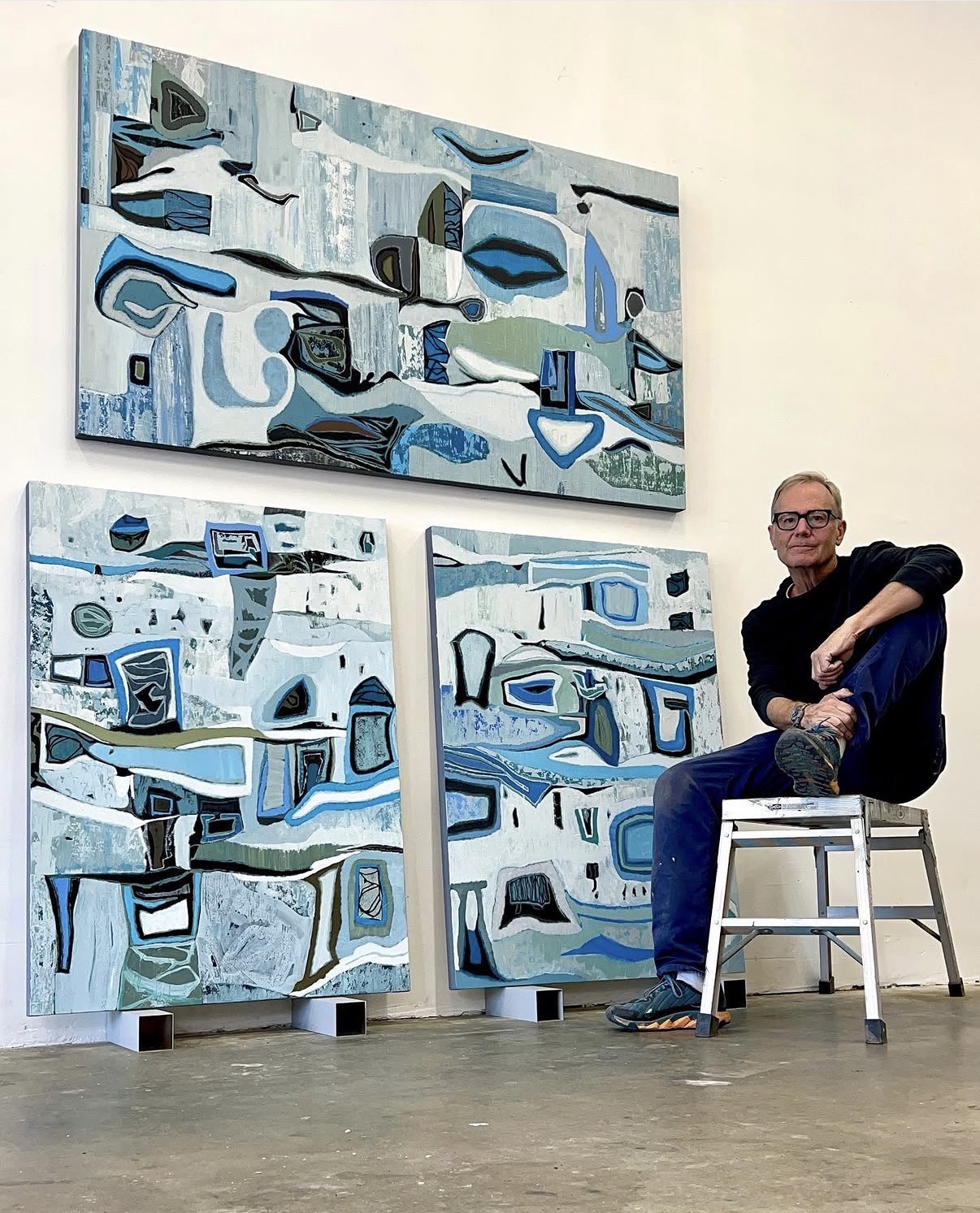
Chase Langford and the Landscapes We Carry
Artist Spotlight · The Collection Editorial
In 2025, Chase Langford completed "Loon Point," a luminous new oil on canvas that signals exactly where this quietly essential American painter stands at the height of his powers. The work carries the hallmarks collectors have come to treasure: layered topographic striations that pulse with geological memory, coastal contours that feel simultaneously observed and invented, and a surface alive with the particular warmth that only decades of rigorous painterly commitment can produce. At sixty five, Langford is not slowing down. He is deepening, clarifying, and arriving at something that feels urgently relevant to a cultural moment in which questions of place, belonging, and how we know the land beneath our feet have never felt more charged.
Chase Langford
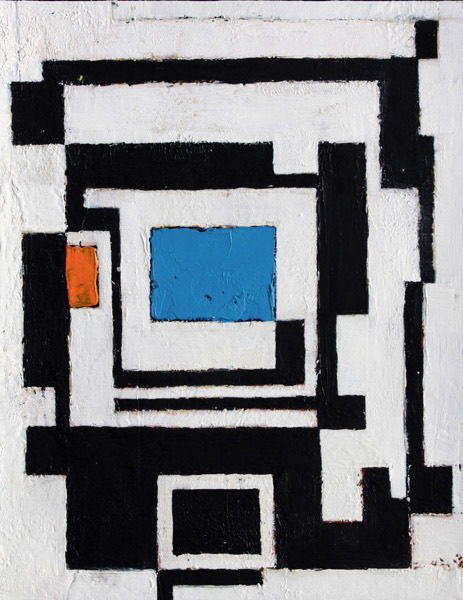
Maze 4, 2013
Langford was born in 1960, coming of age in an America that was simultaneously expanding its relationship to landscape through environmentalism and fracturing its confidence in authoritative systems of knowledge. These twin currents run through everything he would eventually make. The map, that most confident of human artifacts, became his central subject precisely because it embodies both ambitions: the dream of total comprehension and the inevitability of selective truth. Growing up with an awareness of the American West, its mythologies and its cartographic distortions, Langford was drawn early to the tension between what a map claims to show and what a body actually experiences standing in a place.
His formation as a painter unfolded through sustained engagement with the traditions of American abstraction, particularly the gestural freedoms opened up by the New York School and the chromatic intensity pioneered by the Color Field painters. Yet Langford resisted pure abstraction as much as he resisted pure representation. The map gave him a structure, a grid of inherited meaning onto which he could press the full weight of painterly experience. By the time he was working steadily through the 1990s and into the 2000s, his practice had found its distinctive shape: compositions that borrow the visual syntax of geography while systematically dismantling geography's claims to neutrality and objectivity.
Chase Langford
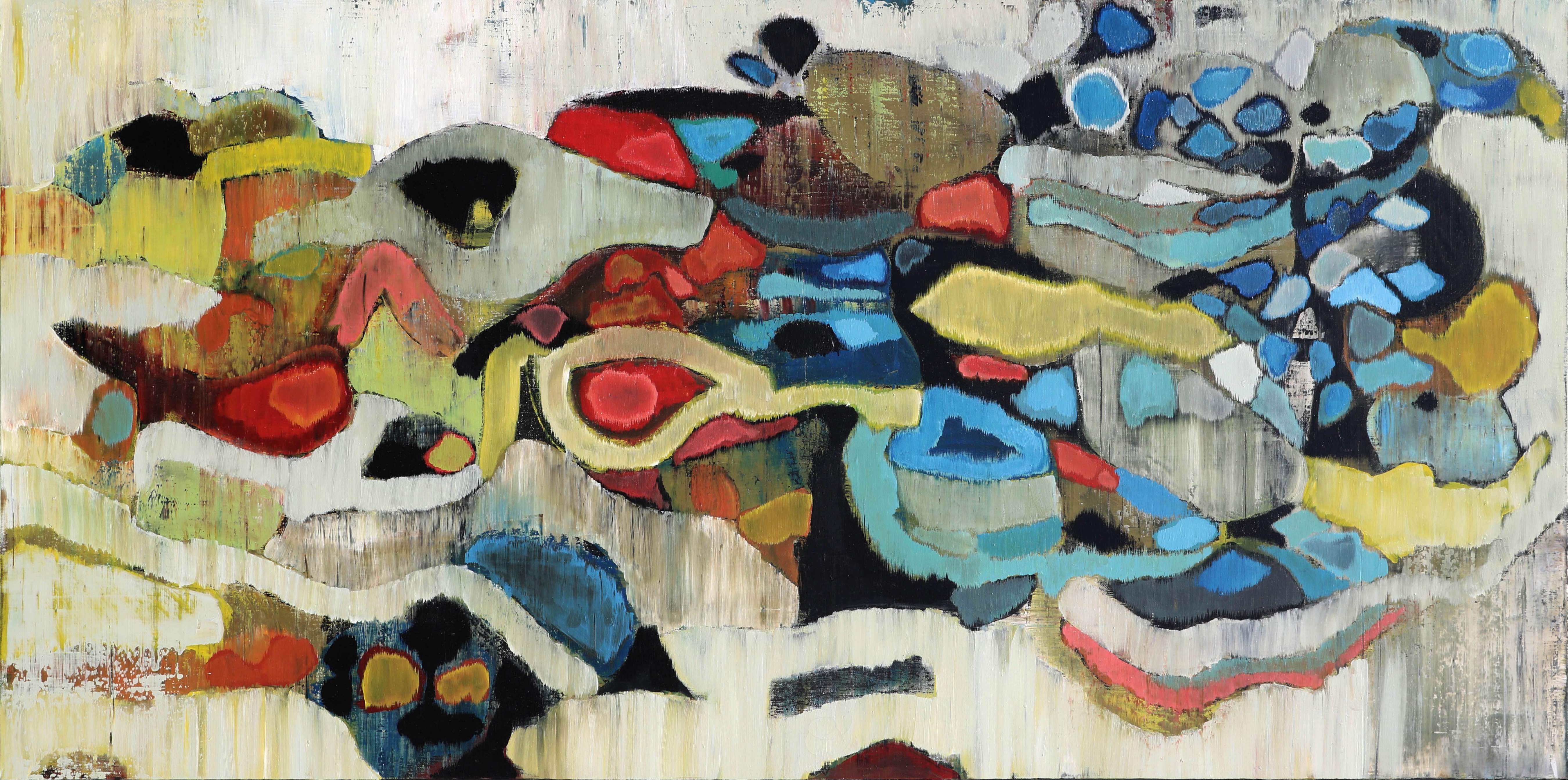
Emerald Bay, 2009
The breakthrough works of the 2000s and early 2010s establish Langford's signature most clearly. "Emerald Bay" from 2009 is a consummate example of his method, its coastal forms rendered with a tenderness that transforms shoreline into something closer to emotional register than survey data. "Maze 4" from 2013 pushes further into abstraction, its labyrinthine passages evoking both the pleasure and the anxiety of navigation, of being inside a system without access to the overview that would make it legible. That same year, "Morphic Panorama" introduced bronze into his oil on canvas practice, a material decision that proved revelatory.
The metallic element catches and holds light in ways that pure paint cannot, suggesting a kind of geological permanence beneath the gestural surface, as though the painting had been excavated rather than constructed. The panorama format, which Langford returned to in "Palm Springs Panorama" in 2015, reflects a sustained curiosity about the horizon as a conceptual and perceptual limit. These wide compositions refuse the frame's conventional authority. They ask viewers to scan rather than simply look, to move through the work as one might move through a landscape.
Chase Langford
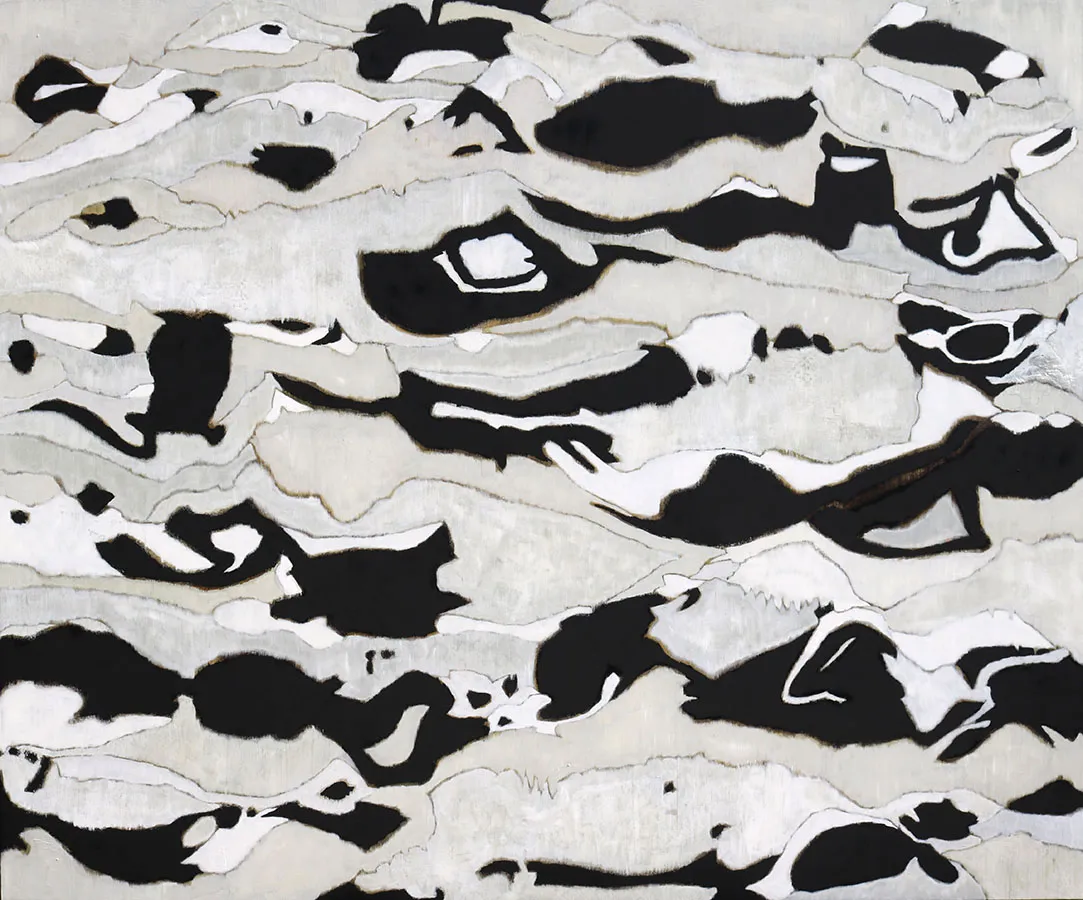
Umbria 9, 2017
"Umbria 9" from 2017 brings this sensibility to the Italian countryside, translating the particular quality of Umbrian light and terrain into Langford's cartographic language with a result that feels both rigorously observed and freely imagined. The work demonstrates how Langford's geographic expressionism operates across cultures and continents without ever becoming merely illustrative. More recent works show no diminishment of invention. "Saddle Junction 12" from 2022 and "Sunset Point" from the same year, the latter combining oil and acrylic, reveal an artist continuing to interrogate his own methods, introducing new material relationships and pushing his color into zones of greater chromatic complexity.
"Bering Sea" from 2024 is among his most ambitious recent achievements, its vast oceanic subject demanding a scale of mark making and a patience with blue that few painters would attempt. The work joins a distinguished lineage of American painters who have taken the sea as a measure of the sublime, and it holds that conversation with confidence. For collectors, Langford represents a proposition of considerable interest and integrity. His work sits at a compelling intersection of abstraction, landscape, and conceptual inquiry, making it legible to multiple collecting sensibilities while remaining genuinely difficult to categorize in ways that serve it well over time.
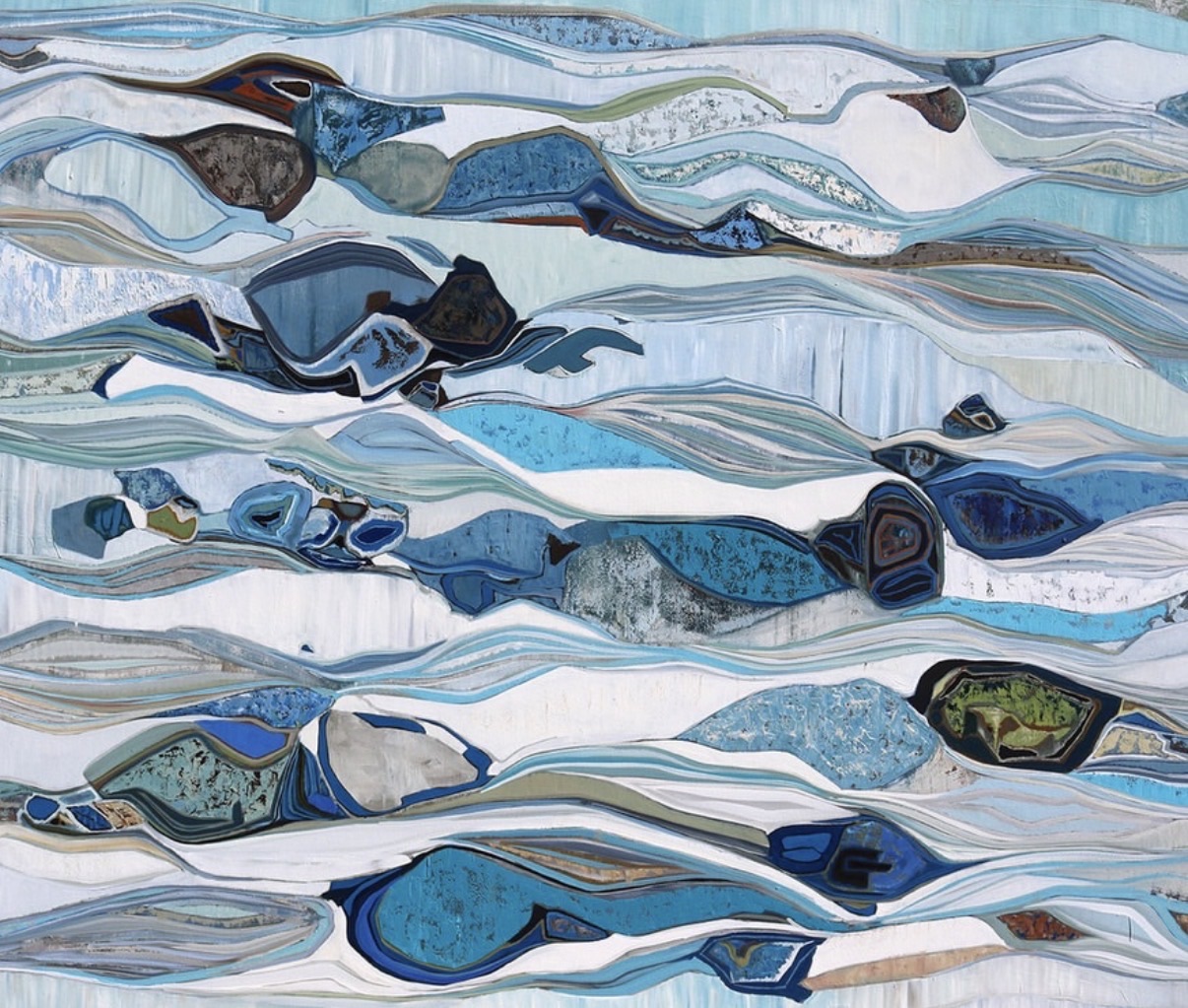
Chase Langford
Oceania
Artists who resist easy classification tend to appreciate in cultural stature as the field catches up to what they were doing. Langford has been doing this work with consistency and seriousness for decades, and the body of paintings now available through The Collection offers an opportunity to engage with an artist at the mature height of a distinctive and coherent practice. Works range across scales and palettes, from the intimate geography of smaller studies to the expansive panoramas, allowing collectors to enter the work at multiple points. In the broader context of art history, Langford's practice invites comparison with artists who have similarly worked at the border between abstraction and legible systems of knowledge.
His geographic expressionism carries echoes of Jasper Johns's use of maps as charged cultural objects, and shares a certain epistemological restlessness with artists like Terry Winters, whose biomorphic forms also navigate between scientific diagram and painterly freedom. There is something, too, of Richard Diebenkorn's California landscapes in Langford's coastal works, that same quality of light understood from within rather than observed from without. Yet Langford's voice is distinctly his own, shaped by a theoretical engagement with cartography that gives his abstractions an unusual conceptual spine. What ultimately makes Chase Langford matter in 2025 is the precision with which his life's work addresses something we are all grappling with: the limits of the systems we use to know where we are.
Maps, data, coordinates, these are the tools of a culture that believes knowledge is equivalent to control. Langford's paintings propose something different and more honest. They suggest that any territory worth knowing resists complete documentation, that the most truthful account of a place includes the marks of uncertainty, the layered revisions, the beautiful incompleteness that only a painting, and only this painter's paintings, can honestly render.