Carsten Höller
Artist Spotlight · The Collection Editorial
```json { "headline": "Carsten Höller Makes the World Wonderful Again", "body": "There is a particular kind of joy that surfaces when an artist manages to make an entire institution feel alive. In 2006, Carsten Höller installed five enormous steel slides inside the Turbine Hall at Tate Modern, and the result was one of the most talked about commissions in the history of the Unilever Series. Titled Test Site, the work invited visitors to launch themselves from the upper galleries down to the ground floor, surrendering control and experiencing, for a few breathless seconds, something close to pure sensation. Queues stretched around the building for weeks.
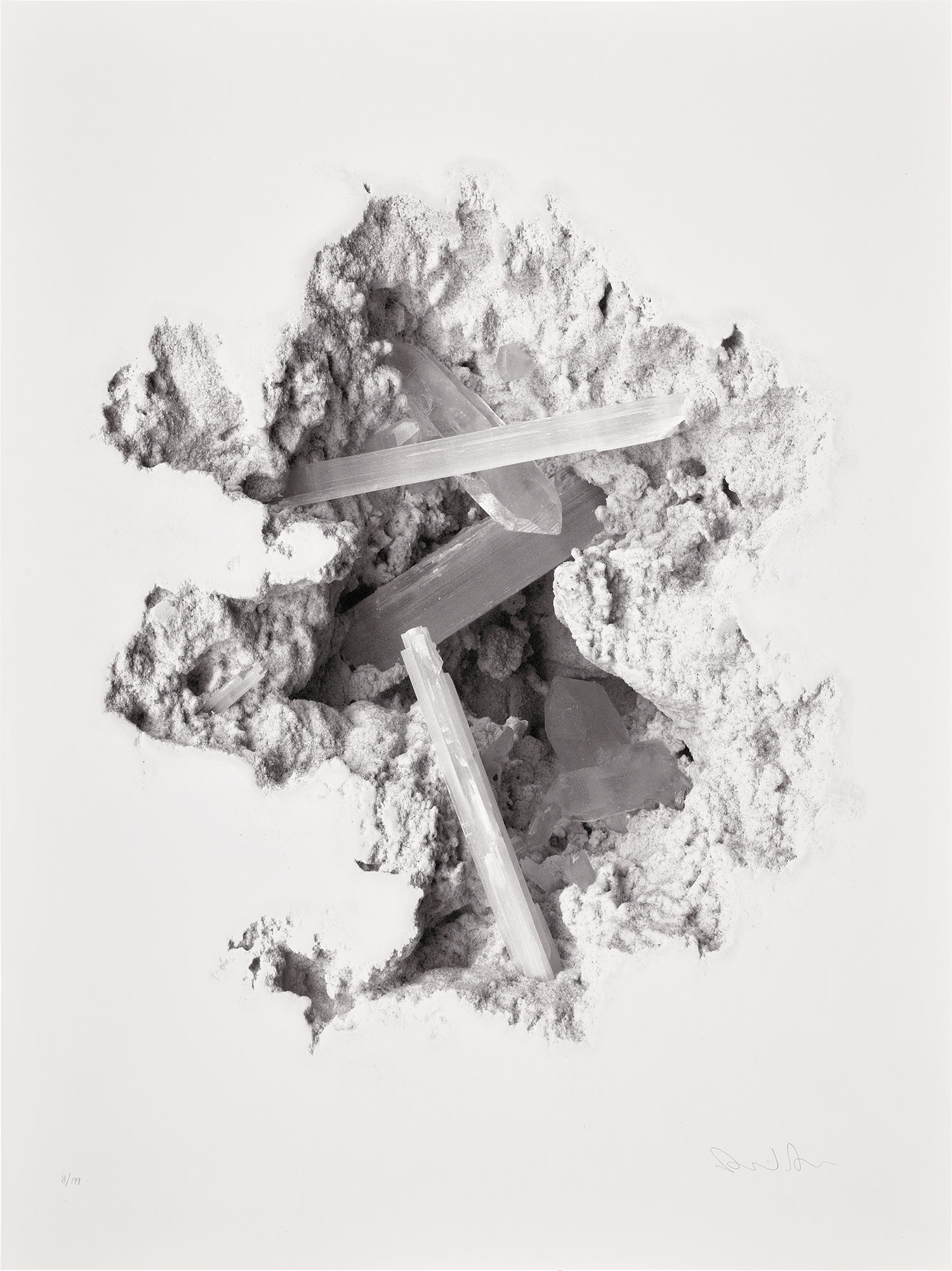
Carsten Höller
Black Canary
Critics wrote not just about the spectacle but about what it felt like to be inside it, which was precisely the point. Höller had done what very few artists manage: he had made art that could not be described without also describing your own body.", "Early life matters enormously when understanding an artist whose work is rooted in empirical thinking. Höller was born in Brussels in 1961 and trained not as an artist but as a scientist, completing a doctorate in agricultural entomology at the University of Kiel in Germany.
This is not a footnote to his practice. It is the foundation of it. The years spent studying insect behavior and ecological systems gave Höller a framework for understanding how living organisms respond to their environments, and that framework never left him. When he eventually moved toward visual art in the late 1980s and early 1990s, he brought with him an almost methodological curiosity about perception, behavior, and the conditions under which human beings can be nudged, seduced, or disoriented into seeing differently.
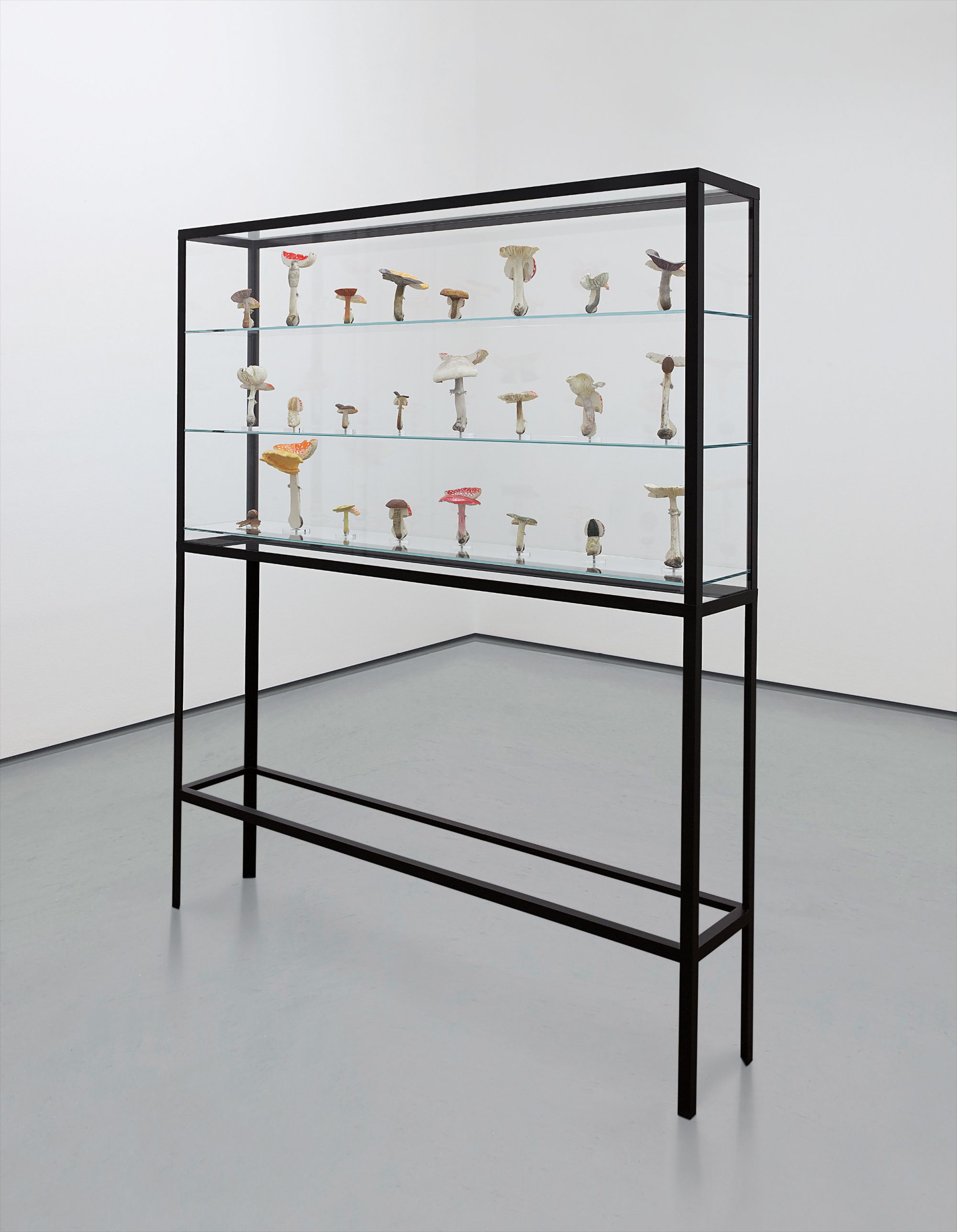
Carsten Höller
Doppelpilzvitrine (24 Doppelpilze)
", "His early works in the 1990s were already marked by this double identity, part laboratory experiment and part sensory invitation. The 1995 piece Red Baby Whale, a sculptural object rendered in polyurethane and enamel with faux eyelashes, signals the playful uncanniness that would define so much of his output. There is something simultaneously tender and unsettling about it, a quality that asks you to question your own response. Throughout the 1990s he collaborated with artist Rosemarie Trockel, and his solo work was increasingly shown in major European contexts.
By the time he represented Belgium at the Venice Biennale in 1999, it was clear that Höller occupied a genuinely singular position, neither a conceptualist in the dry academic sense nor a crowd pleaser in the shallow sense, but someone operating in the serious and underexplored territory in between.", "The years from 2000 onward saw Höller develop and deepen the ideas around altered states, perception, and what he calls the doubt that arises from experiencing the world through different senses simultaneously. His Flying Machines, Upside Down Goggles, and various rotating and tilting environments pushed audiences into physiological territory that most art simply does not reach. The Revolving Hotel Room, first shown at the Guggenheim Bilbao, invited visitors to spend a night in a slowly rotating space.
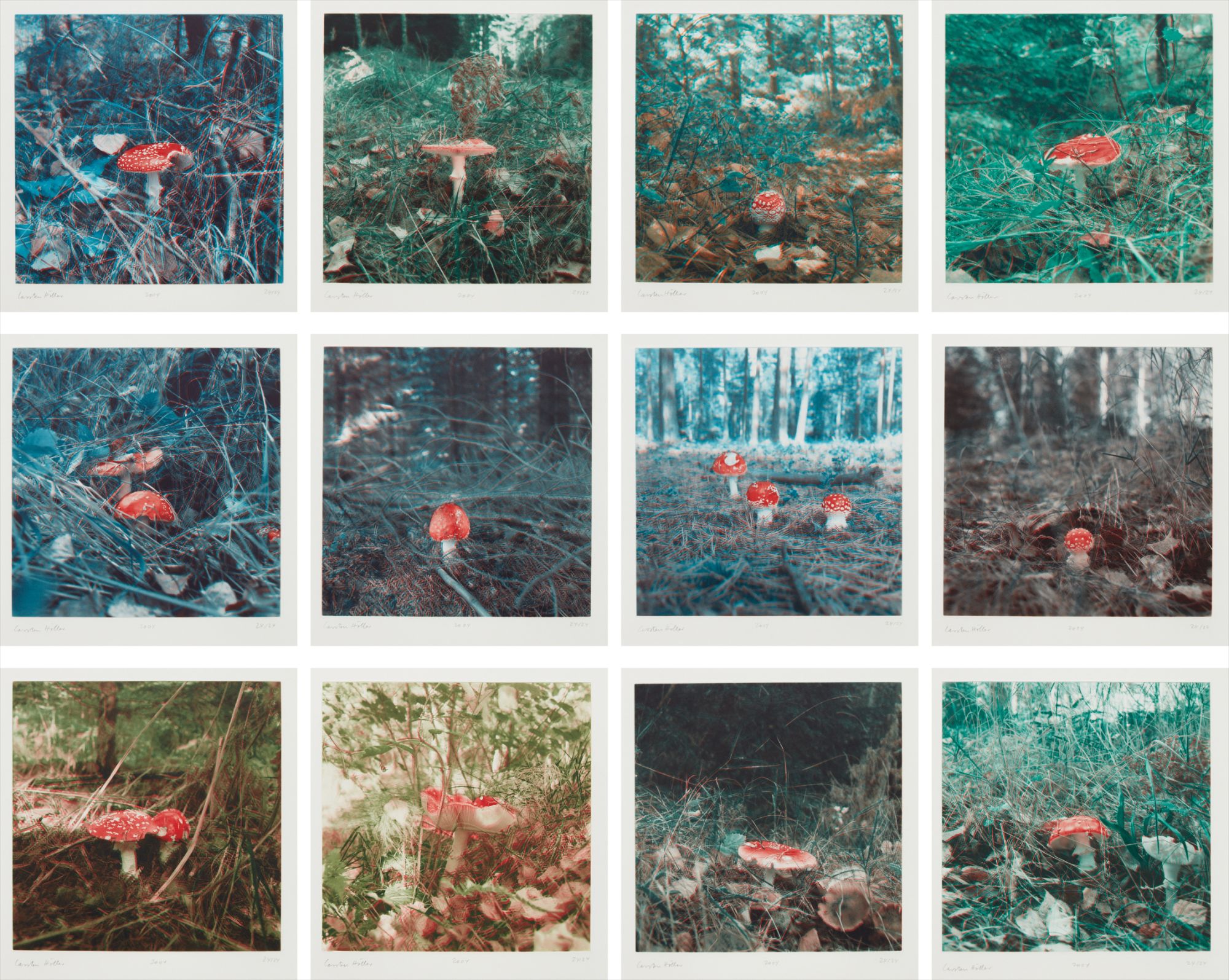
Carsten Höller
Mushroom
His mirrored carousels merged the formal elegance of kinetic sculpture with something more visceral, a looping, vertiginous experience of time and reflection. These were not gimmicks. They were rigorous propositions about how consciousness is constructed and how fragile that construction is.", "Among the most beloved recurring subjects in his work are mushrooms, canaries, and birds, themes that recur across editions, sculptures, and vitrines with the consistency of a genuine obsession.
The Doppelpilzvitrine series, in which doubled polyurethane mushroom sculptures are presented under glass in immaculate steel and acrylic cases, combines the aesthetics of natural history display with something altogether stranger. The doubling is the key: it introduces a logical impossibility into a format that promises scientific clarity. Similarly, his printed editions featuring canaries and birds carry a lightness of touch that belies their conceptual weight. Works such as Canaries, Mushroom, and Birds, produced in collaboration with Niels Borch Jensen Editions in Copenhagen and Edition Hatje Cantz in Berlin, are among the most sought after prints in his output, precisely because they distill the larger ideas of his practice into an intimate, livable format.
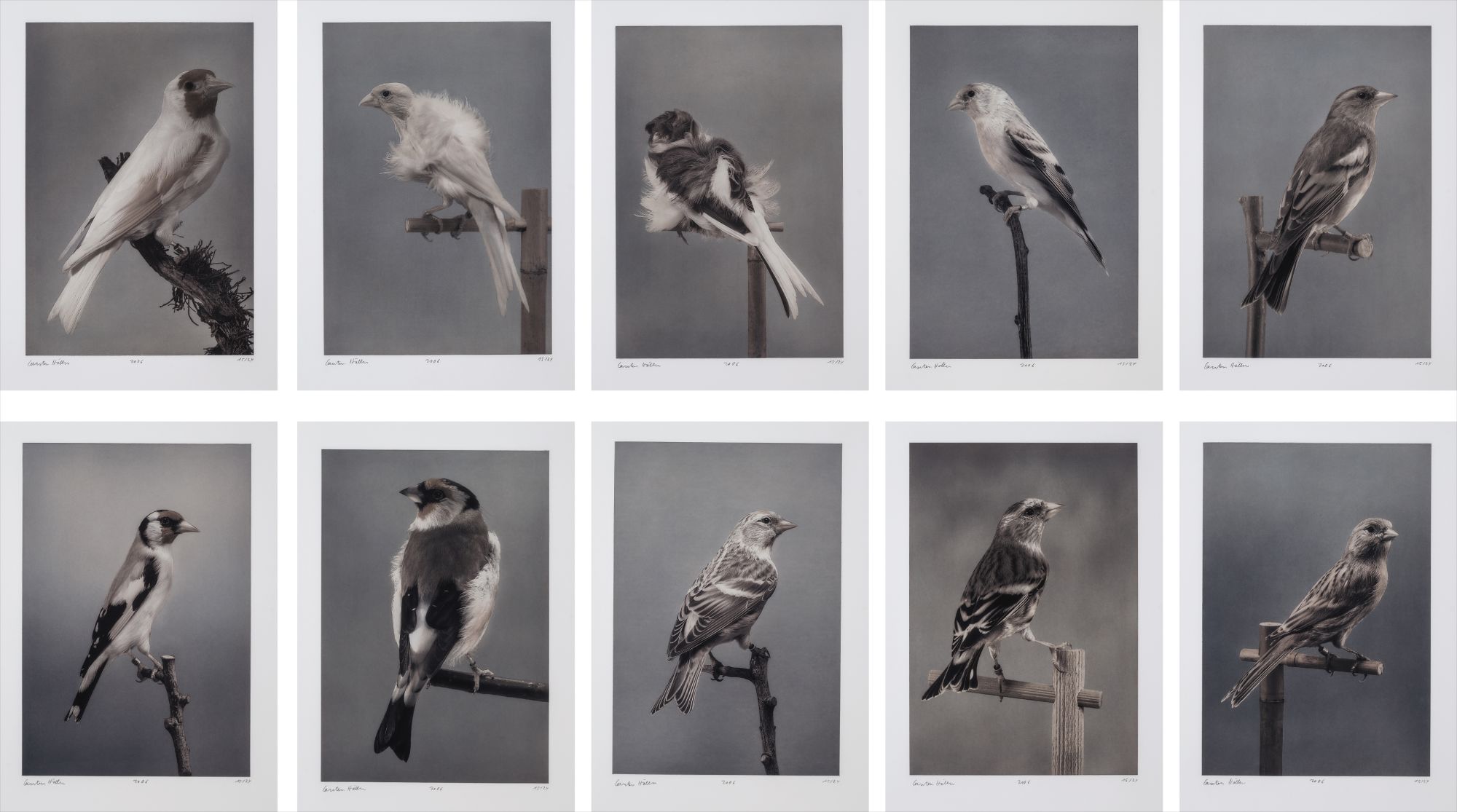
Carsten Höller
Birds
Black Canary, published by Edition Hatje Cantz in collaboration with BORCH Editions, is a particularly striking example of how Höller can make a single image feel charged with question.", "From a collecting perspective, Höller offers something genuinely rare: a body of work that functions coherently across very different scales and media. His major installations require institutional infrastructure, but his editions and smaller sculptures bring the same logic into private spaces. Collectors have long recognized that owning a Höller work is not simply about acquiring an object but about welcoming a particular quality of attention into a home or collection.
The print editions, produced in careful limited runs with trusted publishers, carry clear provenance and are well documented. The sculptural works, particularly the Doppelpilzvitrine pieces with their precise materials and immaculate presentation, have performed strongly on the secondary market and continue to attract interest from collectors who appreciate rigor alongside beauty. As awareness of his practice grows beyond the institutional sphere, the depth and consistency of his editioned work becomes increasingly apparent.", "Höller belongs to a generation of artists who transformed what installation art could ask of its audience.
He shares certain preoccupations with Olafur Eliasson, whose Weather Project at Tate Modern arrived just a few years before Test Site and similarly made the Turbine Hall into a theater of perception. He has affinities with Bruce Nauman in his willingness to use the body as both subject and instrument, and with Felix Gonzalez Torres in his understanding that genuine warmth and genuine seriousness are not opposites. The scientific and phenomenological strand of his thinking also connects him to figures like James Turrell, for whom light and space are not backdrops but the actual material. Yet Höller remains distinctly himself, consistently funny, consistently rigorous, consistently unwilling to let pleasure become shallow.
", "What makes Höller matter in 2024 and beyond is not simply the scale of his ambitions or the spectacle of his major works. It is the underlying commitment to a question that has only become more urgent: what does it mean to trust your own perception in a world that constantly manipulates it. His slides, his rotating rooms, his doubled mushrooms and singing birds are not answers. They are carefully designed situations in which the question becomes impossible to ignore.
That combination of genuine warmth toward the audience and genuine seriousness about the inquiry is what separates the very best artists from those who merely impress. Höller does both, and has done so consistently across four decades of practice. To collect his work is to collect a form of alert, delighted attention to the world." , "quotes": [ { "quote": "I want to create a situation where you are confronted with doubt about yourself, not about the art.
Explore books about Carsten Höller
Carsten Höller
Okwui Enwezor
Carsten Höller: Museo Tamayo
Various contributors

Carsten Höller: Experience
Various curators
Carsten Höller: Psycho Buildings
Storefront for Art and Architecture
Carsten Höller: Decision
Gabriela Golder