Carrie Mae Weems
Carrie Mae Weems, America's Essential Witness
Artist Spotlight · The Collection Editorial
“I am trying to create work that is both beautiful and troubling, that allows for complexity and contradiction.”
Carrie Mae Weems, interview with The Guardian
When the Guggenheim Museum mounted its landmark retrospective of Carrie Mae Weems in 2014, spanning three floors and more than three decades of work, something remarkable happened: audiences who had never encountered her photographs stood before them in near silence. The show, titled "Carrie Mae Weems: Three Decades of Photography and Video," had already traveled from the Frist Center for the Visual Arts in Nashville, gathering momentum and critical devotion at each stop. It was the kind of institutional affirmation that confirmed what artists, scholars, and collectors had long understood: Weems is not simply a great photographer. She is one of the most searching and consequential artists America has produced in the past half century.
Carrie Mae Weems
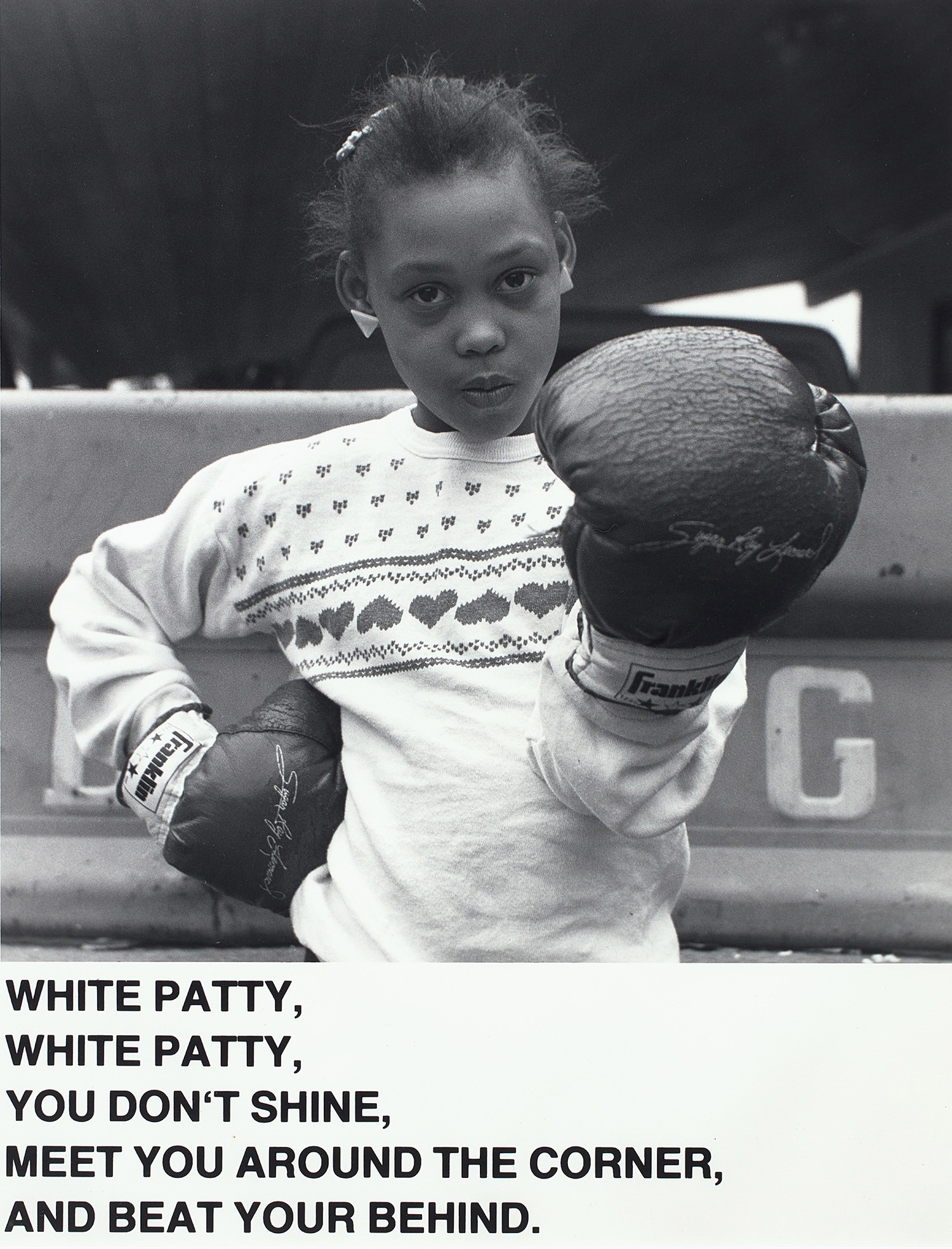
White Patty You Don't Shine from Ain't Joking
Weems was born in Portland, Oregon in 1953, one of seven children in a family that had migrated north from the American South. Her childhood was shaped by the rhythms of a working class Black family navigating a country still convulsing with racial violence and transformation. She came of age during the Civil Rights Movement and its aftermath, absorbing both its promise and its disappointments. These formative years planted the questions that would animate her entire practice: who gets to tell the story of Black life in America, and on whose terms is that story told.
Photography offered her a language, but it was never merely a technical pursuit. It was, from the beginning, a form of testimony. Weems studied photography at the California Institute of the Arts and later earned her MFA from the University of California, San Diego in 1984, before going on to graduate study in folklore at Berkeley. That detour into folklore was not incidental.
Carrie Mae Weems
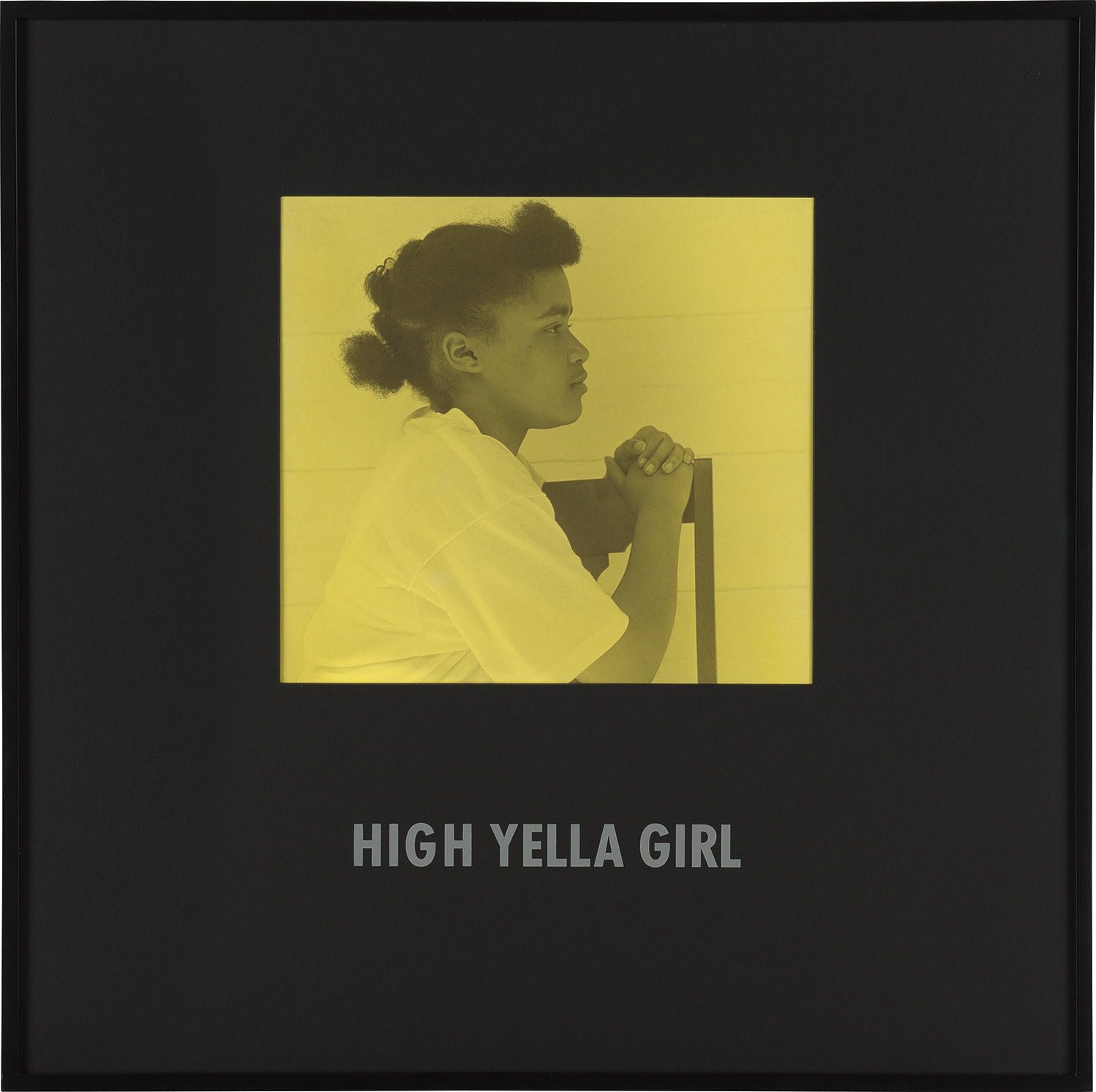
High Yella Girl from Colored People
It gave her a scholar's understanding of how stories travel through communities, how myths calcify into received wisdom, and how images can either reinforce or rupture inherited narratives. She arrived in the art world not as a naive documentarian but as a rigorously trained thinker who understood that every photograph is an argument. Her early series, including the "Family Pictures and Stories" project from the early 1980s, announced this sensibility immediately: here was an artist interested in the intersection of the personal, the political, and the mythological. The work that made her name, and that remains a touchstone of American photography, is the "Kitchen Table Series" from 1990.
“The camera is a tool for learning how to see without a camera.”
Carrie Mae Weems
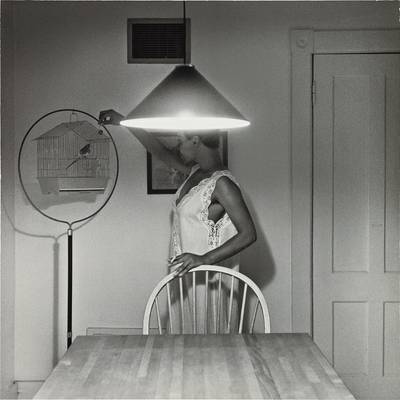
Composed of twenty black and white photographs accompanied by text panels, the series unfolds like a novel in stills. A single woman, played by Weems herself, sits at a kitchen table and moves through the rituals of domestic life: eating, arguing, playing cards, sitting in silence, loving, and grieving. The kitchen table becomes a stage, a confessional, and a cosmos. The series was groundbreaking not only for its formal elegance but for its insistence that Black domestic life deserved the same meditative, interior gaze that had long been reserved for other subjects.
Carrie Mae Weems
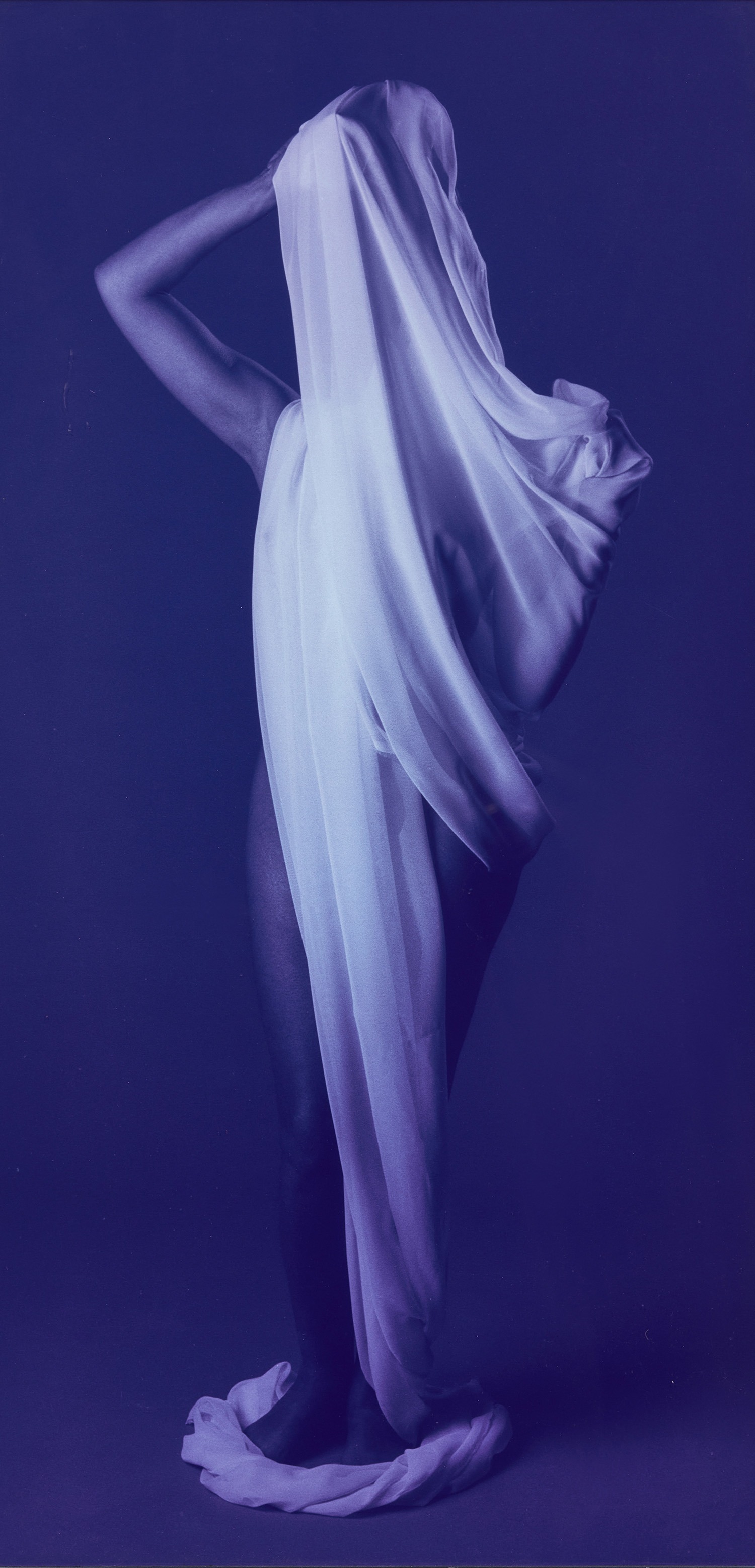
The Apple of Adam’s Eye
It redefined what portraiture could hold. Decades on, it remains one of the most reproduced and studied bodies of work in contemporary photography, taught in university classrooms and collected by institutions from the Museum of Modern Art to the Art Institute of Chicago. From there, Weems moved with extraordinary intellectual restlessness across formats and subjects. The "Colored People" series of 1989 to 1990 used toned gelatin silver prints and hand lettered text to confront the taxonomy of skin color within Black communities, turning the language of prejudice back on itself with wit and fury.
The "Sea Islands Series" documented the Gullah communities of the South Carolina and Georgia coast, their culture, and their connection to West African traditions. Later works like "From Here I Saw What Happened and I Cried" from 1995 to 1996 reappropriated nineteenth century daguerreotypes of enslaved people from Harvard's Peabody Museum, rephotographing and printing them in deep red with engraved text, transforming documents of dehumanization into memorials of dignity. The ambition and moral seriousness of that project drew comparison to the conceptual strategies of Barbara Kruger and the political urgency of Kara Walker, two artists whose practices share Weems's commitment to excavating power through image and text. Collectors have responded to Weems with sustained and growing enthusiasm, drawn not only by the historical importance of the work but by its uncommon beauty.
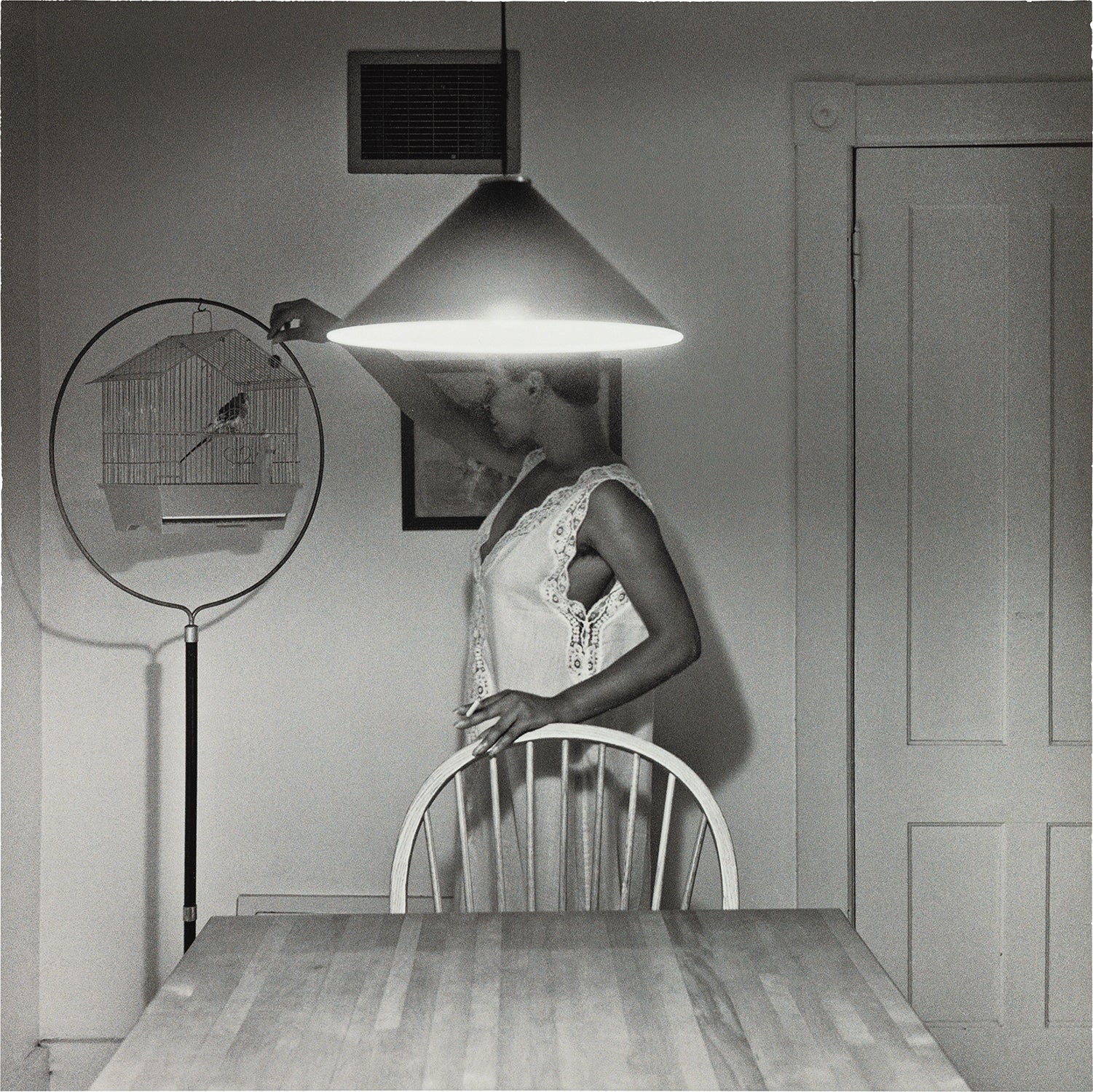
Carrie Mae Weems
1990/2022
Her gelatin silver prints have a luminous, velvety depth that rewards prolonged looking, and her chromogenic and inkjet works carry the same formal authority. The market for her photographs has grown steadily across the past two decades, with major auction houses regularly presenting her work to competitive bidding. Prints from the "Kitchen Table Series" and the "Colored People" series are considered cornerstone acquisitions, both because of their cultural significance and because of their relative scarcity in pristine condition. Works on paper, signed editions, and artist books have also become sought after entry points for collectors building a serious engagement with her practice.
The range of available formats, from unique photographic works to carefully produced limited editions, means that a meaningful relationship with Weems's art is accessible across different collecting budgets and ambitions. To understand Weems fully, it helps to place her within a constellation of artists who have used photography to interrogate race, identity, and the politics of the image. Her work is in conversation with the documentary humanism of Gordon Parks, the conceptual provocation of Adrian Piper, and the archival strategies of Lorna Simpson, whose own text and image works emerged in close proximity to Weems's during the 1980s and 1990s. Like Glenn Ligon, Weems understands that language and image together can do what neither can accomplish alone.
Like Zanele Muholi, she insists on the radical act of self representation as a form of political resistance. These are not incidental comparisons. They are a map of the terrain that Weems helped chart. What endures about Carrie Mae Weems is the combination of formal beauty, intellectual depth, and moral seriousness that runs through every body of work, regardless of subject or format.
She has spent more than four decades asking America to look at itself clearly, to account for what it has done and what it continues to do, and to find in that reckoning not despair but the possibility of understanding. Her photographs do not lecture. They invite. They sit with you at the kitchen table and wait for you to speak.
For collectors, institutions, and anyone who believes that art can change the way we see the world, her work is not simply important. It is indispensable.
Explore books about Carrie Mae Weems
Carrie Mae Weems: The Kitchen Table Series
Tina Campt
Carrie Mae Weems
Lucy Moore
Carrie Mae Weems: Three Decades of Photography and Video
Various Contributors
Carrie Mae Weems: Museum of Modern Art
Connie Butler
Carrie Mae Weems: Recent Work
Anthony Vidler
Carrie Mae Weems: Constructing History
Claudette Lauterbach