Carmen Herrera
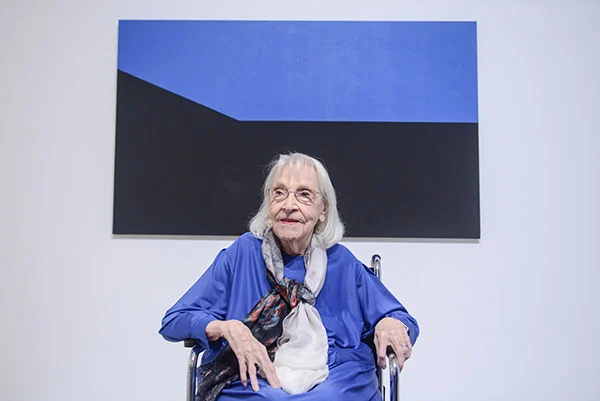
Carmen Herrera, A Century of Pure Vision
Artist Spotlight · The Collection Editorial
“I just love the use of color and form. That is what I have always wanted to do.”
Carmen Herrera, interview with the Whitney Museum of American Art
In 2016, the Whitney Museum of American Art mounted a long overdue retrospective for Carmen Herrera, bringing her razor sharp geometric canvases to the grandest possible stage in her adopted city of New York. The exhibition, titled Carmen Herrera: Lines of Sight, introduced her luminous hard edged abstractions to a new generation of collectors and curators who might have known her name only distantly. It was a triumphant cultural moment, one that confirmed what a small circle of devoted admirers had understood for decades: Herrera was among the most rigorous and original abstract painters of the twentieth century, and the art world was finally paying full attention. Carmen Herrera was born in Havana, Cuba in 1915, into an educated and cultured family.
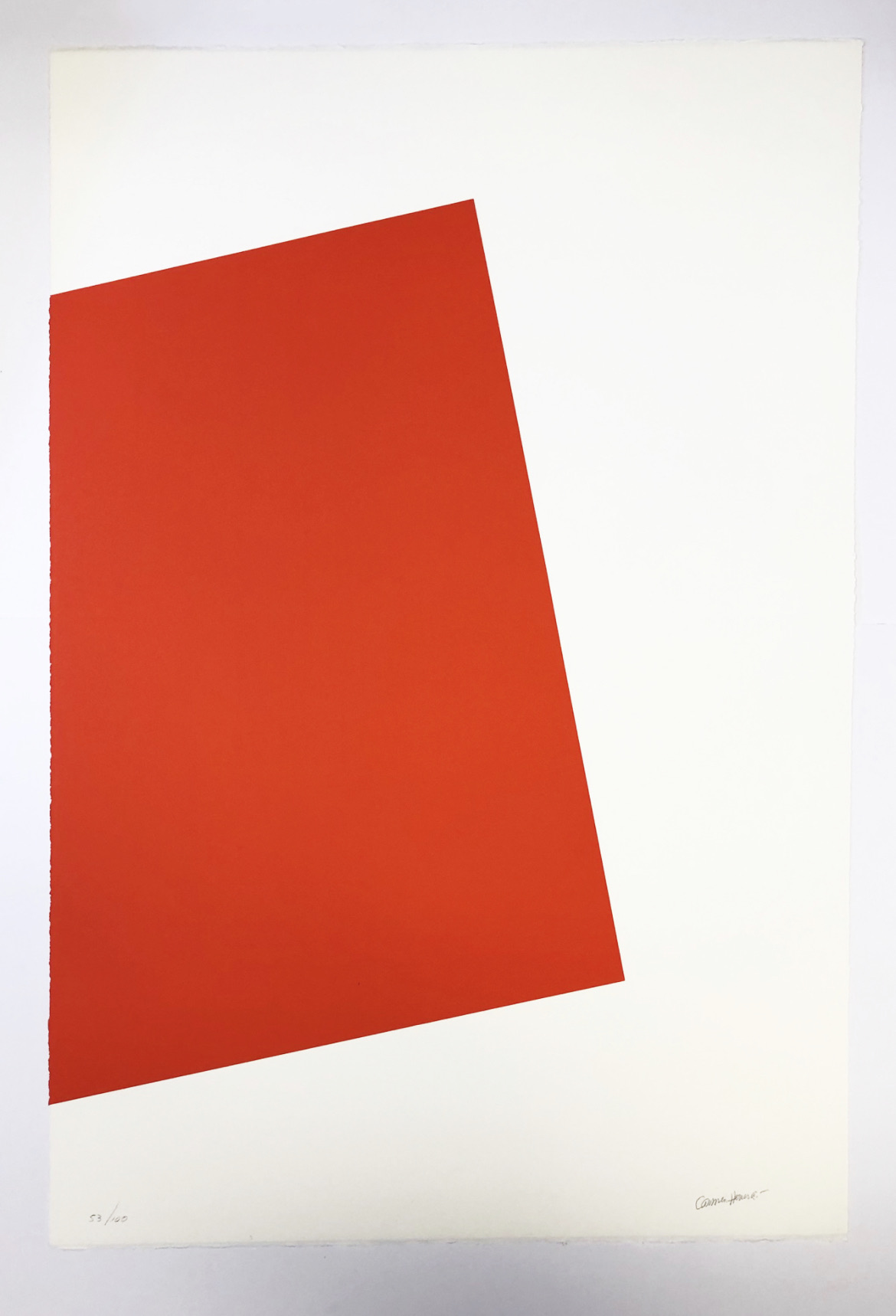
Carmen Herrera
Untitled (NWR), 2017
Her father was a journalist and founder of a Cuban newspaper, and the household valued intellectual life with genuine seriousness. She studied architecture at the Universidad de La Habana, a formative discipline that would leave a permanent imprint on the structural logic of her paintings. In 1939 she moved to New York, and later spent the late 1940s in Paris, where she found herself immersed in the postwar European avant garde and drawn into the orbit of abstraction just as it was becoming the defining language of ambitious painting. The years in Paris were transformative.
Herrera exhibited alongside figures such as Barnett Newman and attended the Salon des Réalités Nouvelles, the prestigious annual exhibition of abstract and constructivist art. She was working at the very center of the conversation. And yet, despite the quality of her work and the company she kept, galleries consistently passed on offering her representation. The combination of her gender, her Cuban heritage, and a market that was systematically oriented toward a particular image of what a successful artist looked like meant that Herrera spent decades producing extraordinary work in near total commercial obscurity.
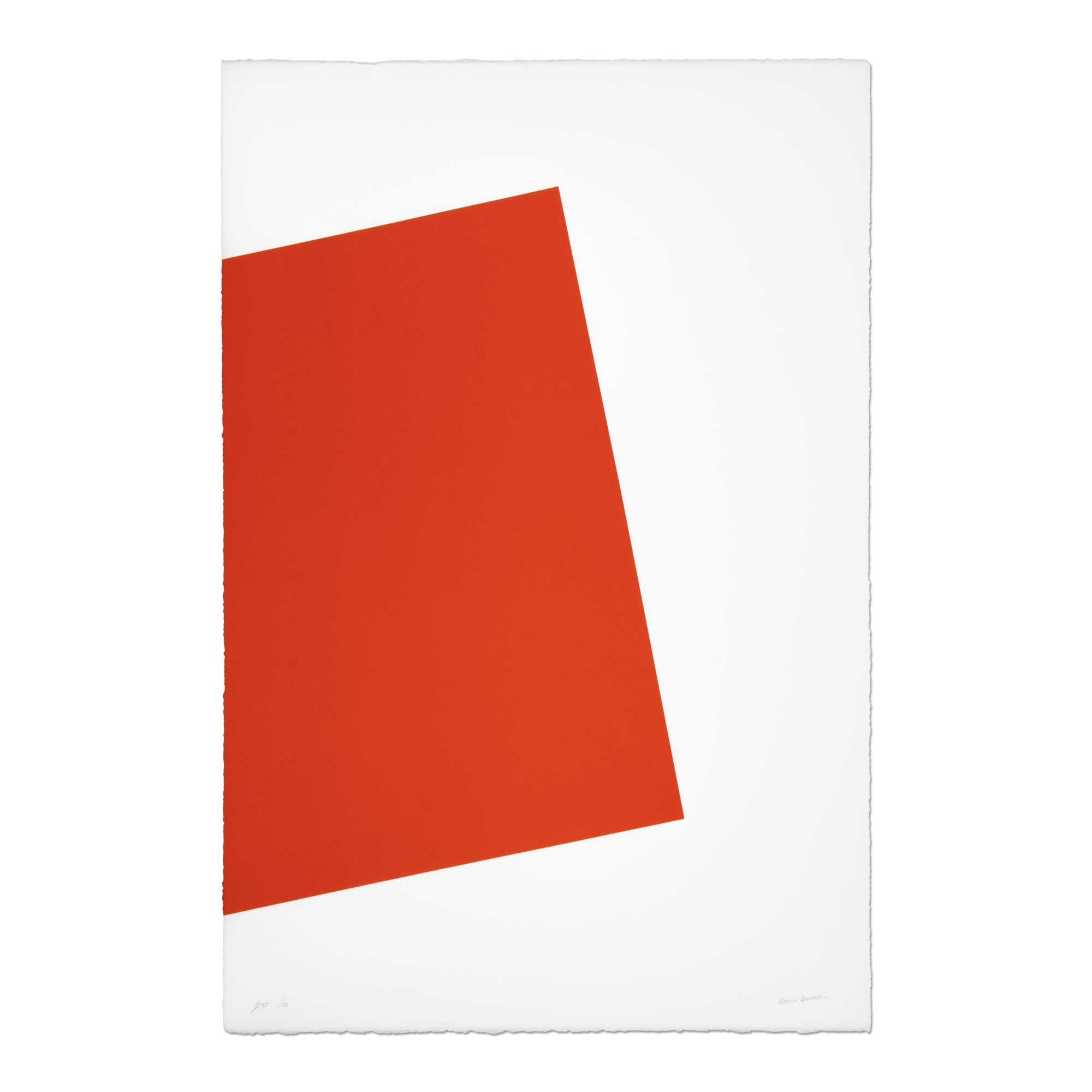
Carmen Herrera
Untitled (NRW), 2017
She continued painting anyway, with a discipline and commitment that is itself a remarkable story. Herrera returned permanently to New York in 1954, and it was there that her practice deepened into the spare, exacting vision she is celebrated for today. She worked with acrylic on canvas and, at times, on shaped wooden panels, reducing her compositions to their most essential elements: a bold line, two or three colors held in precise and dynamic tension, a geometry that feels both inevitable and surprising. Her Blanco y Verde series, developed across several decades, exemplifies this approach with particular force.
“I always knew that one day the world would come around.”
Carmen Herrera, The New York Times, 2009
White and green meet along diagonal and curvilinear boundaries with an almost architectural authority, as though the canvas itself has been designed rather than painted. There is no gesture, no accident, no expressionist residue. Only the pure fact of color and edge. Works such as Green and Orange from 1958 demonstrate how early Herrera arrived at her mature sensibility.
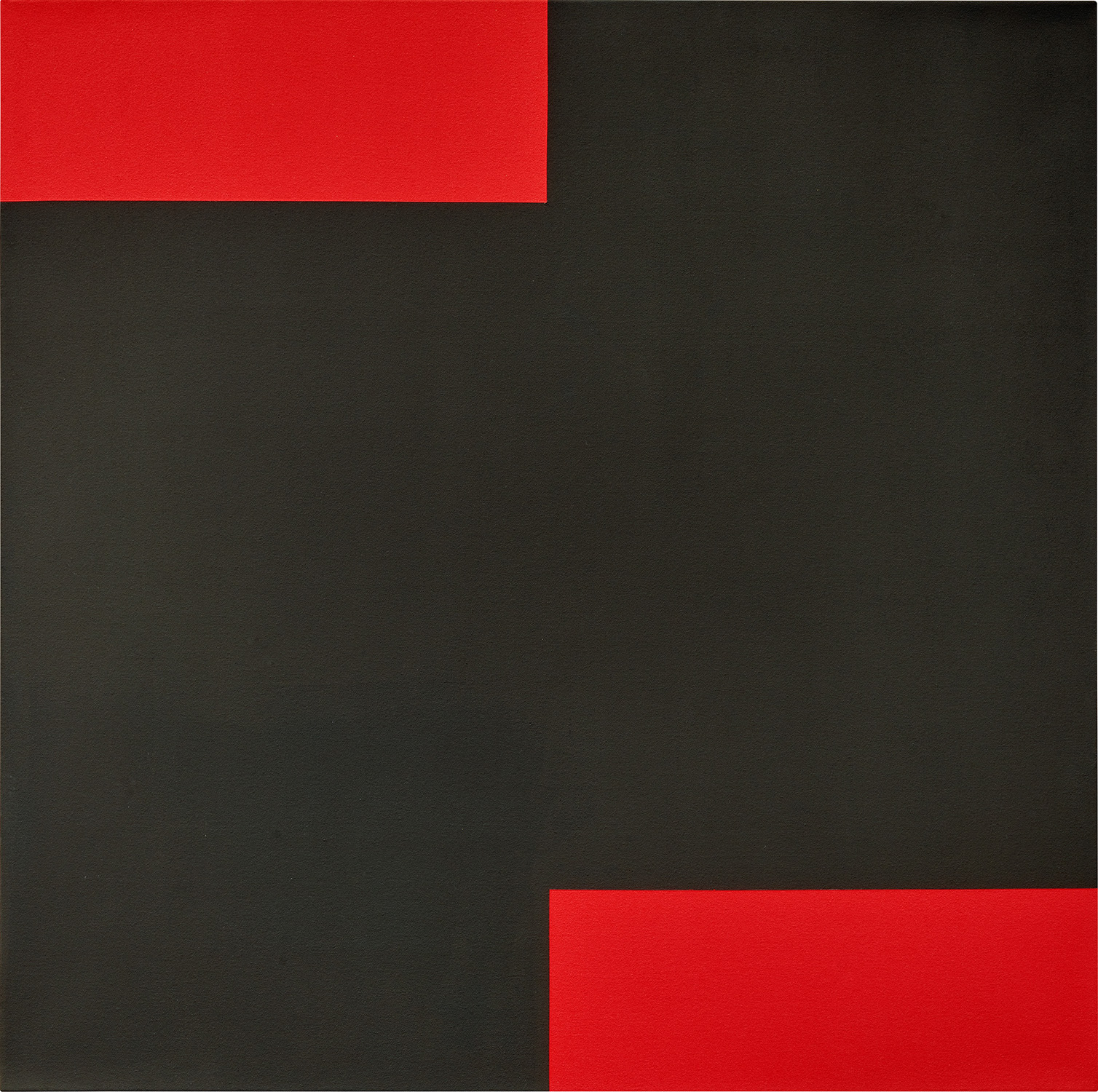
Carmen Herrera
Stanzas, 2012
The painting belongs to a moment when Abstract Expressionism dominated New York, yet Herrera was moving in an entirely different direction, toward clarity and reduction at a time when emotional turbulence was celebrated. Amarillo Uno from 1971, rendered in acrylic on wood in two parts, shows her willingness to extend her thinking into the physical structure of the object itself, allowing the shaped support to become an active element of the composition. And works from her later print practice, including the lithographs and screenprints she produced through publishers such as Edition Copenhagen and Universal Limited Art Editions, reveal an artist who translated her painterly logic into new mediums with complete conviction. Prints such as Verde y Rojo for Studio and Rojo y Negro carry the same architectural intensity as her large canvases, proving that her vision was not dependent on scale but on principle.
Herrera sold her first painting at the age of 89, to the collector Tony Bechara, and from that moment her market ascent was swift and sustained. Her works now reside in the permanent collections of the Museum of Modern Art in New York, Tate Modern in London, and the Hirshhorn Museum and Sculpture Garden in Washington D.C., among many others.
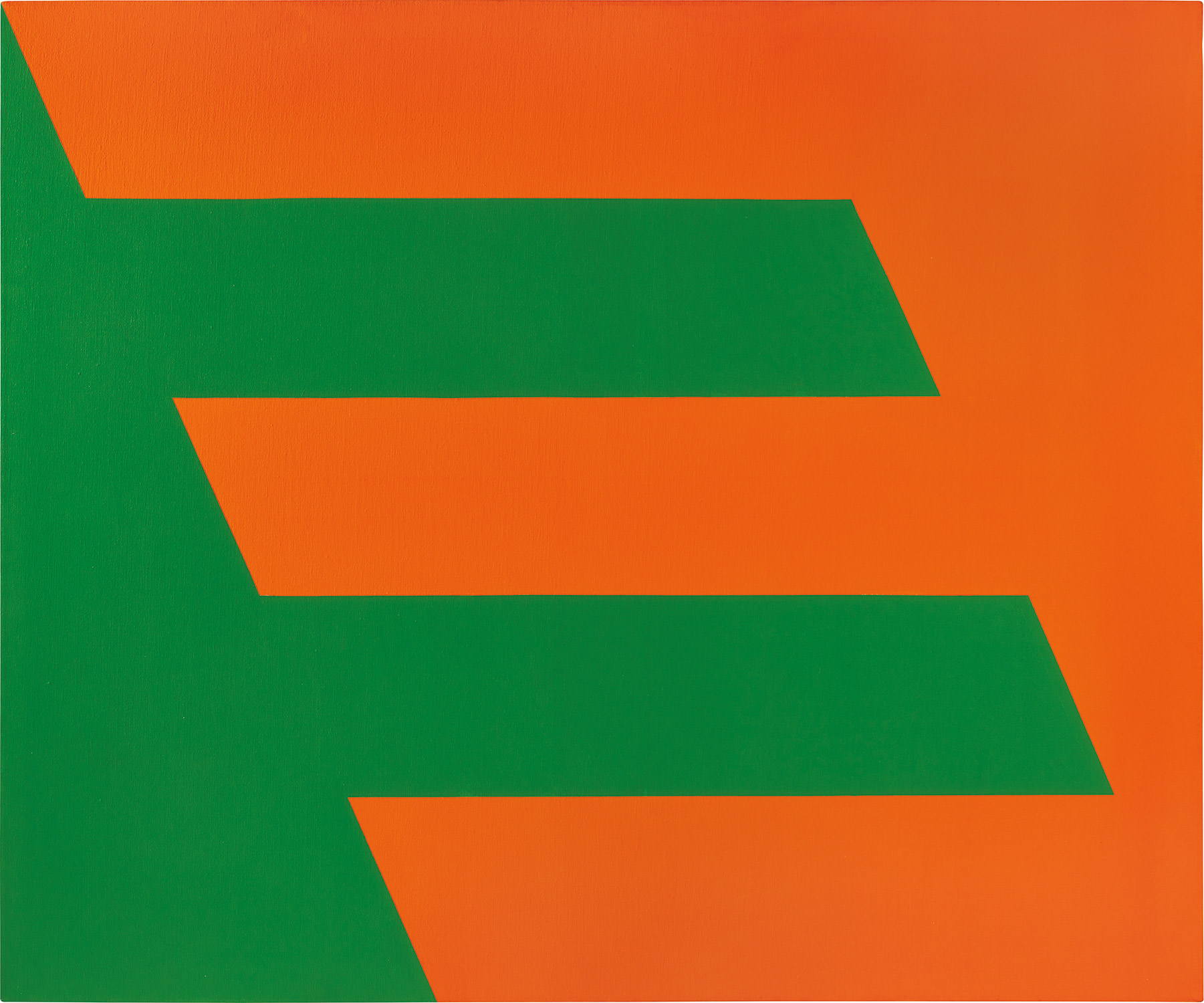
Carmen Herrera
Green and Orange, 1958
For collectors approaching her work today, the print editions offer a particularly compelling entry point: published in small numbers, signed by Herrera herself, and produced through respected printmaking ateliers, they carry the full weight of her vision in formats that reward close and sustained looking. The shaped canvas works and early acrylics from the 1950s and 1960s, when she is represented in auction, command serious attention and reflect her growing canonical status. Within the broader landscape of postwar abstraction, Herrera belongs in conversation with artists such as Ellsworth Kelly, Frank Stella, and Josef Albers, all of whom pursued geometry and color with comparable rigor. She shares with Kelly in particular a commitment to the activated edge, the idea that where two colors meet is where all the energy of a painting lives.
Her Cuban heritage and her years in Paris also connect her to a Latin American tradition of constructivism that includes figures such as Jesús Rafael Soto and Carlos Cruz Diez, artists who understood abstraction not as a retreat from meaning but as its most direct expression. Herrera deserves to be understood in all of these contexts simultaneously, as someone who was never peripheral to the story but always integral to it. Carmen Herrera passed away in 2022 at the age of 106, having witnessed her own remarkable rehabilitation and the full flowering of her reputation. Her longevity was not incidental to her legacy.
It allowed her to see her work enter the greatest museums in the world, to speak for herself in interviews and documentaries, and to continue making art almost until the very end. What she left behind is a body of work of astonishing consistency and quiet power, paintings and prints that ask very little of the viewer except sustained attention and reward that attention generously. In an art world that often prizes novelty and narrative above all else, Herrera's example reminds us that patience, conviction, and a clear eye are their own extraordinary forms of ambition.
Explore books about Carmen Herrera