Carl Hopgood
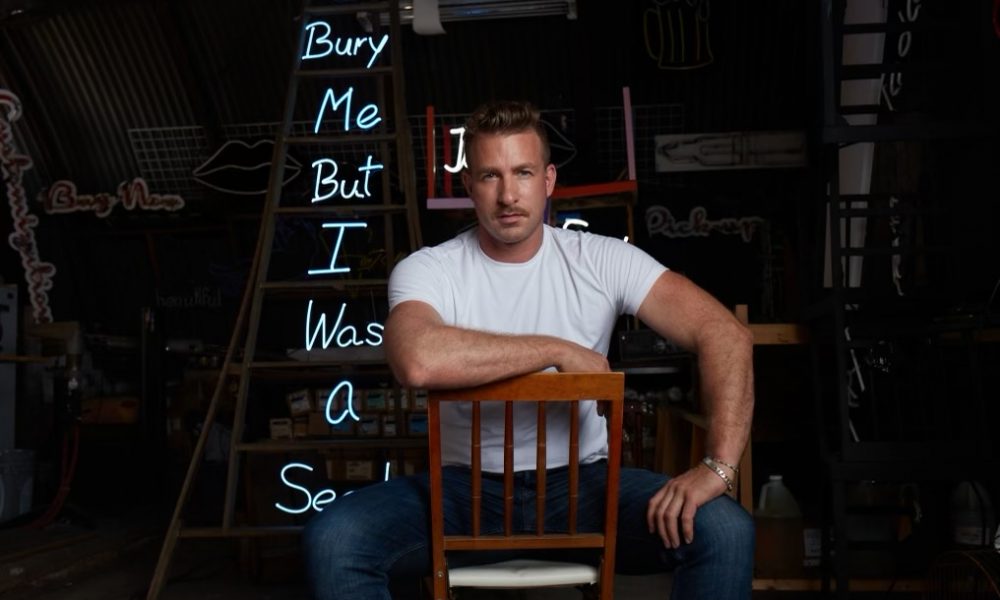
Carl Hopgood: The Voice of Radiant Resistance
Artist Spotlight · The Collection Editorial
Something is shifting in the air around Carl Hopgood. His recent exhibition at UTA Artist Space in Los Angeles, titled Fragile World, arrived at a moment when audiences everywhere seem hungry for art that speaks plainly, warmly, and with genuine conviction about what it means to be human in a complicated century. The show confirmed what those who have followed his career from its Cardiff beginnings have long understood: Hopgood is one of the most emotionally intelligent artists working in Britain today, a maker of objects and images that carry the weight of lived experience without ever surrendering their sense of joy or their faith in people. Hopgood was born in Cardiff in 1974, and Wales shaped him in ways that continue to resonate through everything he makes.
Carl Hopgood
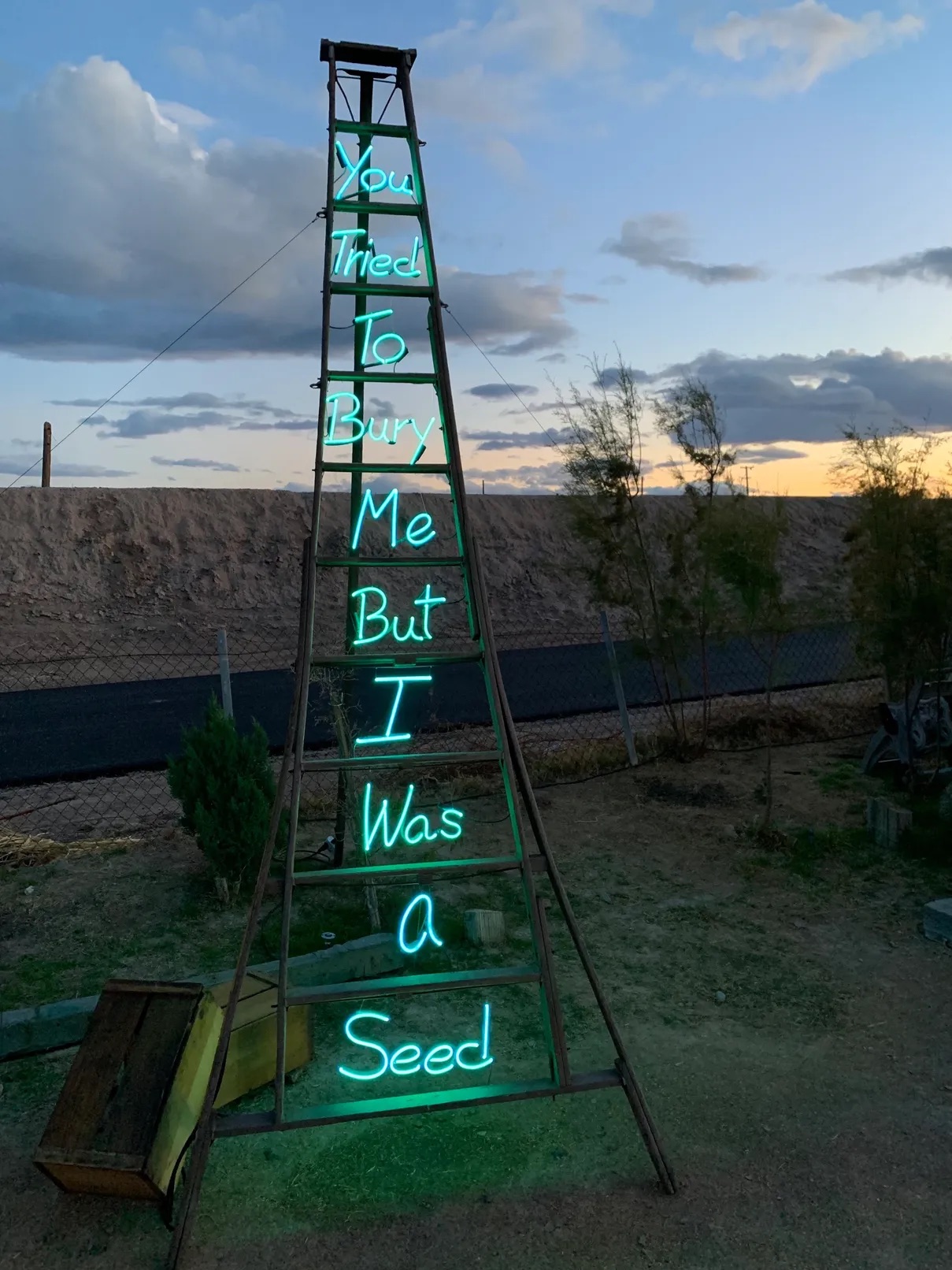
You Tried To Bury Me But I Was A Seed, 2022
There is a particular quality to the Welsh sensibility, a tendency toward communal warmth, toward song and solidarity and a distrust of empty grandeur, that runs like a thread through his entire practice. He came of age in a city rebuilding its identity after decades of industrial decline, and that context gave him an instinct for the overlooked, the ordinary, and the quietly heroic. The streets of Cardiff taught him to look at people, really look at them, and that habit of attention has never left. His formation as an artist took place at Goldsmiths College in London, where he earned his BFA in 1994.
The timing was significant. The Young British Artists had already detonated their cultural grenade. Damien Hirst, Sarah Lucas, and the broader cohort that had gathered around the legendary Freeze exhibition in a Docklands warehouse in 1988 had redrawn the boundaries of what British art could be and who it could reach. Hopgood arrived in the aftermath of that explosion, absorbing its lessons about ambition, visibility, and the power of a strong conceptual gesture, while charting a course that was distinctly his own.
Carl Hopgood
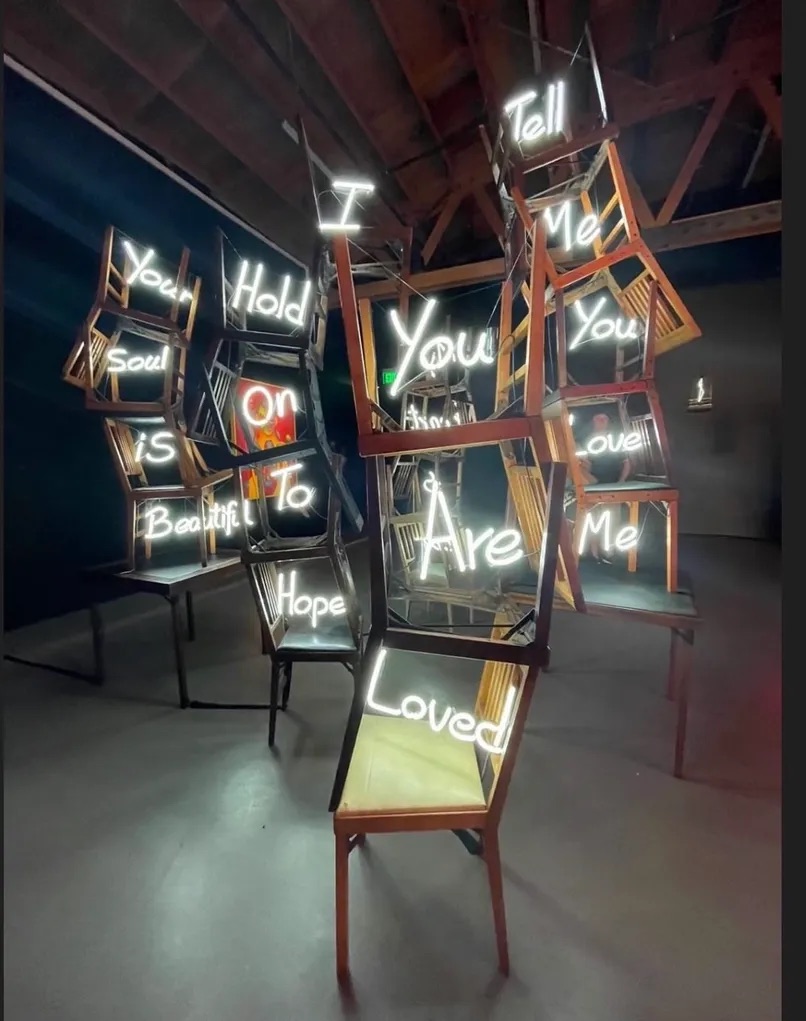
Chair Therapy Group, 2022
Where the YBAs often courted provocation and spectacle, Hopgood moved toward something more tender, more rooted in genuine human connection. The speed with which he found his footing was remarkable. Shortly after graduating in 1994, he was already showing solo work at two Mayfair galleries, the kind of early recognition that speaks to both the quality of his output and the clarity of his artistic vision from the outset. Those early exhibitions established him as an artist comfortable with the full range of his influences, from the graphic directness of pop art to the expressive sincerity of naive painting, from the democratic reach of street art to the emotional precision of illustration.
He was never simply one thing, and that refusal to be categorised has served him well across a career of sustained creative development. Hopgood works across painting, printmaking, installation, and sculpture, and his practice has a coherence that comes not from medium but from voice. That voice is unmistakable: direct without being blunt, optimistic without being naive, politically aware without being didactic. His neon text works are among the most affecting things he has made.
Carl Hopgood
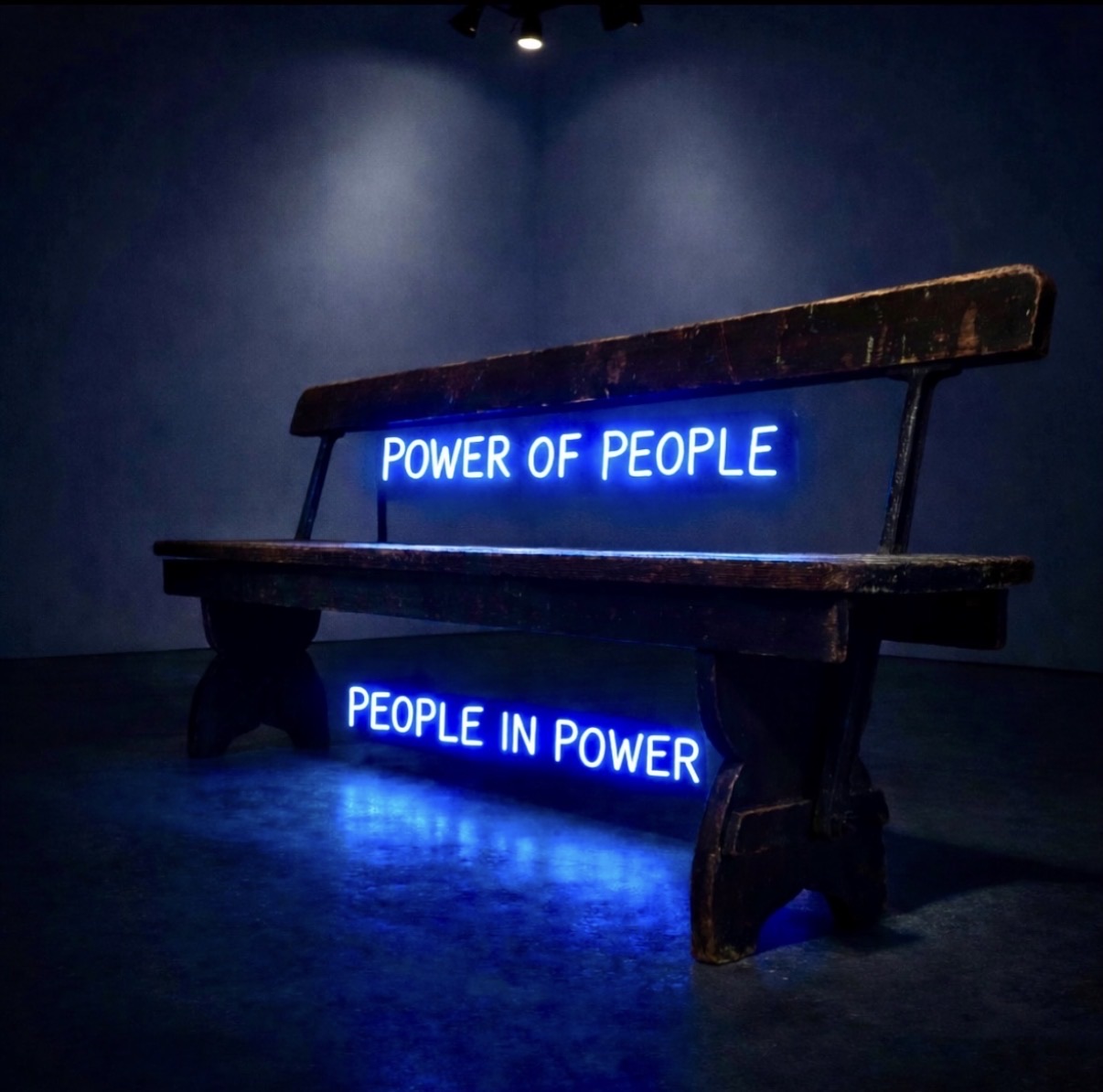
Get Up Stand Up (Power Of People / People In Power), 2026
Pieces like You Tried To Bury Me But I Was A Seed, created in 2022, demonstrate his gift for finding phrases that operate simultaneously as personal affirmation, political statement, and universal poetry. The neon light mounted on a metal structure transforms a sentence into an object of almost sacred weight, glowing with the kind of stubborn hope that feels genuinely earned rather than manufactured. It is the work of someone who understands that the right words, in the right light, can change a room and change a person. Chair Therapy Group, also from 2022, shows another dimension of his practice, his ability to build installations that create genuine social and psychological space.
The combination of chairs and neon lights constructs a scene that is at once familiar and uncanny, evoking community, conversation, support, and the particular vulnerability of people gathered together to be honest with one another. There is humour in it, but the humour serves the tenderness rather than undercutting it. And Get Up Stand Up, a major work incorporating neon text, pine wood, and a cast metal railway bench, extends this commitment to public furniture as a site of meaning. The railway bench carries enormous symbolic freight: it is where people wait, where strangers sit beside strangers, where lives briefly intersect.
Hopgood makes it monumental. For collectors, Hopgood represents an opportunity that is both emotionally and strategically compelling. He occupies a fascinating position in the contemporary art landscape, recognised and celebrated, with a career spanning serious institutional and commercial exhibition history, yet still at a stage where acquisition is accessible and the trajectory points clearly upward. His work sits comfortably alongside artists working in the territory where pop sensibility meets conceptual rigour and social conscience, a tradition that includes figures such as Barbara Kruger in her use of text as image, or the graphic warmth of artists like Bob and Roberta Smith, while remaining entirely his own invention.
Collectors who are drawn to work that has something to say, that earns its place on a wall by giving something back every time you look at it, will find Hopgood deeply rewarding. The materials he chooses, neon, found furniture, wood, mixed media assemblage, have a physicality that photographs beautifully but rewards presence even more. These are works made to be lived with, to be discovered across time, to catch the light differently in the morning than they do in the evening. That quality of durability, not just physical but emotional, is the hallmark of work that retains its power across years and decades.
What Carl Hopgood ultimately offers is something that feels rare and necessary in equal measure: an art practice built on the conviction that people matter, that their struggles and their resilience and their capacity for connection are worthy of the most serious artistic attention. From Cardiff to Goldsmiths to Mayfair to Los Angeles, he has followed that conviction without deviation, and the work is stronger for it. Fragile World is not just a title for one exhibition. It is a description of the territory Hopgood has always inhabited and chosen to illuminate, with warmth, with wit, and with the particular courage of an artist who genuinely believes that beauty and meaning can coexist.