Carl Andre
Carl Andre: The Floor Is Sacred Ground
Artist Spotlight · The Collection Editorial
“I am not a creator. I am a receiver of matter from the world.”
Carl Andre, interview
When the Dia Art Foundation in Beacon, New York, reinstalled its celebrated holdings of Carl Andre's work, something remarkable happened to the visitors who moved through those rooms. People slowed down. They looked at their feet. They became, almost involuntarily, aware of the ground beneath them, of the weight of metal plates and the cool geometry of industrial material arranged with absolute conviction.
Carl Andre
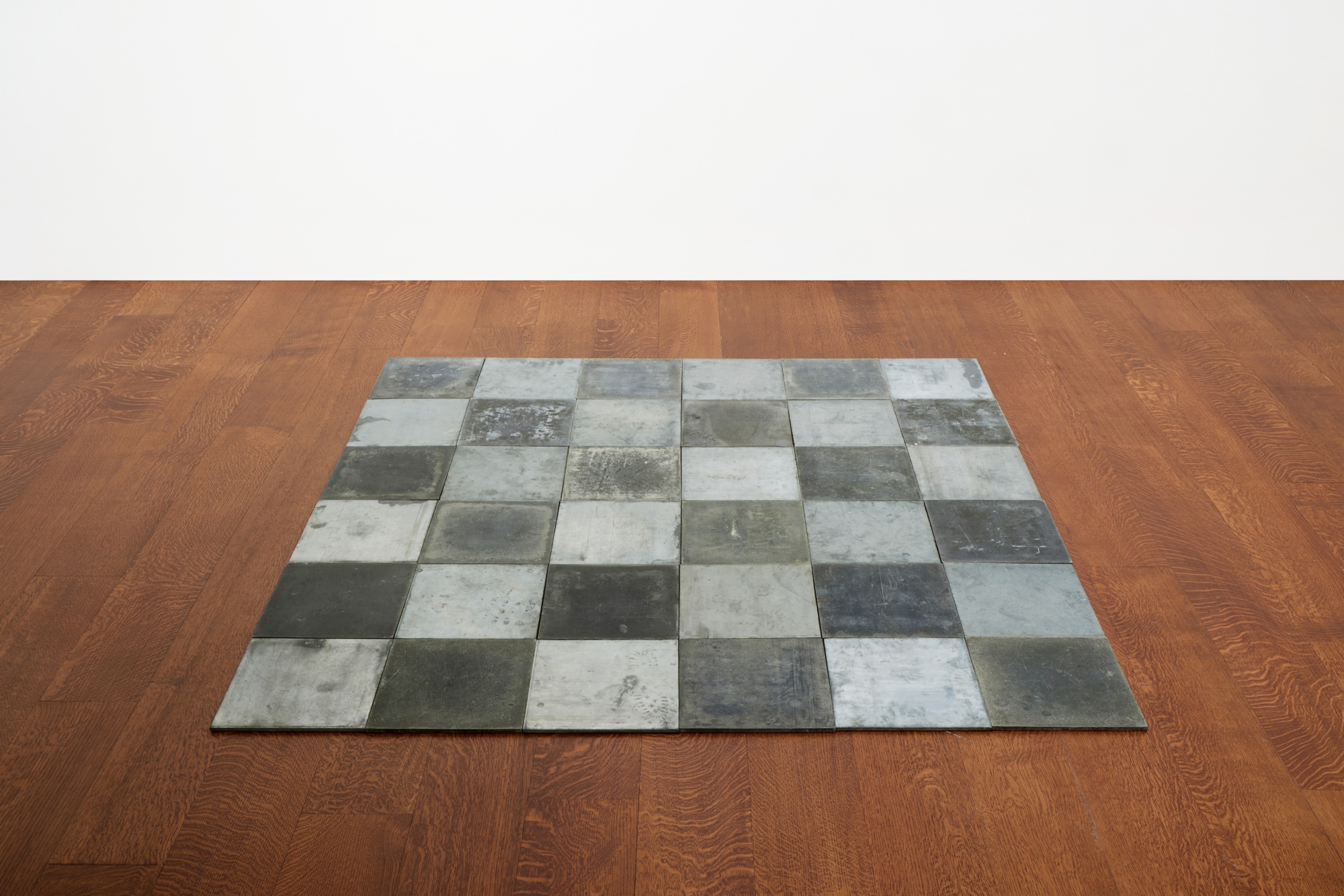
Lead-Zinc Plain, 1969
Andre, who passed away in January 2024 at the age of eighty eight, left behind a body of work that continues to reshape how we understand sculpture, space, and the act of looking. His legacy is not receding. If anything, it is growing clearer. Carl Andre was born on September 16, 1935, in Quincy, Massachusetts, a working port city whose shipyards and granite quarries left a deep impression on his sensibility.
The material culture of labor, the dignity of raw substance, the logic of things stacked and arranged by hand, these were not abstract ideas to Andre but lived realities from childhood. The decisive turn came at Phillips Academy in Andover, where he encountered Frank Stella, a friendship that would prove transformative for both artists. Stella's rigorous thinking about structure and surface gave Andre an intellectual framework, while Andre's own instincts pushed him toward something more physical, more rooted in the horizontal plane of the earth itself. After his time at Phillips Academy, Andre spent a formative period in Europe in the late 1950s, where he encountered the work of Constantin Brancusi firsthand.
Carl Andre
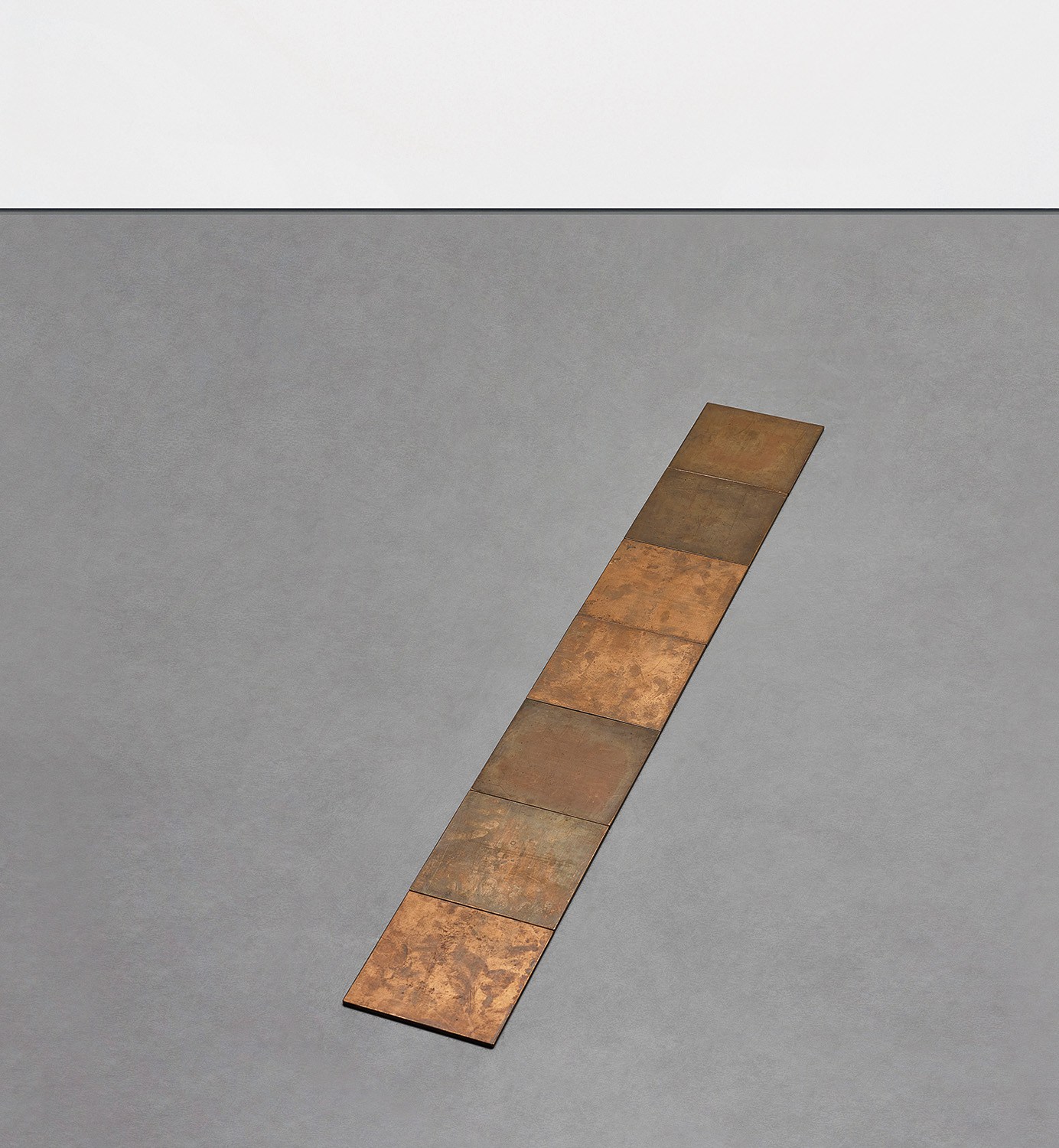
7 Copper Weather Row
The Romanian sculptor's stacked forms, his belief that the base of a sculpture was as important as the object it supported, electrified Andre's thinking. In the early 1960s, back in the United States and working as a freight brakeman for the Pennsylvania Railroad, Andre began to see the logic of his art in the materials that surrounded him. Timber, steel, concrete, the elemental vocabulary of American industry became his medium. He later remarked that the railroad taught him to think about form in relation to landscape and movement, a lesson that never left his work.
“A place is an area within an environment which has been altered in such a way as to make the general environment more conspicuous.”
Carl Andre, artist statement
The breakthrough came with his decision to abandon vertical accumulation in favor of horizontal dispersal. Around 1965 and 1966, Andre began creating the floor pieces that would define his practice and alter the course of sculpture. Works like his metal plate series, in which identical units of steel, copper, zinc, lead, or aluminum were laid directly onto the gallery floor in precise rectangular configurations, proposed something entirely new. Sculpture was no longer an object to be looked at from a respectful distance.
Carl Andre
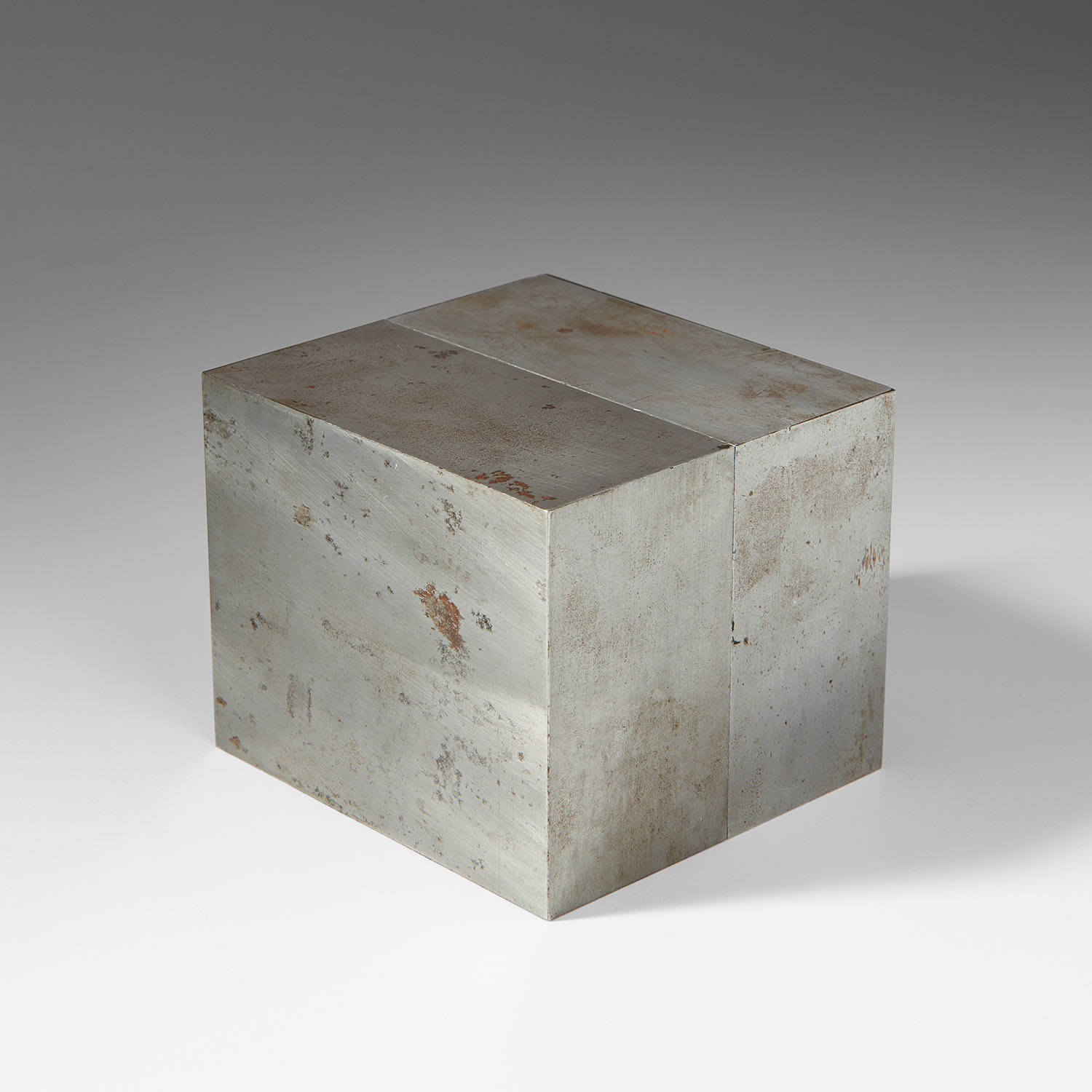
Fault
It was something you walked across, walked around, something that activated the entire room and placed the viewer's body at the center of the experience. This was a radical democratization of the sculptural encounter. Among the works that illuminate the full range of his thinking, several stand out as essential touchstones. "Lead Zinc Plain" from 1969 exemplifies his rigorous approach to material equivalence, placing two different metals in dialogue through simple adjacency.
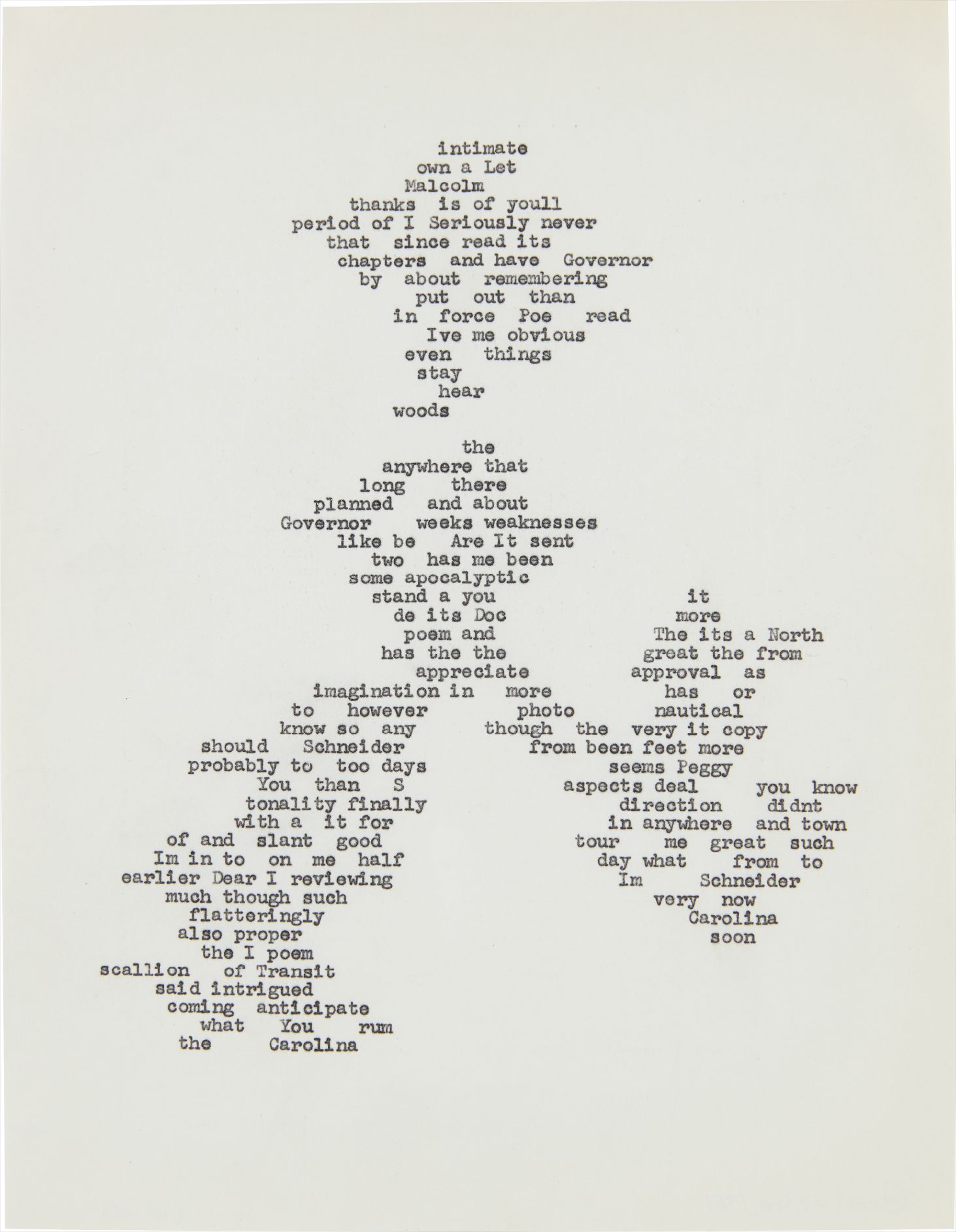
"Two Blocks and Stones," created in 1973 as part of the ambitious "144 Blocks and Stones for Robert Smithson," speaks to Andre's deep friendship with the land artist and his interest in the relationship between the fabricated and the found. "The Way North, South and West (Uncarved Blocks)" from 1975 reaches back toward Brancusi while insisting on an entirely Andre sensibility, unworked timber as both idea and physical fact. Even smaller works from the early 1960s, such as "Intimate" from 1961, reveal a sculptor already thinking with extraordinary precision about mass, interval, and the poem of repetition. For collectors, Andre's work occupies a singular position in the market for postwar and contemporary sculpture.
Carl Andre
Intimate, 1961
His pieces have long been held by major institutional collections including the Museum of Modern Art in New York, the Tate in London, and the Stedelijk Museum in Amsterdam, which lends his market a stability and seriousness that serious collectors find deeply reassuring. Works on paper and smaller sculptural configurations occasionally come to auction and to the secondary market, offering entry points across a range of ambition and budget. The material integrity of each piece, its direct relationship to industrial production and its resistance to decoration or sentiment, means that condition considerations are straightforward and the work tends to age with immense dignity. What collectors respond to, again and again, is the quality of attention that Andre demands.
His work does not perform. It simply is. Within art history, Andre belongs to a constellation of artists who redefined what sculpture could be in the 1960s and 1970s. The connection to Donald Judd is obvious and acknowledged: both artists were committed to industrial fabrication, serial logic, and the elimination of illusion.
Robert Morris was another close peer, equally invested in the body's relationship to space. Dan Flavin, working with fluorescent light, shared Andre's interest in the transformation of architectural environments through simple, repeated units. The sculptor Richard Serra, whose massive steel works carry the logic of Andre's floor pieces into monumental scale, is perhaps his most visible artistic heir. Andre also maintained important intellectual friendships with writers and poets, and language was never far from his practice.
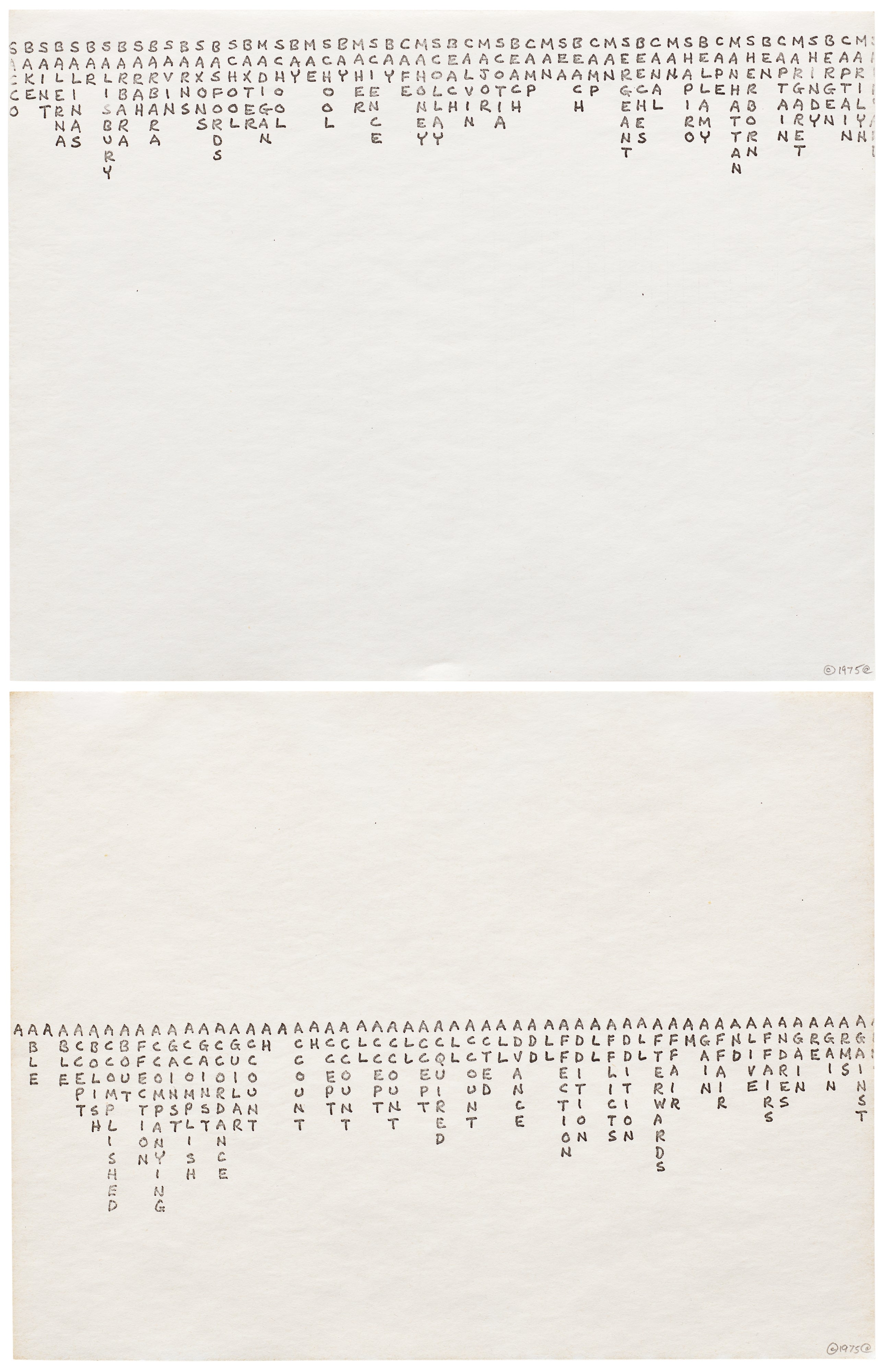
He made concrete poetry throughout his life, small typographic works that applied the same serial logic to words that his sculptures applied to metal. Carl Andre's importance today rests on something deeper than art historical positioning. He gave us a new way to inhabit space. In a culture saturated with images competing for vertical attention, a culture of screens and spectacle, his horizontal works insist on the ground, on presence, on the irreducible fact of material in a room.
Institutions are reassessing his contributions with renewed seriousness, and the market for his work reflects a growing collector consensus that his vision was not simply influential but essential. To stand on one of his metal plains, feeling the slight give of lead or the cool firmness of steel through the soles of your shoes, is to understand in your body something that no amount of reading can fully convey. That is the gift Andre left us, and it is inexhaustible.
Explore books about Carl Andre

Carl Andre: Sculpture 1958-2010
James Rondeau
Carl Andre: The Materials of Experience
Phyllis Tuchman
Carl Andre: Space and Belief
Nicholas Serota
Carl Andre: Sculpture 1959-1977
Liza Bear
Carl Andre
Richard Shiff

Carl Andre: Sculpture and Poems
Carl Andre