Candida Höfer

Candida Höfer: Keeper of Magnificent Empty Rooms
Artist Spotlight · The Collection Editorial
“I try to show the spaces as they are, without any staging. The light is always the existing light.”
Candida Höfer, interview with Tate
When the Kunsthalle Düsseldorf mounted a comprehensive survey of Candida Höfer's work in recent years, visitors found themselves moving through the galleries in a kind of reverent silence, which felt entirely appropriate. The photographs on the walls depicted libraries, opera houses, and grand institutional interiors from across Europe and the Americas, all utterly devoid of human presence, yet somehow radiating a profound sense of human ambition, memory, and longing. That paradox is at the heart of everything Höfer does, and it has made her one of the most quietly powerful voices in contemporary photography. Her images do not shout.
Candida Höfer
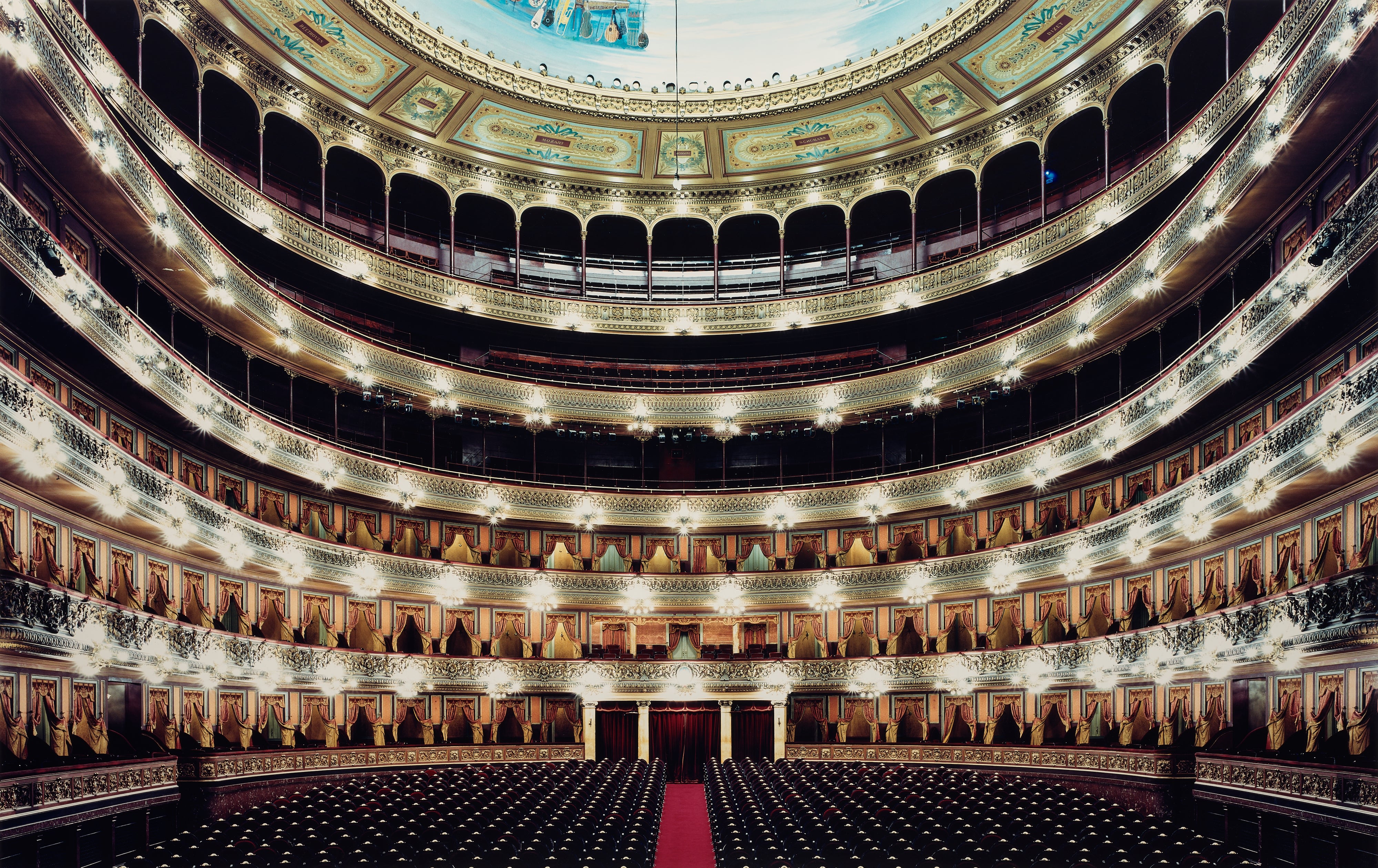
Teatro Colòn Buenos Aires I
They wait, and in waiting, they draw you in completely. Candida Höfer was born in Eberswalde, Germany in 1944, and came of age in a postwar Cologne that was both rebuilding its physical fabric and grappling with questions of culture, memory, and civic identity. She studied at the Kunstakademie Düsseldorf, first under Ole John and later, crucially, under Bernd Becher alongside a generation of photographers who would collectively reshape the medium. The Becher circle, which also produced Andreas Gursky, Thomas Struth, and Thomas Ruff, was shaped by a rigorous conceptual framework: the idea that systematic, frontal, large format documentary photography could function as serious art.
For Höfer, this training was foundational, instilling a discipline of observation and a belief in the intelligence of the photograph itself as a carrier of meaning. Her early work in the 1970s took a different path from her Becher contemporaries. Höfer spent several years photographing Turkish immigrant communities living in Germany, producing an intimate and socially engaged body of work that explored questions of belonging, displacement, and cultural identity within domestic and public spaces. These photographs, often overlooked in favor of her later monumental interiors, reveal the depth of her humanist curiosity.
Candida Höfer
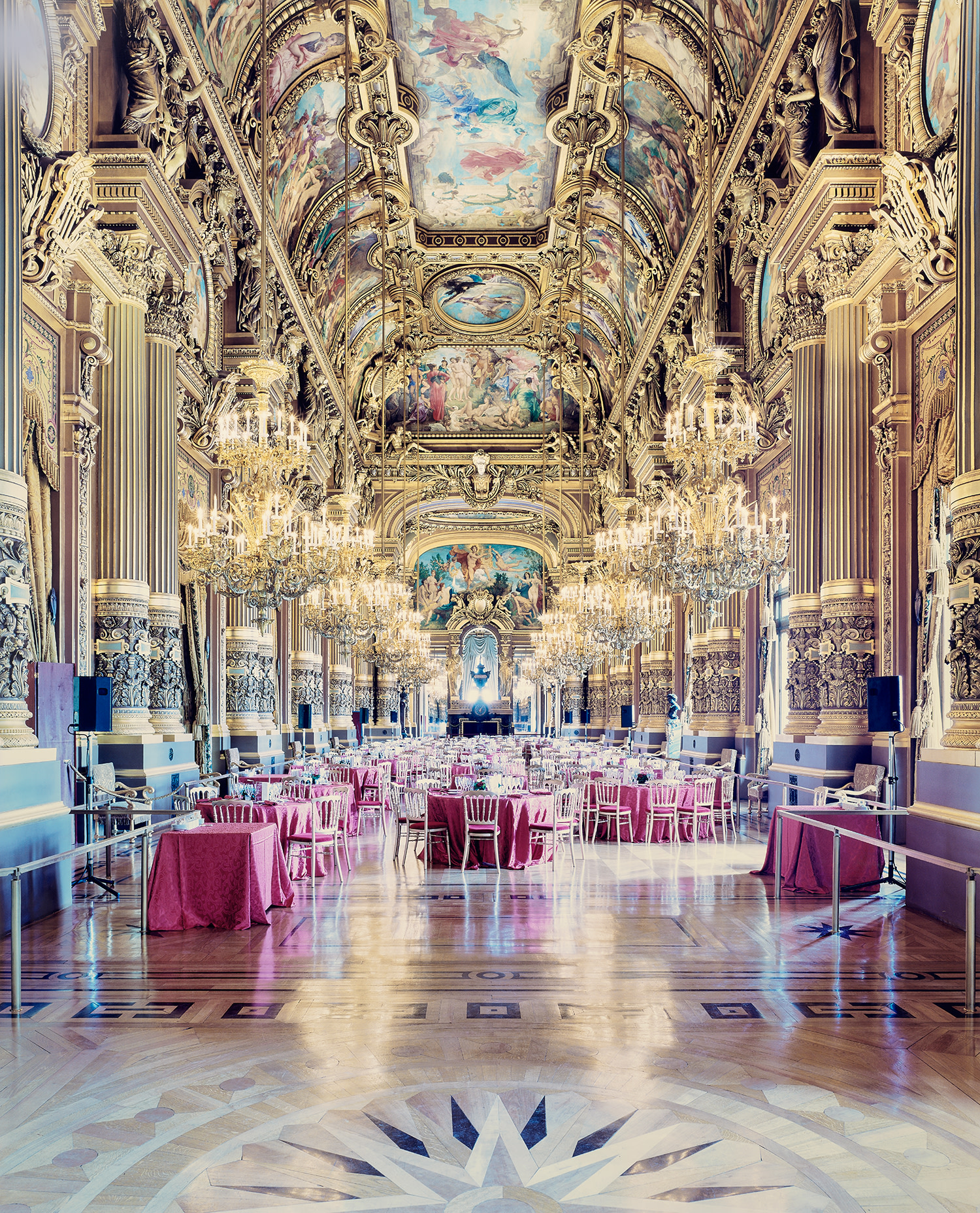
Palais Garnier Paris XXXIII
People populate those early images, and their gradual disappearance from her frame over the following decade was not an act of coldness but rather a shift in focus toward the architectural and institutional as a kind of social portrait in itself. The transition into the grand interior photographs that define her mature practice emerged through the 1980s and deepened dramatically through the 1990s. Höfer began training her large format camera on the interiors of libraries, museums, palaces, theaters, and halls of state across Europe, producing chromogenic prints of extraordinary color saturation and compositional precision. The images are typically centered, symmetrical, and lit by the existing light of the spaces themselves, whether the warm amber of chandeliers in an opera house or the cool northern light falling through a reading room's high windows.
There is no theatrical intervention, no additional lighting, no manipulation of the scene. The rooms are found as they are, and Höfer's great skill lies in selecting the precise position and moment that reveals each space's character with maximum clarity. Among her most celebrated works are the extended series devoted to the Palais Garnier in Paris, the Teatro alla Scala in Milan, and the Teatro Colón in Buenos Aires. These images of operatic and theatrical interiors are among the most reproduced photographs of their era, and for good reason.
Candida Höfer
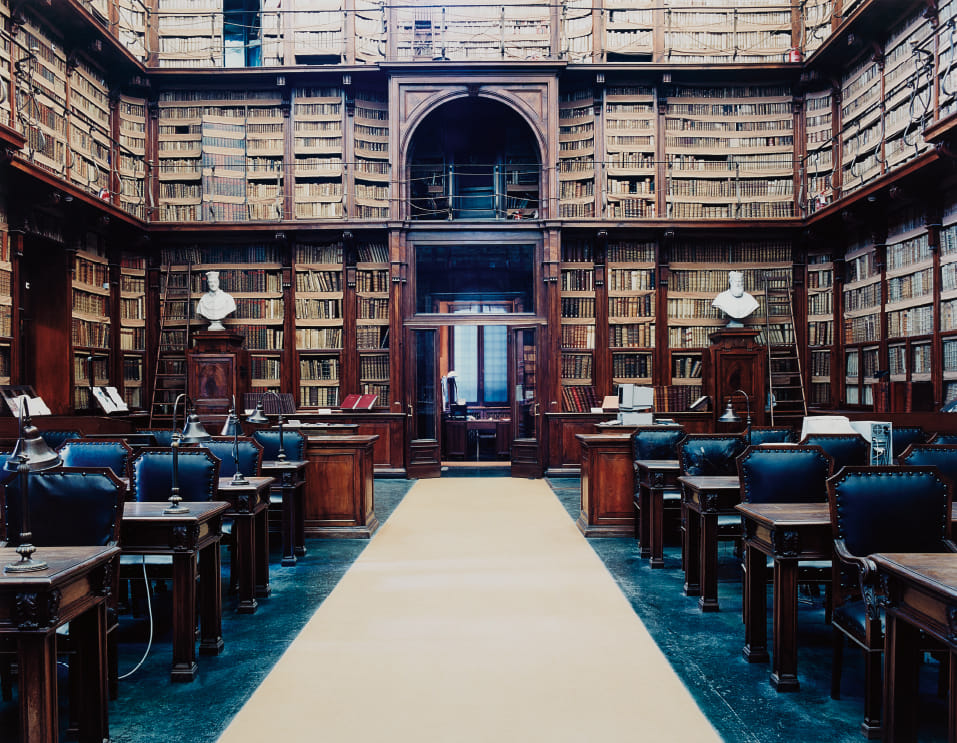
Biblioteca Angelica Roma 1, 2003
A work like Teatro alla Scala Milano V presents the famous horseshoe auditorium in breathtaking fullness, the gilded tiers curving away into the darkness of the upper reaches, every velvet seat in readiness for an audience that never arrives. The Biblioteca Angelica Roma from 2003 is another touchstone, capturing the oldest public library in Europe in a light that feels almost sacred, the wooden shelves rising toward a painted ceiling as though the books themselves were engaged in an act of perpetual prayer. These are not cold documents. They are deeply felt encounters with civilization's grandest aspirations for knowledge and culture.
The market for Höfer's work has grown steadily and significantly since her inclusion in the German pavilion at the Venice Biennale in 2003, which she shared with Martin Kippenberger in a pairing that underscored her standing at the very top of her generation. Her prints are held in the permanent collections of the Getty Museum in Los Angeles, Tate in London, and the Guggenheim, among many other major institutions worldwide. At auction, her large format chromogenic prints, particularly those from the opera house and library series, command strong prices reflective of both their physical beauty and their art historical importance. Collectors are drawn to several qualities simultaneously: the sheer magnificence of the images as objects in a room, the intellectual seriousness of the project, and the fact that each edition is produced with exceptional care and archival precision.
Candida Höfer
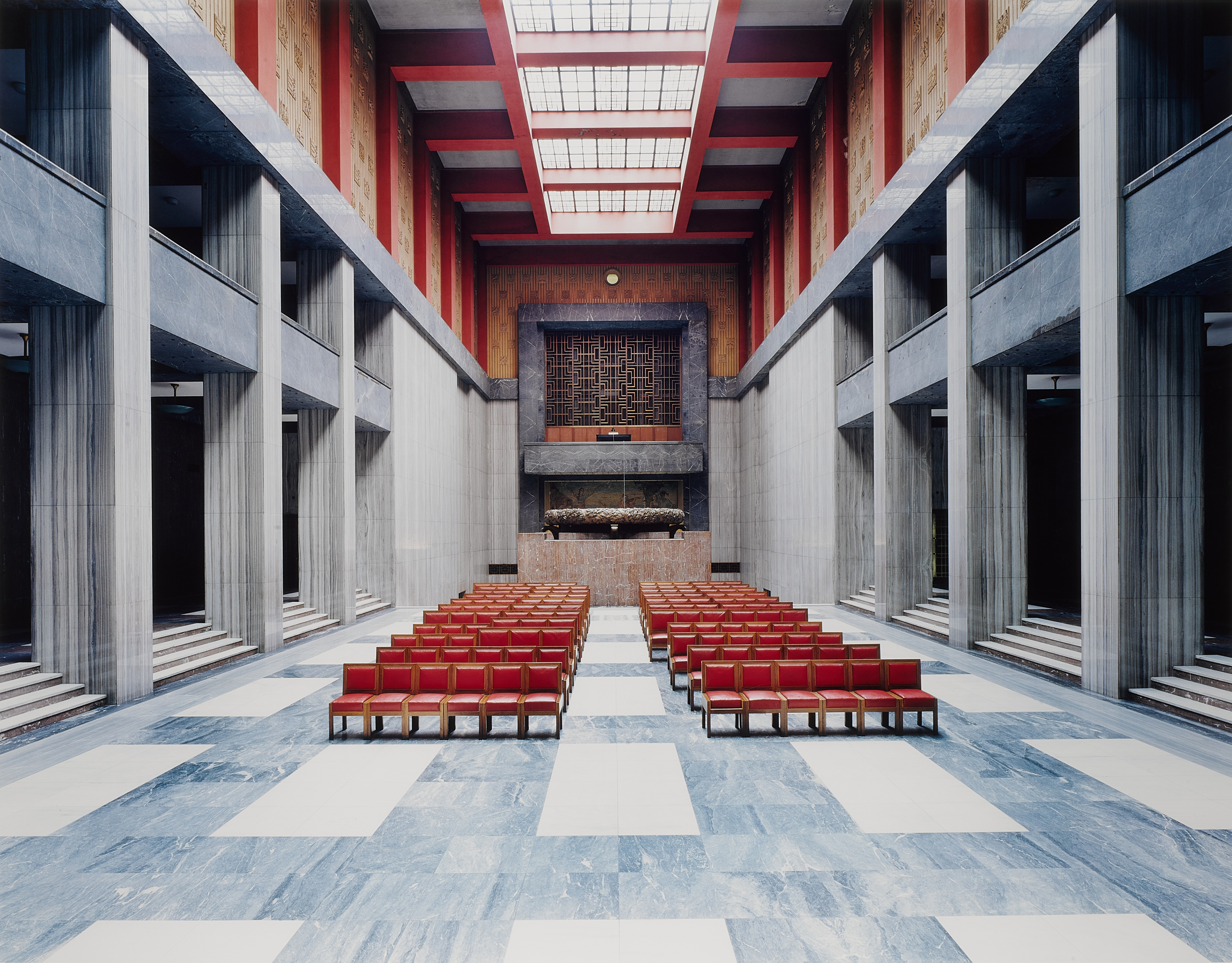
Památník Vítkov Praha I
Works mounted to aluminum or face mounted to Plexiglas carry a particular visual presence, the colors luminous and deep, that makes them transformative additions to any collection. Within the broader landscape of contemporary photography, Höfer occupies a singular position. Her work is in constant dialogue with her Düsseldorf School contemporaries, but where Gursky often works with digital manipulation to construct images of vertiginous scale and hyperreality, Höfer maintains a fidelity to the found world that gives her photographs their particular authority. She is perhaps more naturally compared to the architectural photography tradition that includes figures like Walker Evans, whose reverence for the civic and institutional resonates across decades, or to the cool precision of Luigi Ghirri, whose Italian interiors share something of Höfer's atmospheric tenderness.
Her work also speaks to a broader tradition in German art of engaging with spaces of culture and memory, from the Bechers' industrial typologies to the archival impulses of conceptual art more broadly. What makes Candida Höfer matter so deeply today is precisely the quality of attention her work demands and rewards. In an era of image saturation, her photographs insist on slowness, on looking, on the recognition that spaces built for the gathering of human beings carry within their walls an almost unbearable weight of accumulated presence. The empty library is not lonely.
It is expectant. The silent opera house is not forgotten. It is between performances, holding its breath. Höfer gives us permission to see these places as the monuments to human aspiration that they truly are, and to understand that beauty, patience, and rigorous craft remain among the most powerful tools available to any artist.
Her work is a gift to anyone who has ever stood in a great room and felt the pull of history whispering through its proportions.
Explore books about Candida Höfer
Candida Höfer: Photographs
Candida Höfer
Candida Höfer: Ausgewählte Werke
Candida Höfer
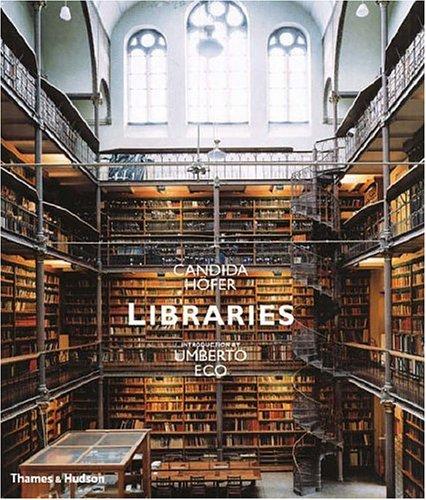
Candida Höfer: Libraries
Candida Höfer
Candida Höfer: Intérieurs
Candida Höfer
Candida Höfer: Works 1976-2010
Candida Höfer

Candida Höfer: Fotografien
Candida Höfer