Caitlin Keogh
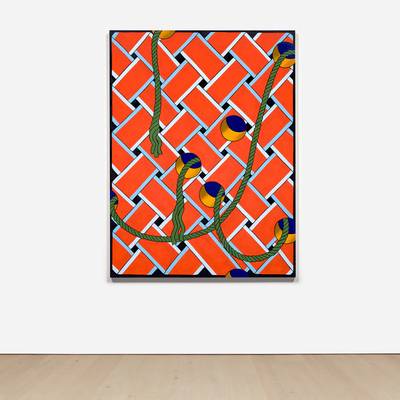
Caitlin Keogh Adorns the World Anew
Artist Spotlight · The Collection Editorial
In recent seasons, Caitlin Keogh has emerged as one of the most consistently compelling voices in contemporary American painting, her work appearing with increasing frequency in museum collections and blue chip gallery contexts that recognize the depth and rigor beneath her seductive surfaces. Her paintings have been shown at Bortolami Gallery in New York, the venue that has been central to bringing her work to serious collector attention, and her presence in group exhibitions across the United States and Europe has steadily elevated her profile among curators who value painting that thinks as hard as it dazzles. There is a sense, among those who follow contemporary figurative work closely, that Keogh is an artist whose moment has fully arrived, that the conversation around her paintings has matured from admiration into something closer to necessity. Keogh was born in 1981 and came of age in an American cultural moment when the boundaries between fine art, graphic design, fashion, and craft were being productively interrogated by a generation of makers who refused the old hierarchies.
Caitlin Keogh
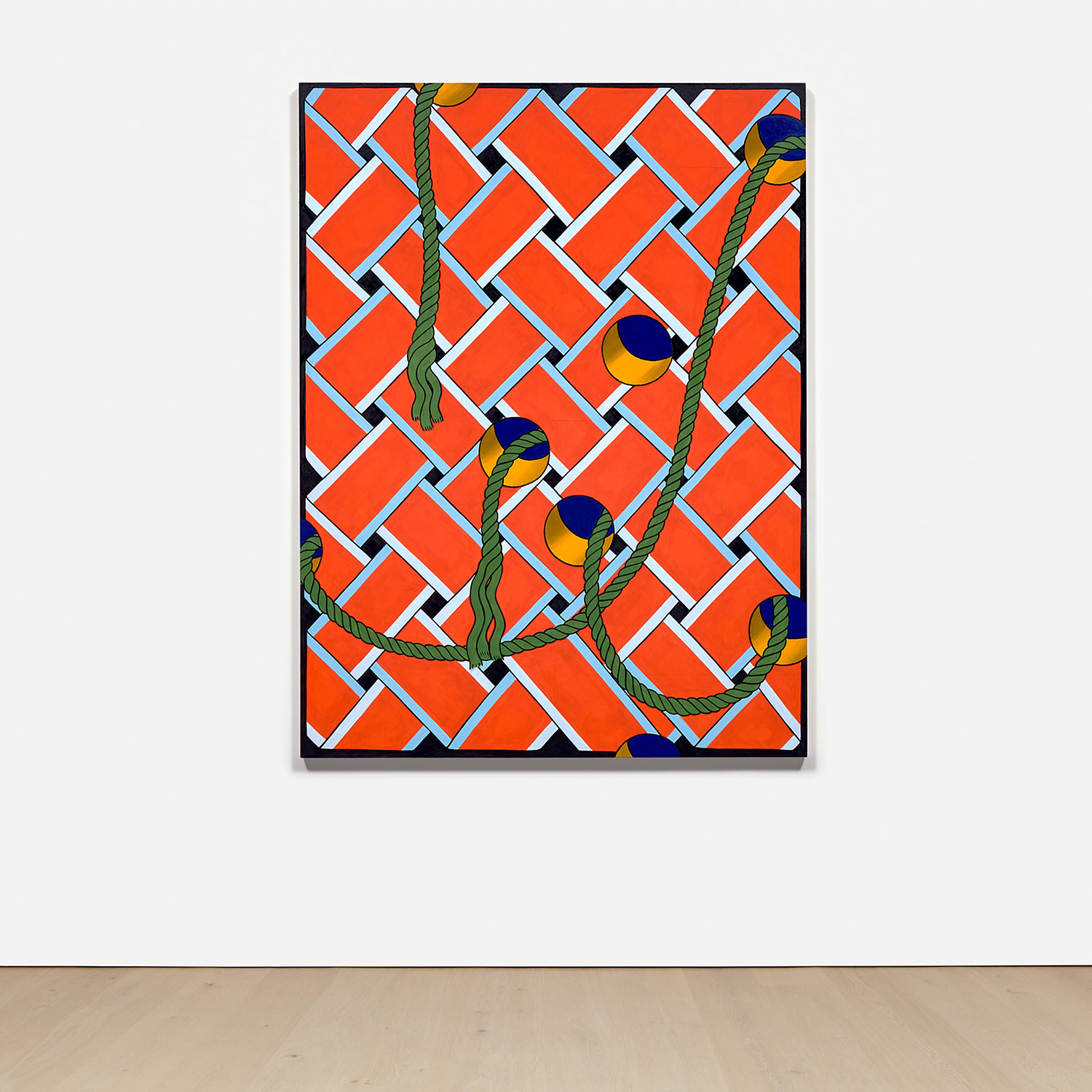
The Extremes of Contrary Passions Are with Little Variation Expressed by the Same Action, 2017
Her formation as a painter was shaped by an acute sensitivity to the history of decorative arts and illustration, traditions that mainstream art criticism had long treated as secondary to the canonical story of painting. That she would go on to make those traditions not merely the subject but the very architecture of her work feels, in retrospect, inevitable. She studied and developed her practice in New York, a city whose density of visual culture and design history provided constant material for her evolving sensibility. The development of Keogh's artistic practice has been defined by an unusually coherent vision pursued with increasing technical ambition.
Her early works on panel, including pieces like Big Names from 2013, show her already in command of a visual language that borrows from fashion illustration and mid century graphic design while remaining unmistakably her own. The flattened picture plane, the confident line, the interplay of figure and ornament: these elements were present from the beginning, but over the course of the following decade they grew richer and more layered. By the time she was producing the large acrylic canvases that would define her mature period, Keogh had developed a method of weaving symbolic objects and textile patterns through her figurative compositions that feels both historically learned and urgently contemporary. Among her most significant works are the large scale paintings she produced in the years surrounding 2017 and 2018, a period of remarkable creative output.
Caitlin Keogh
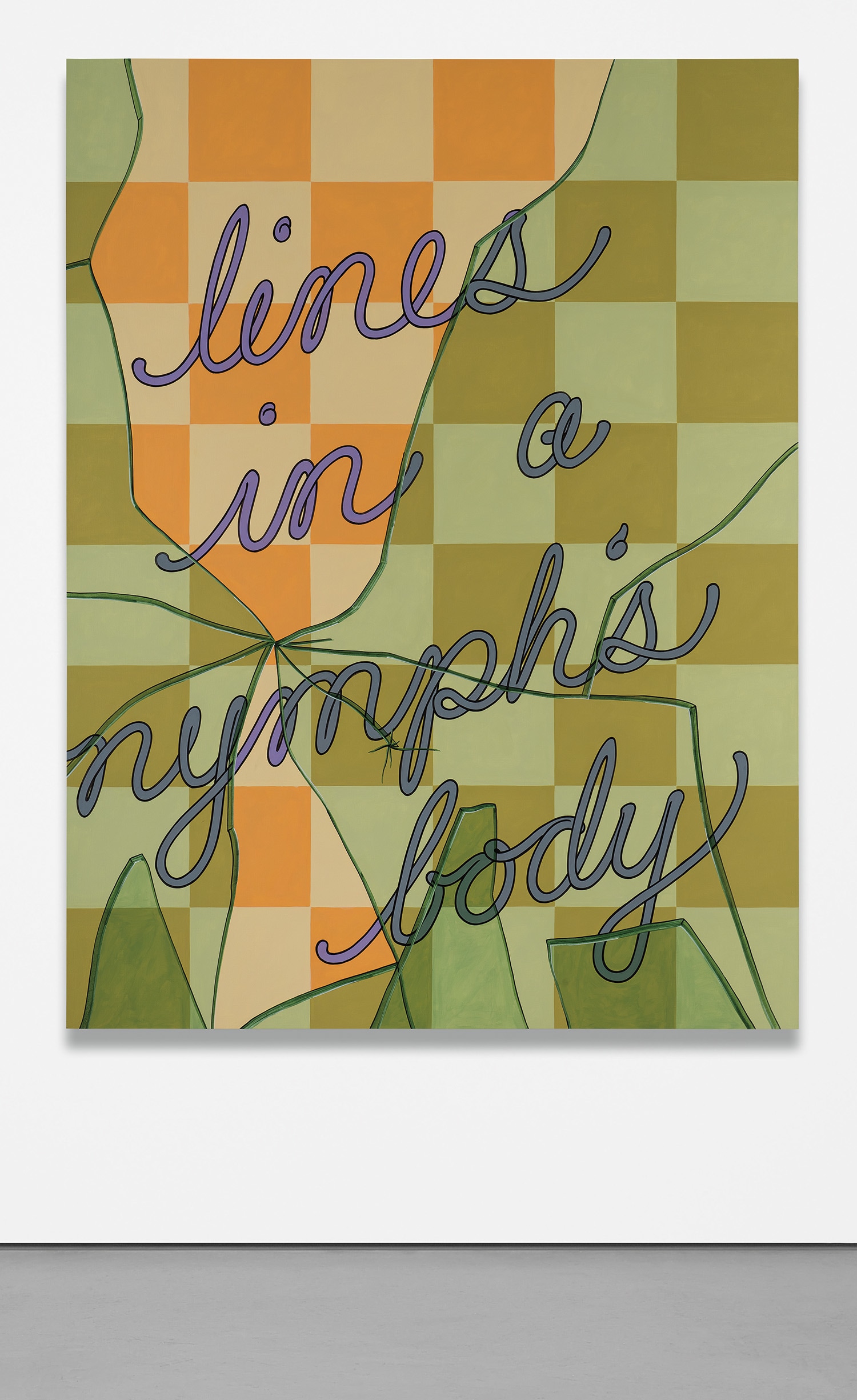
Caitlin Keogh, 2019
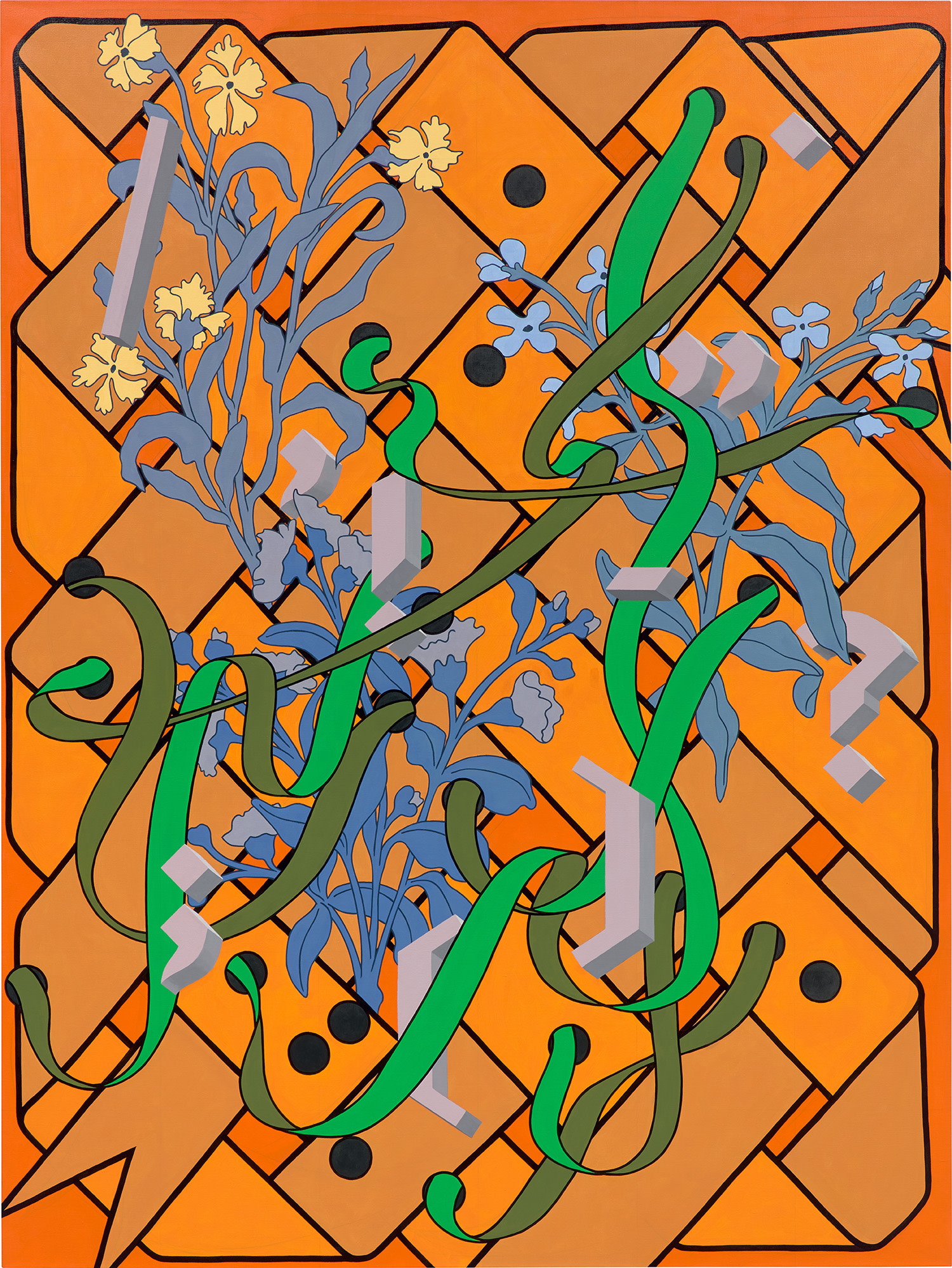
The Extremes of Contrary Passions Are with Little Variation Expressed by the Same Action, completed in 2017, is a painting whose title alone announces Keogh's intellectual ambitions: drawn from the history of physiognomy and emotional representation, it frames the female figure as a site where cultural scripts are inscribed, performed, and quietly subverted. Punctuation from 2018 continues this inquiry with characteristic elegance, using the visual logic of typographical marks as a way to think about how meaning is broken, paused, and resumed in the representation of women. Her 2019 works, including the canvases grouped under her own name and the deceptively spare Bb, show an artist willing to strip her compositions toward a kind of distilled intensity, trusting the viewer to meet her on complex ground. What draws collectors to Keogh's work is a combination of visual pleasure and conceptual seriousness that is genuinely rare.
Her paintings reward extended looking: the more time one spends with them, the more one notices the historical references threaded through the ornamental patterns, the way a draped fabric recalls a specific tradition of textile design, the way a figure's posture rhymes with an illustration from a century old fashion magazine. Collectors who acquire her work tend to be those with strong backgrounds in design history or feminist theory, or simply those who have learned to trust their eye when it tells them that a painting has genuine intelligence operating beneath its gorgeous surface. The works on panel from her early career, smaller and more intimate in scale, represent an accessible entry point, while her large canvases command the kind of sustained attention and wall space that major collectors find deeply satisfying. In the broader landscape of contemporary figurative painting, Keogh occupies a distinctive position that invites comparison with artists who have similarly drawn on the history of illustration and decorative arts to produce work with genuine critical weight.
Caitlin Keogh
Punctuation, 2018
Her engagement with fashion as both a formal and a feminist subject connects her to a lineage that includes artists attentive to how femininity is constructed and consumed through visual culture. Her interest in pattern and ornament places her in conversation with the Pattern and Decoration movement of the 1970s, which sought to rehabilitate craft adjacent traditions within the art world, though Keogh brings to this inheritance a sharper contemporary awareness of what is at stake in those gestures. She is also part of a broader resurgence of interest in figurative painting that has characterized the international art world over the past decade, a resurgence in which women painters have played a central and long overdue role. The legacy that Keogh is building is one grounded in the conviction that beauty and critique are not opposites, that a painting can be genuinely pleasurable to look at and genuinely demanding in what it asks the viewer to think about.
Her work insists on taking seriously the visual traditions that have been associated with women's labor and women's lives, the traditions of craft, adornment, fashion, and domestic decoration, not to celebrate them uncritically but to examine them with care and to find within them a rich vocabulary for contemporary painting. In a cultural moment that is finally reckoning with which artists and which traditions have been undervalued, Keogh's practice feels not merely timely but necessary. She is an artist whose work will only continue to grow in critical and cultural significance, and to live with one of her paintings is to participate in one of the most rewarding conversations contemporary art has to offer.