Caio Fonseca
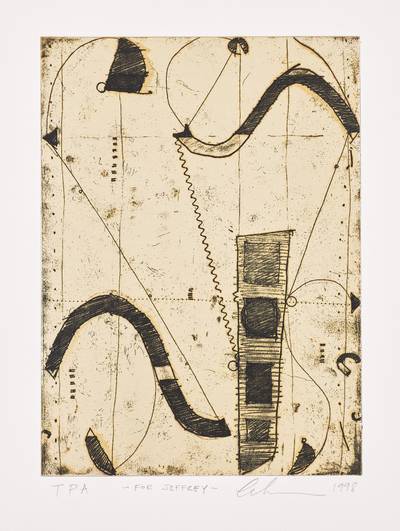
Caio Fonseca: Where Music Becomes Pure Paint
Artist Spotlight · The Collection Editorial
In the great conversation between music and painting, few artists have listened as carefully or responded as beautifully as Caio Fonseca. His canvases, many of them bearing the sun warmed name of Pietrasanta, the Tuscan marble town where he has long maintained a studio, have grown in critical and collector esteem over the past decade with the quiet confidence of an artist who has always known exactly what he is after. Major institutions across the United States and Europe continue to place his work in permanent collection galleries, and the secondary market has rewarded early believers with results that reflect both the rarity and the refinement of his output. To encounter a Fonseca painting in person is to understand immediately why collectors return to his work again and again: there is a stillness in it that feels genuinely hard won.
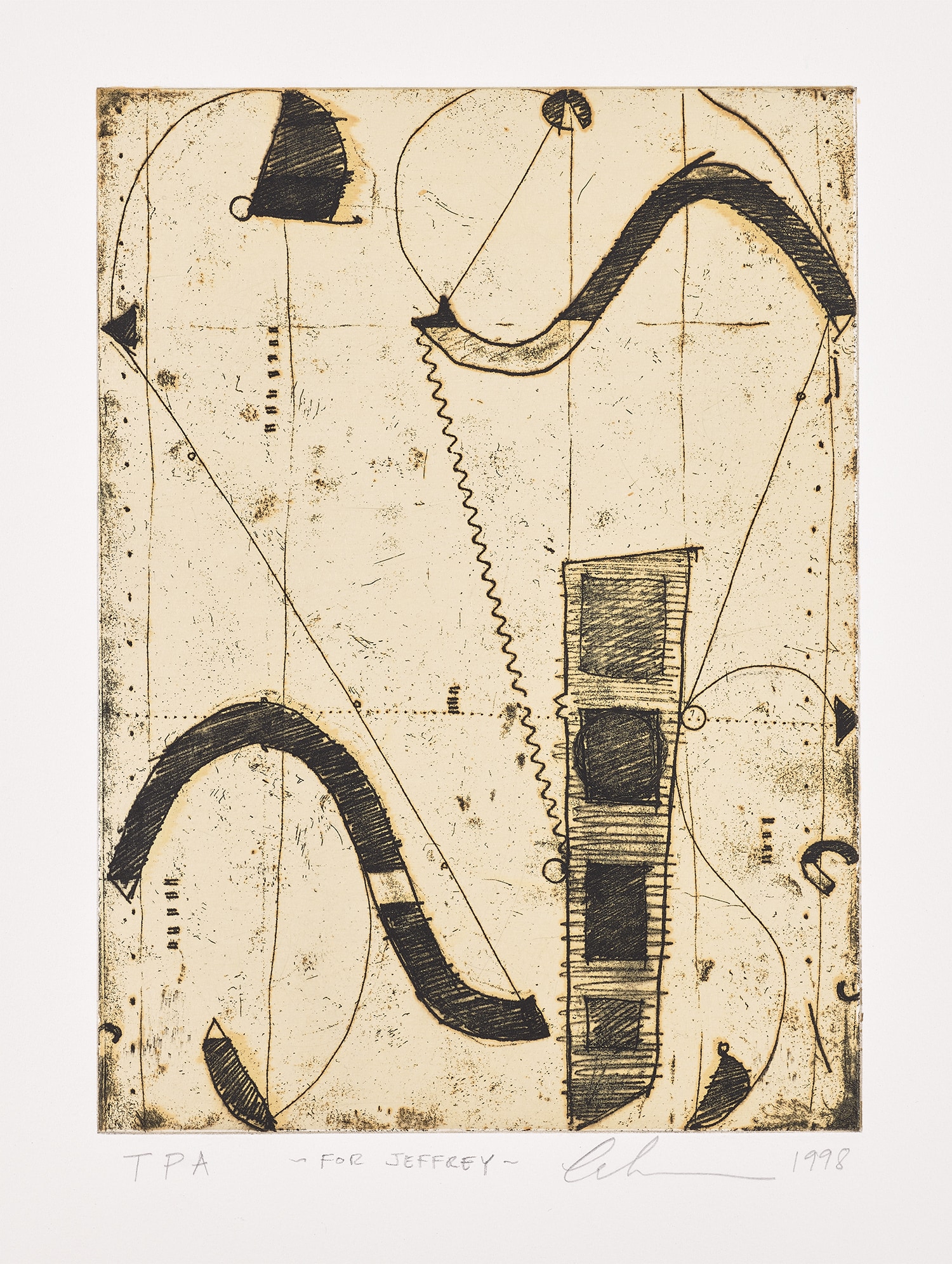
Caio Fonseca
Caio Fonseca
Caio Fonseca was born in New York City in 1959, into a family whose artistic and intellectual life was itself a kind of ongoing seminar. His father, Gonzalo Fonseca, was a sculptor of considerable reputation, a Uruguayan artist whose monumental stone works carried the memory of ancient civilizations and whose studio was a gathering place for some of the most serious artists of his generation. Growing up in that atmosphere, surrounded by objects made with deep intention and longer thought, gave Caio an instinctive understanding that art was not decoration but language. He absorbed this without apparent effort, the way children raised among musicians absorb pitch.
Formal training took him to the Art Students League in New York and eventually to Europe, where he spent formative years in Madrid and later settled into a sustained relationship with Pietrasanta, the small Tuscan city famous for its marble craftsmen and for the community of international artists it has attracted for generations. It was in Pietrasanta that Fonseca found the particular quality of light and the particular quality of silence that his paintings seem to hold inside them. The series of works he titled Pietrasanta Paintings became the backbone of his mature practice and the body of work by which he is most widely known. The naming convention itself, combining city and date and a catalog number, reflects an almost musical approach to titling, treating each canvas as a movement within a larger ongoing score.
Caio Fonseca
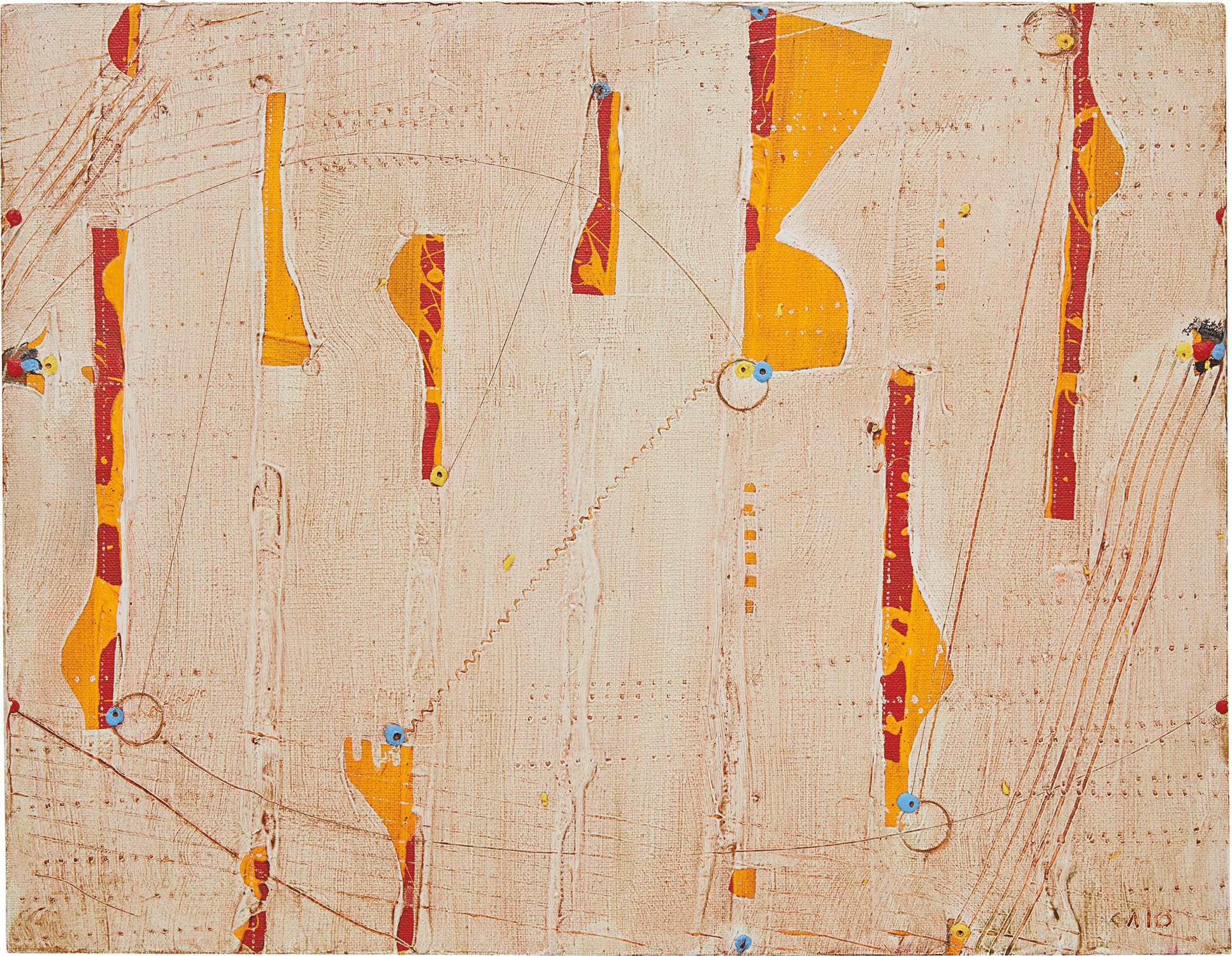
Pietrasanta Painting C98.20, 1998
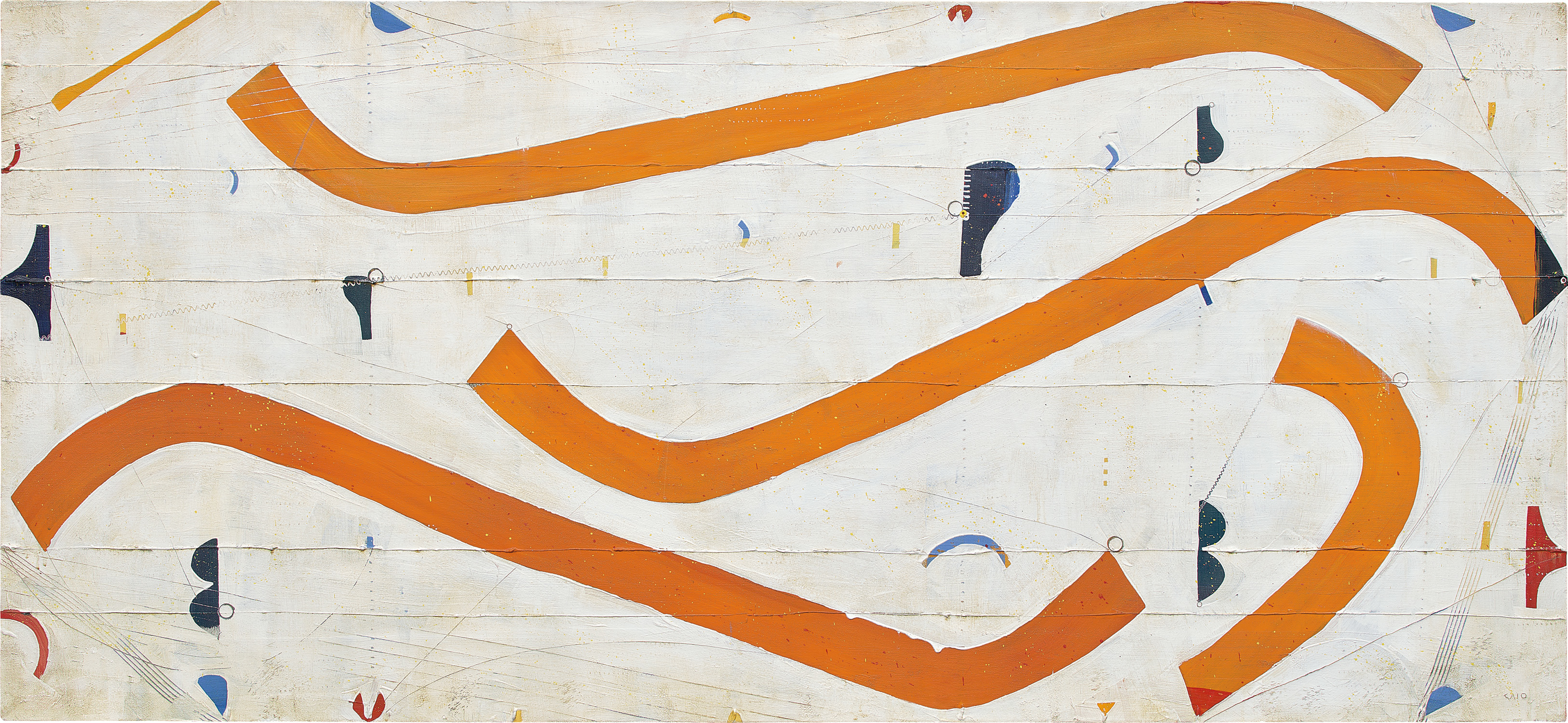
The Pietrasanta Paintings from the late 1990s onward represent some of the most sustained and coherent bodies of abstract work produced by an American artist of his generation. Works such as Pietrasanta Painting C98.20 from 1998 and Pietrasanta Painting C99.37 from 1999 show the grammar of his visual language at a moment of full maturity: the delicate grids that float across the picture plane like architectural memory, the washes of color that settle beneath and between linear structures with the softness of watercolor even when the medium is acrylic, and the sense that every mark has been placed in relationship to every other mark with the care a composer gives to a chord.
By the time of Fifth Street Painting from 2001 and C05.46 from 2005, the compositions had grown both more spare and more assured, the visual rhythm clarified without being simplified. His gouaches on paper, including works such as Pietrasanta Painting P98.22, demonstrate that his gifts translate across scale and medium with remarkable ease.
Caio Fonseca
Pietrasanta Painting C99.37, 1999
Music is not a metaphor Fonseca applies to his work from the outside: it is a structural principle embedded in how he thinks about composition, space, and time within a picture. He is a serious student of music, and the vocabulary critics reach for when writing about his paintings, terms like rhythm, tempo, harmony, and counterpoint, are not borrowed loosely. They describe actual formal properties that a careful viewer can identify and follow across the surface of the canvas. The grids in his work do not impose order so much as they create a kind of staff upon which the more lyrical, organic elements of his compositions can move.
This is an artist who has thought deeply about what painting can do that music cannot, and what it can only approximate, and has made that thinking the very subject of his practice. For collectors, the Fonseca market presents a picture of sustained desirability combined with genuine scarcity. His production has always been deliberate rather than prolific, and works from the core Pietrasanta series in particular come to market infrequently. The combination of a strong institutional presence, with holdings in major public and private collections across North America and Europe, and a relatively limited supply of available works has kept collector interest both steady and competitive.
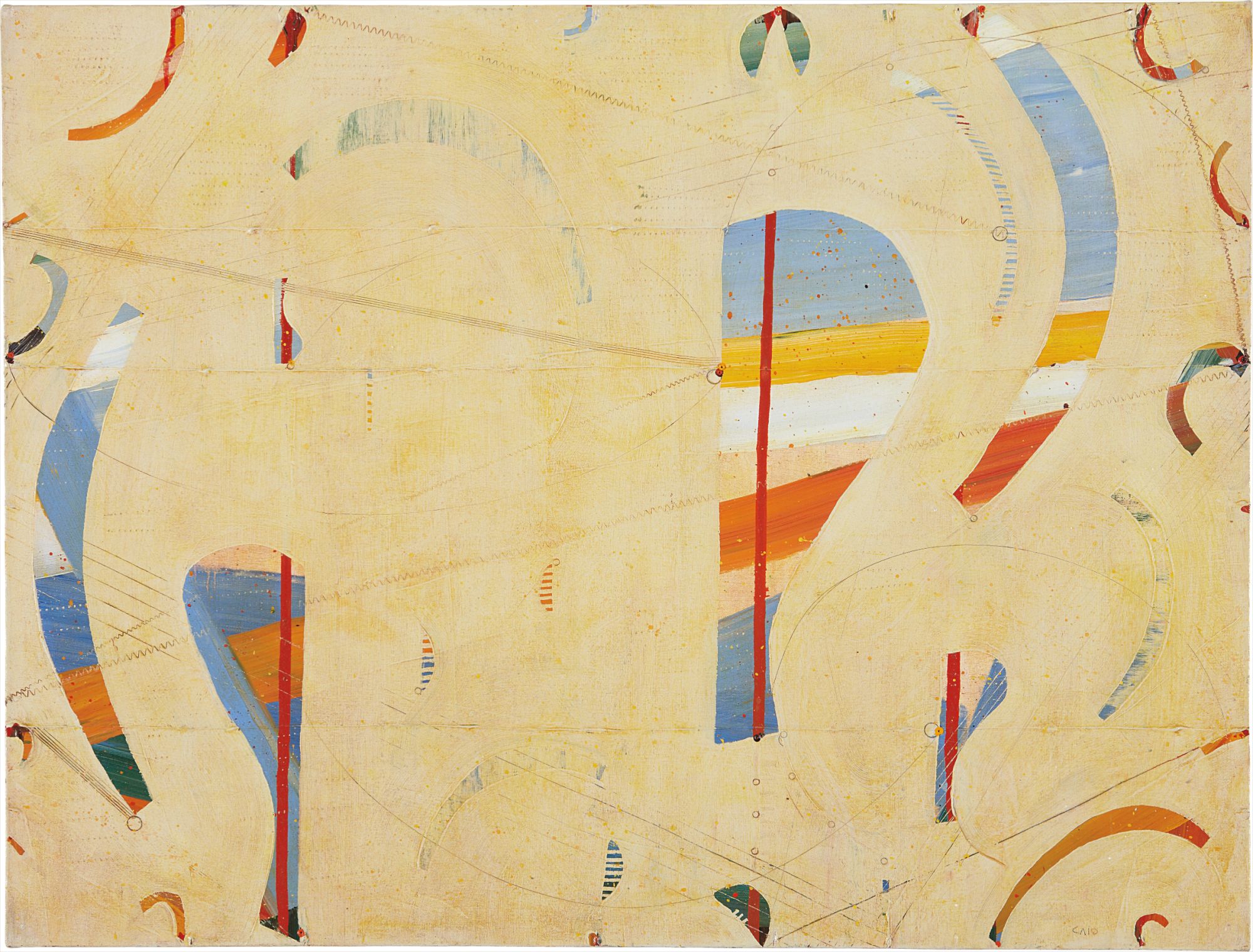
Caio Fonseca
Pietrasanta Painting C03.30
Buyers who have followed his career since the 1990s speak about the experience of living with a Fonseca as one of accumulating pleasure: these are paintings that reveal more over time, that respond to different qualities of light, and that hold their place in a room without demanding attention in the way that more aggressive abstract work can. They are confident paintings made by a confident artist, and that confidence is quietly contagious. In the context of postwar and contemporary abstraction, Fonseca occupies a position that is both distinctly his own and richly connected to the broader tradition. The influence of artists such as Mark Rothko and Agnes Martin is visible in his commitment to a meditative, non narrative mode of abstract painting, while his linear architectures have something in common with the grid investigations of artists like Brice Marden.
His connection to Cy Twombly, another American artist profoundly shaped by long residence in Italy, is perhaps the most frequently noted, though Fonseca's work is ultimately warmer in palette and more consistently structured than Twombly's famously improvisatory surfaces. Understanding Fonseca in relation to these figures clarifies both what he shares with the tradition and what makes his contribution irreplaceable within it. What makes Caio Fonseca matter today, and what will ensure his place in any serious account of late twentieth and early twenty first century painting, is the sincerity and the rigor with which he has pursued a single, difficult question: how does a painted surface hold time the way music holds time. His answer, worked out across decades of studio practice between New York and Pietrasanta, is one of the more beautiful things contemporary abstraction has produced.
For collectors new to his work, the Pietrasanta Paintings offer the ideal entry point, works that reward close looking and reward it again, that hold a room with quiet authority, and that represent one of the genuinely cohesive and genuinely distinguished bodies of work in contemporary American art.
Explore books about Caio Fonseca