Cai Guo-Qiang

Cai Guo-Qiang Sets the Sky Ablaze
Artist Spotlight · The Collection Editorial
“I use gunpowder to communicate with the universe, to speak with something larger than myself.”
Cai Guo-Qiang, interviewed in connection with the Guggenheim retrospective, 2008
When Cai Guo Qiang ignited the night sky above Beijing's National Stadium on August 8, 2008, he did something no artist had quite managed before: he turned the opening ceremony of the Olympic Games into a singular work of contemporary art. The sequence of fireworks tracing a series of giant footprints across the heavens, moving from Tiananmen Square toward the Bird's Nest, was watched by an estimated four billion people worldwide. It was spectacular, yes, but it was also deeply conceptual, a meditation on history, on movement, on the invisible forces that connect a civilization to its moment of global arrival. That night, the world understood what the art world had long known: Cai Guo Qiang is one of the most important artists of his generation.
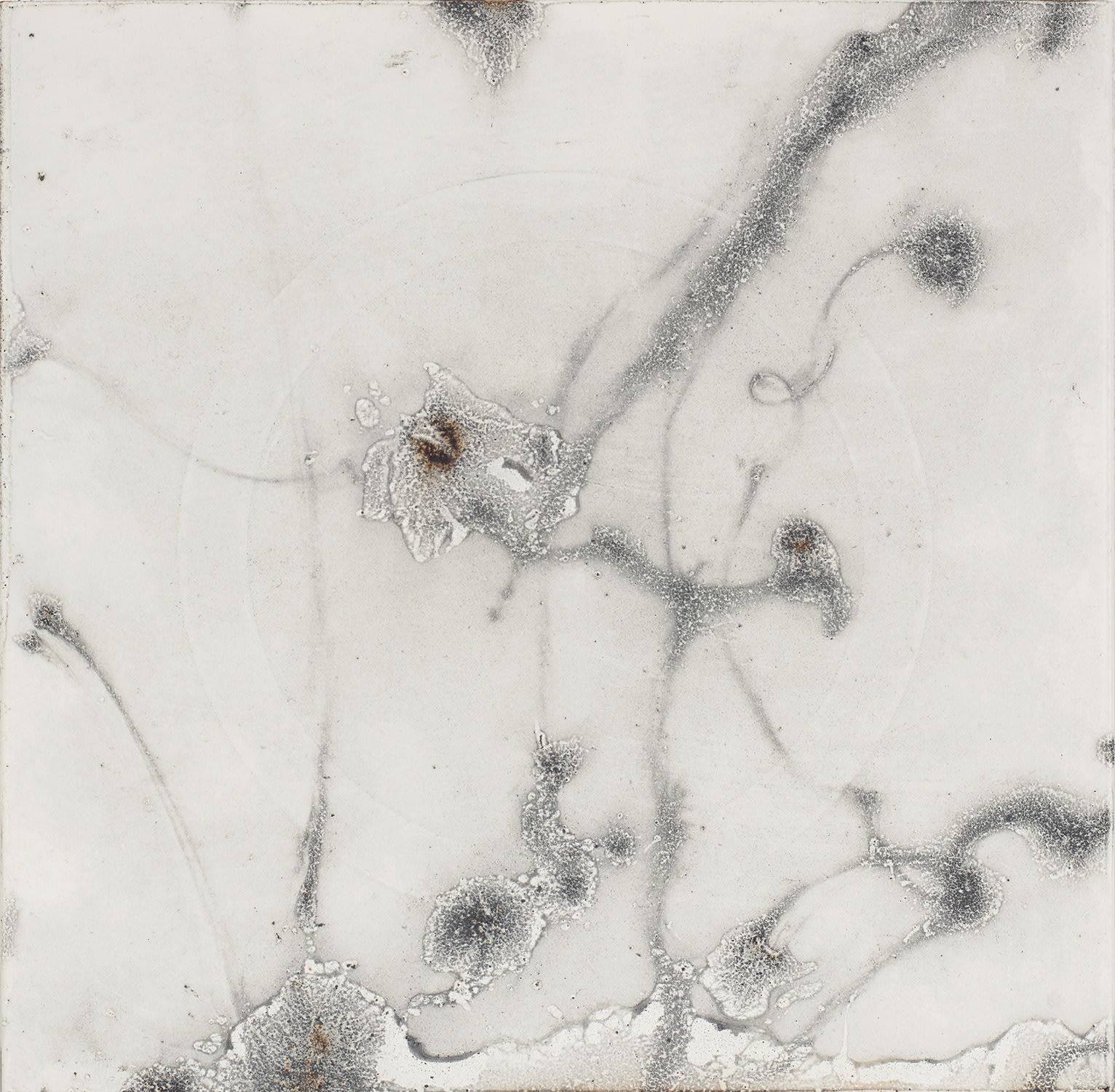
Cai Guo-Qiang
Foreplay
Cai was born in 1957 in Quanzhou, a port city in Fujian Province on the southeastern coast of China. Quanzhou carries its own freight of history: it was once a major hub of the ancient Maritime Silk Road, a crossroads of cultures and religions that left the city with an unusually cosmopolitan sensibility for a provincial Chinese town. His father was a painter and historian, and the household was steeped in books and brushes. Growing up during the Cultural Revolution, Cai absorbed the tension between personal expression and collective ideology, a tension that would later animate some of his most powerful works.
He studied stage design at the Shanghai Theatre Academy, graduating in 1985, and it was there that he began to understand the relationship between spectacle, space, and emotional impact. In 1986, Cai moved to Japan, settling in Tokyo for nine years in a period of intense artistic development. Japan proved transformative. Immersed in a culture that honored both ancient craft and radical contemporary experiment, he began exploring gunpowder as his primary medium, initially in small controlled burn drawings on paper.
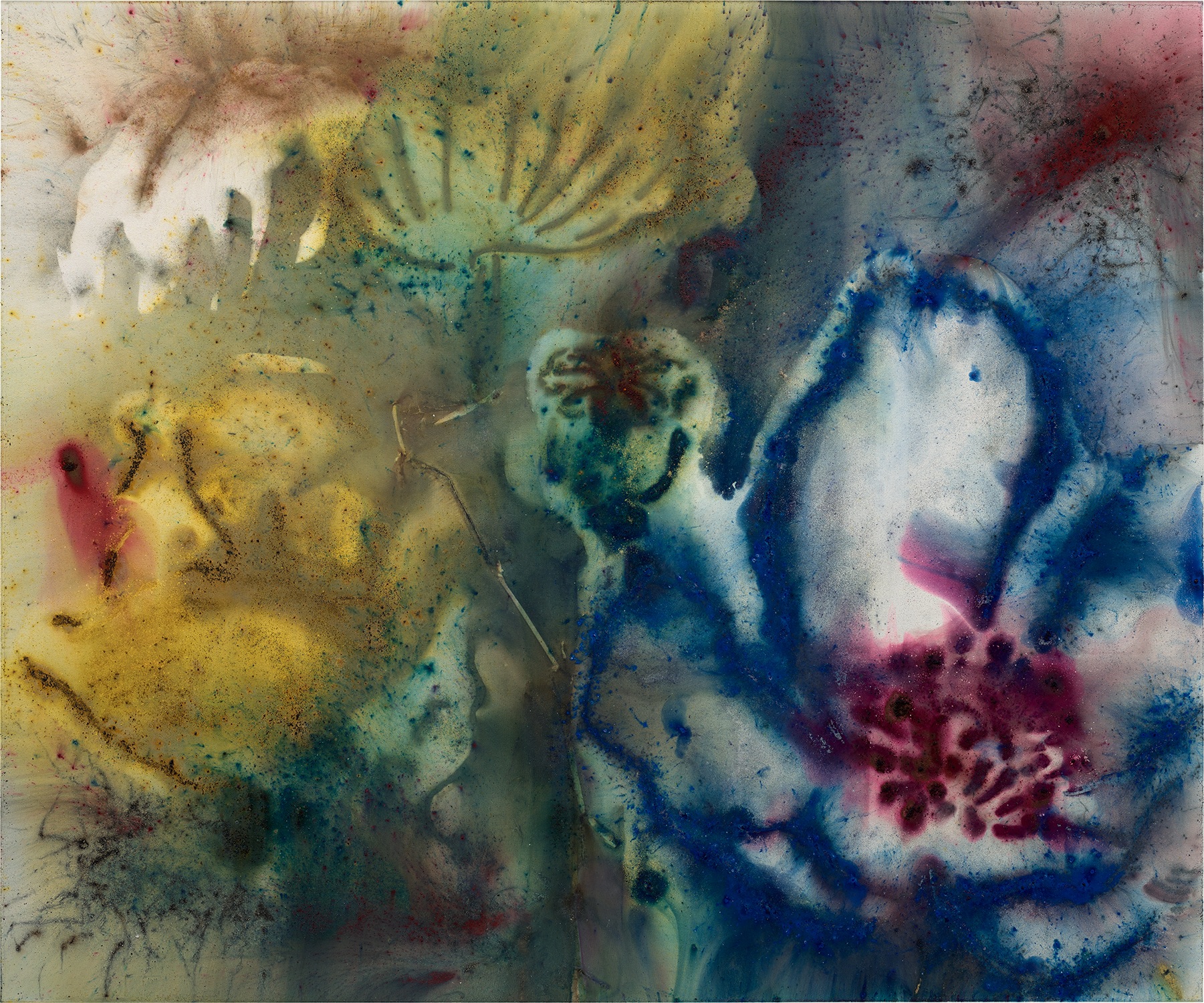
Cai Guo-Qiang
Poppy Series: Animals No. 2, 2016
The choice of gunpowder was not merely provocative. It carried deep historical resonance: gunpowder was invented in China, and yet its most famous applications came through its adoption by others, in warfare, in colonialism, in the very forces that shaped the modern world. By reclaiming it as an artistic material, Cai was doing something quietly radical, repatriating an idea and transforming its destructive charge into something luminous and alive. His international breakthrough came through a series of ambitious projects that positioned him as a genuinely global artist rather than a national curiosity.
“The most important thing is not the explosion itself but what happens in people's hearts when they witness it.”
Cai Guo-Qiang, Sky Ladder documentary, Netflix, 2016
His 1994 project 'The Century with Mushroom Clouds' saw him detonate small mushroom cloud formations in a series of locations around the world, including Nevada's nuclear test site. In 1999, he was awarded the Golden Lion at the Venice Biennale, one of the most prestigious honors in contemporary art, cementing his standing among the very top tier of living artists. Major exhibitions followed at the Guggenheim Museum in New York, the Museum of Modern Art, and the Centre Pompidou in Paris. His 2008 retrospective at the Solomon R.
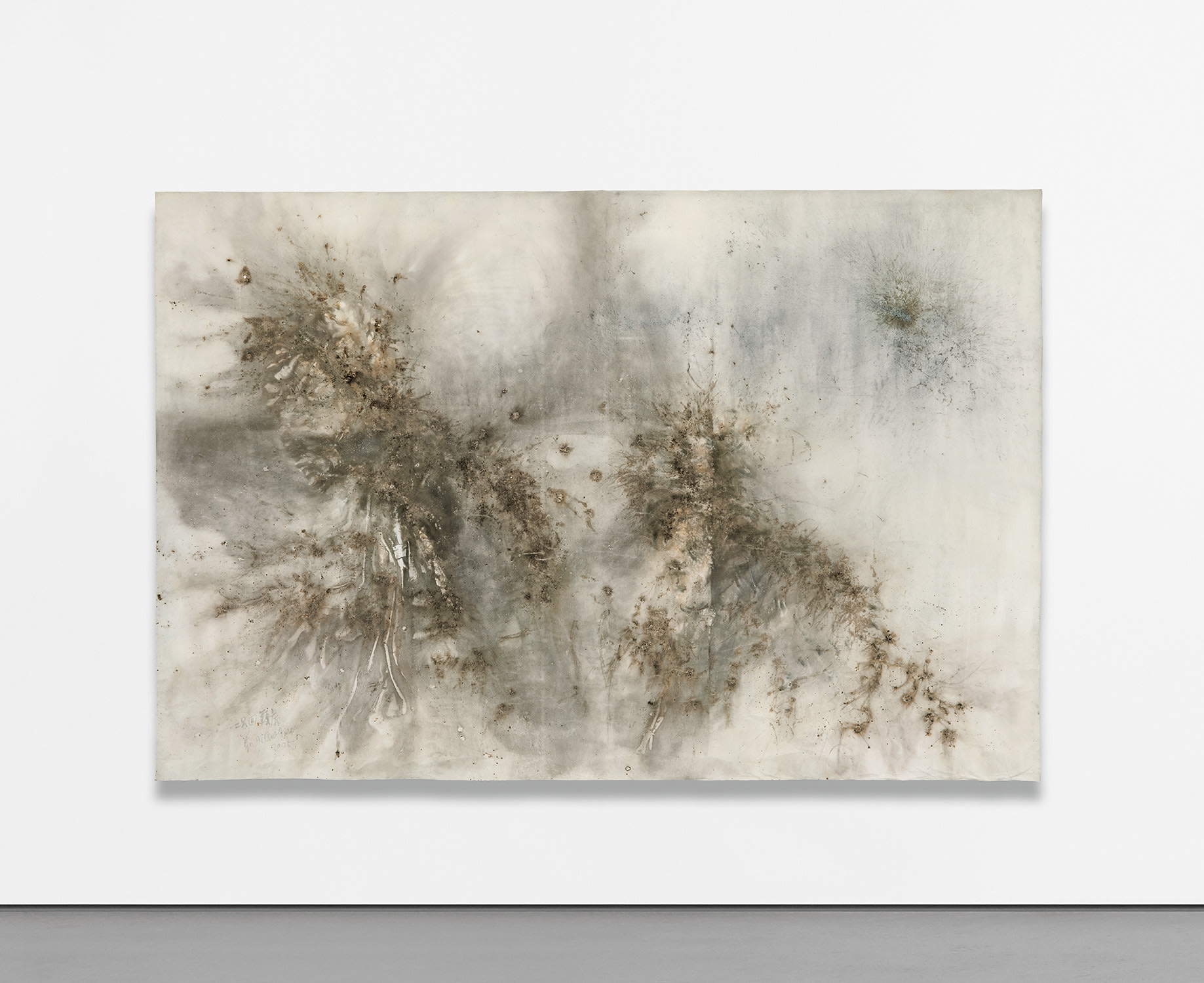
Cai Guo-Qiang
Two Wandering Tigers, 2005
Guggenheim Museum, titled 'I Want to Believe', filled the Frank Lloyd Wright rotunda with installations of extraordinary scale and ambition, drawing some of the highest attendance figures the museum had seen in years. Then there is 'Sky Ladder', perhaps his most intimate large scale work. First conceived in 1994 and finally realized off the coast of his hometown of Quanzhou in 2015, the project involved igniting a 500 meter ladder of fireworks that rose into the cloud cover above the East China Sea at dawn. Witnessed by only a small group that included his grandmother, then aged one hundred years old, it was a work made not for spectacle but for love, a gift to family and to place.
The 2016 Netflix documentary of the same name brought the project to millions of viewers and offered the most intimate portrait yet of an artist who operates simultaneously at the scale of nations and the scale of the personal. For collectors, the works available on paper represent a remarkable opportunity to live with Cai's practice up close. His gunpowder on paper works, including pieces such as 'Two Wandering Tigers' (2005) and 'Life Beneath the Shadow: The Brahan Seer' (2005), carry all the energy of his large scale explosions distilled into a format that is both intimate and charged with physical history. These are not reproductions of an idea: they are the direct record of an event, scorched and singed into being.
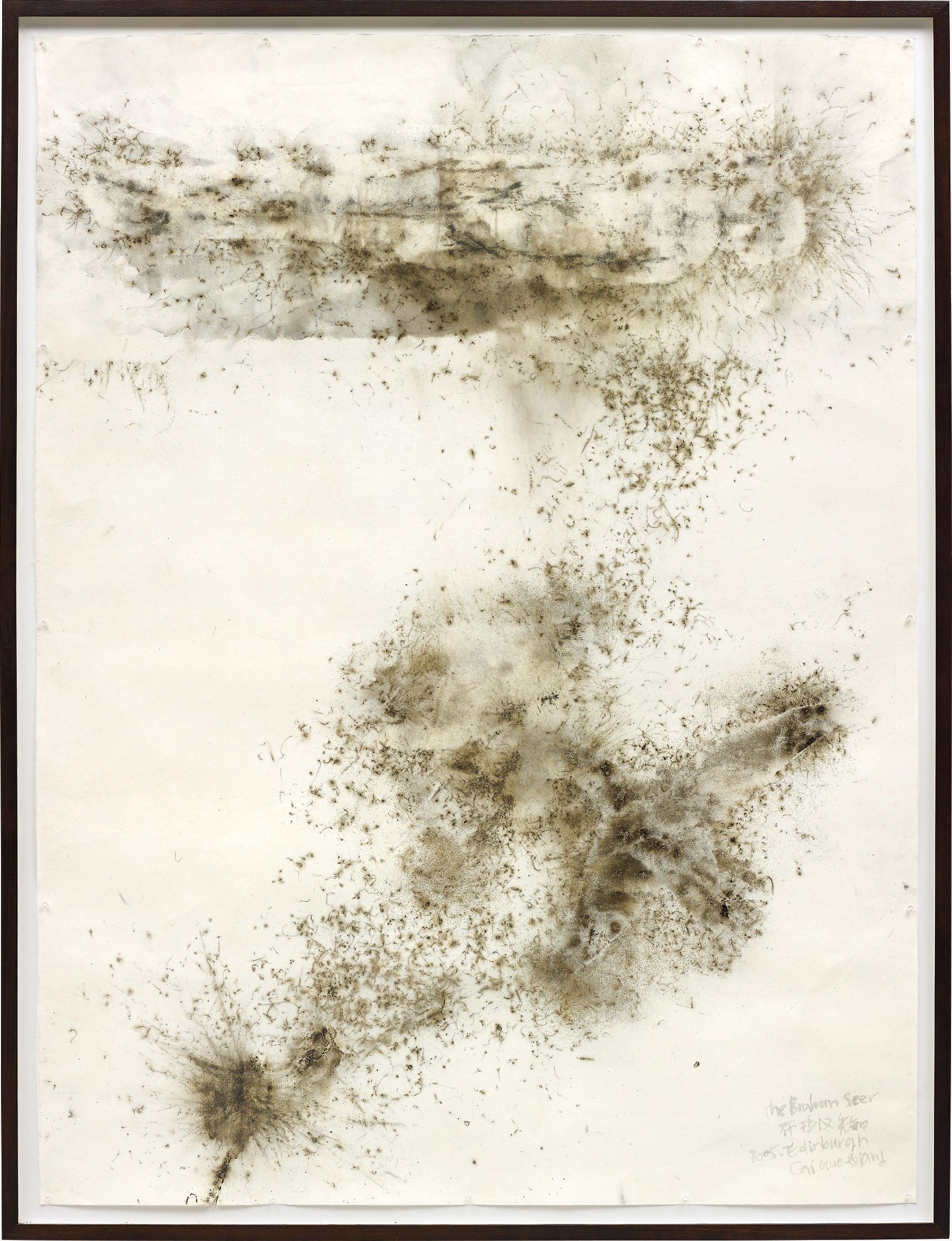
Cai Guo-Qiang
Life Beneath the Shadow: The Brahan Seer, 2005
Works such as 'Howling Wolf' and 'Black Sunflower' (2010) demonstrate the range of his visual language, from the animal world to botanical forms, each one carrying the unmistakable trace of fire. The 'Danger Book: Suicide Fireworks', a set of thirteen drawings made by hand by the artist, with string and matchsticks incorporated into the works themselves, occupies a special category: part artist's book, part sculptural object, part manifesto. It is the kind of work that serious collectors of works on paper return to again and again. In terms of art historical context, Cai's practice sits in productive dialogue with a number of important traditions and figures.
His use of controlled destruction as a generative force connects him to the Gutai group in postwar Japan, particularly to artists like Kazuo Shiraga and Shozo Shimamoto, who explored action and material in ways that challenged Western assumptions about what painting could be. His engagement with spectacle and social space has affinities with the work of Christo and Jeanne Claude, while his interest in Eastern philosophical frameworks, particularly the Daoist concept of the void and the relationship between order and chaos, aligns him with a longer lineage of Chinese ink painting that he both honors and radically transforms. There is also something of Joseph Beuys in his understanding of the artist as a social force, someone whose work operates beyond the gallery and inside the life of a community. What makes Cai Guo Qiang indispensable to our current moment is precisely his refusal to be contained by any single category.
He is a painter who uses explosions. He is a Chinese artist who is also a genuinely global one. He makes works of breathtaking scale and works of intimate, handmade precision. He has received the highest institutional honors the art world offers, and yet he made his most personal work for an audience of one, his elderly grandmother watching a ladder of fire reach toward the clouds at dawn.
In a time when art can feel fragmented or overly conceptual, Cai reminds us that the deepest ideas can arrive with the force of a detonation: sudden, illuminating, and impossible to forget.
Explore books about Cai Guo-Qiang

Cai Guo-Qiang: A Retrospective
Melissa Chiu, Zheng Shengtian
Cai Guo-Qiang: Transient Rainbow
Various
Cai Guo-Qiang: I Want to Believe
Paul Goldberger, Okwui Enwezor
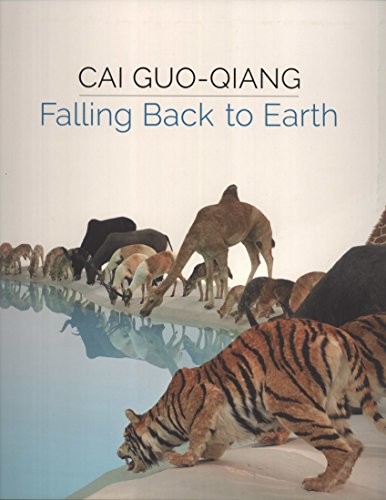
Cai Guo-Qiang: Falling Back to Earth
Various
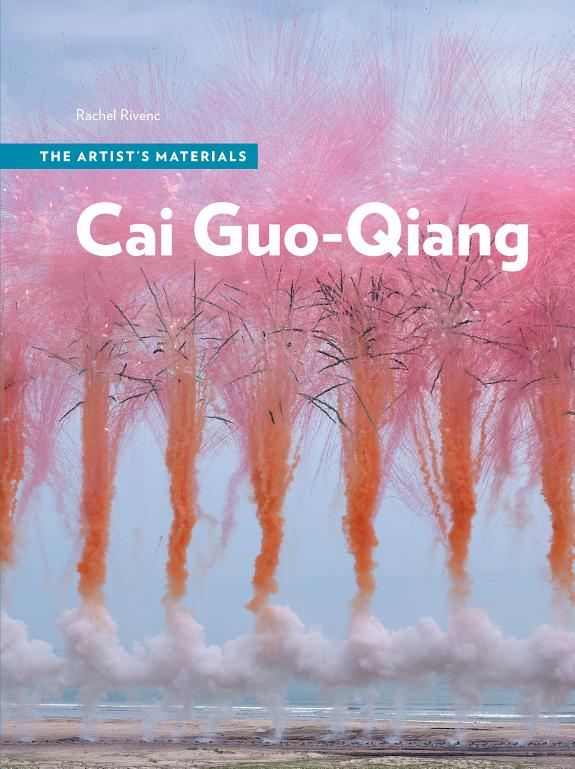
Cai Guo-Qiang: Fireworks in My Memory
Cai Guo-Qiang
Cai Guo-Qiang: Hang It Well
Various
Cai Guo-Qiang: Illumia
Various