Betty Parsons
Betty Parsons: Artist, Visionary, Eternal Pioneer
Artist Spotlight · The Collection Editorial
“I wanted to open windows, not close them.”
Betty Parsons
There is a particular kind of legend that only becomes fully visible with time. Betty Parsons is one of them. In recent years, museums and scholars have begun the long overdue work of examining her dual identity, not simply as the gallerist who gave the world Abstract Expressionism, but as a serious, committed, and wholly original artist in her own right. The Whitney Museum of American Art and institutions across the country have revisited her legacy with fresh eyes, recognizing that the woman who championed Mark Rothko, Jackson Pollock, and Clyfford Still was herself making work of quiet, totemic power throughout her entire life.
Betty Parsons
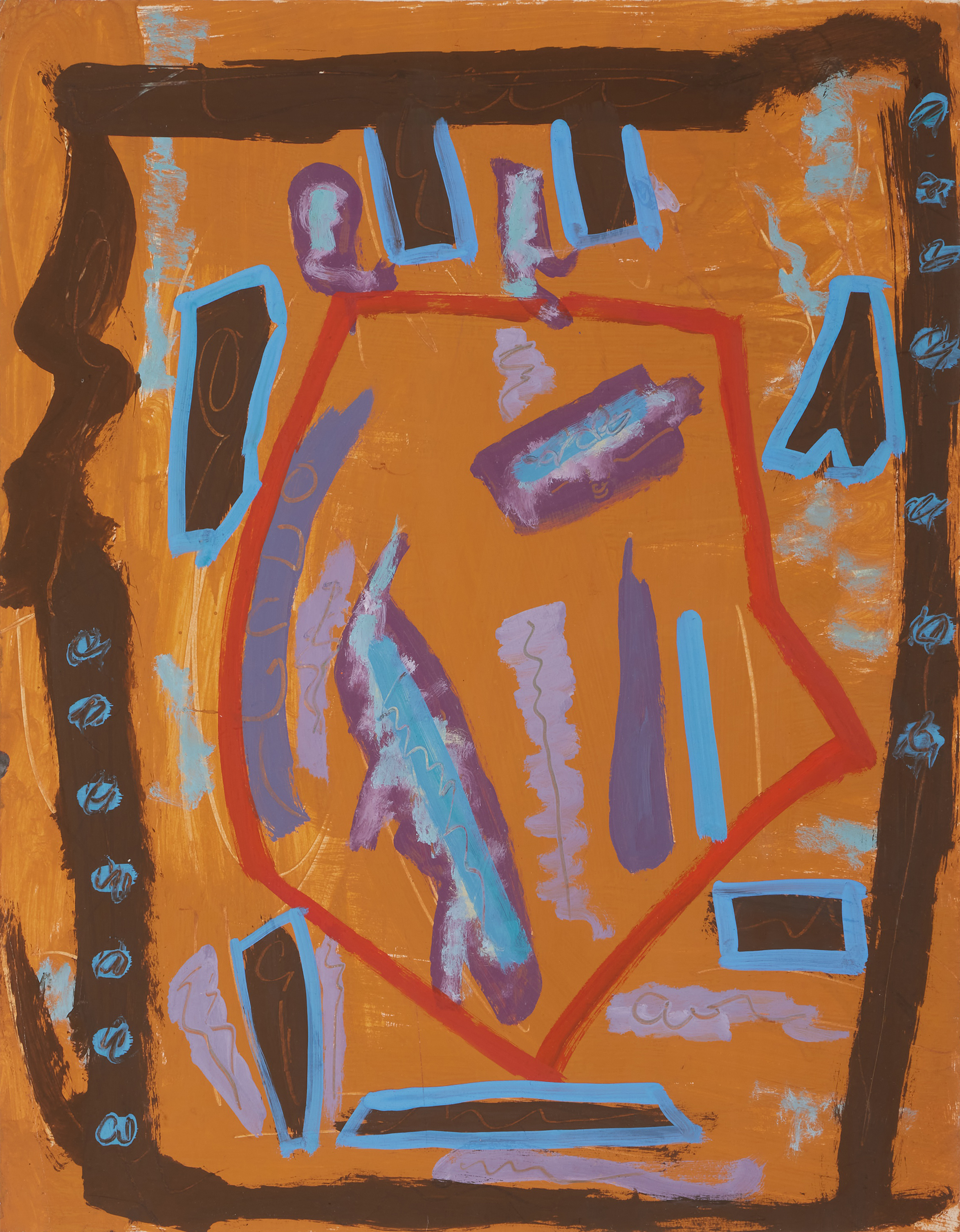
Untitled, 1960
To collect Betty Parsons today is to participate in an act of genuine rediscovery. Parsons was born in New York City in 1900, into a world of social privilege that she would spend much of her life quietly, gracefully subverting. Her family moved in elite circles, but Parsons was drawn toward art with a seriousness that her background did not necessarily invite. After a brief and unhappy marriage, she left for Paris in the 1920s, where she studied sculpture with Ossip Zadkine and painting with Arthur Léger, immersing herself in the ferment of European modernism at one of its most generative moments.
She befriended Gertrude Stein, Alexander Calder, and Alberto Giacometti, absorbing the spirit of an era that believed, passionately, in art as a form of spiritual inquiry. Returning to the United States during the Depression, Parsons spent years in California and then settled permanently in New York. She supported herself by teaching art and working in various galleries before opening the Betty Parsons Gallery on 57th Street in 1946. That gallery would become one of the most consequential spaces in the history of American art.
Betty Parsons
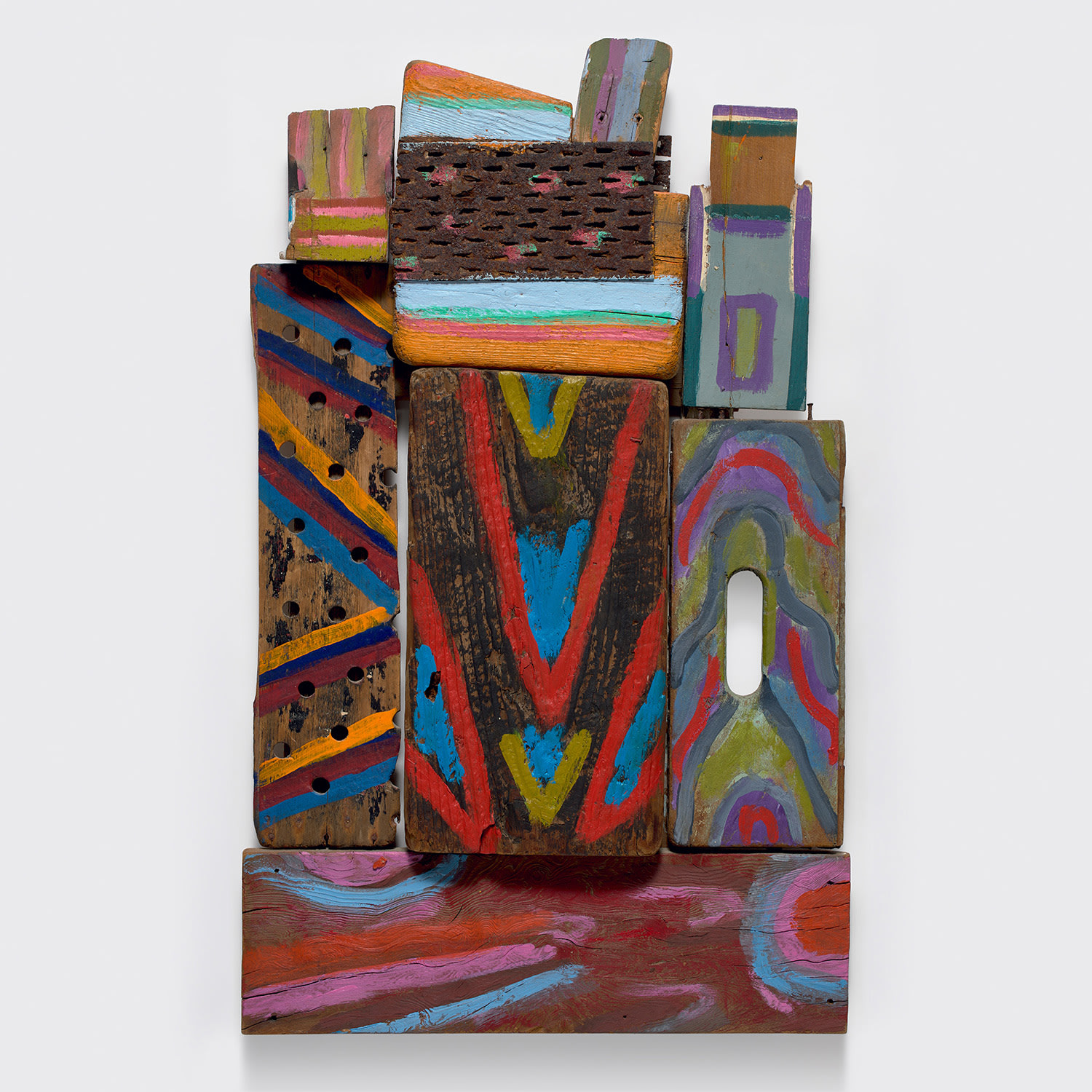
Totem-Materia-R, 1980
Parsons had an almost preternatural instinct for recognizing artists who were doing something genuinely new. She gave Pollock his first major solo show, exhibited Rothko and Still in their formative years, and nurtured a generation of painters who were, collectively, reinventing what art could be. She did all of this while paying herself almost nothing, and while continuing, quietly, to make her own art. Parsons's own practice is where the story becomes most extraordinary and most poignant.
“Art is a way of seeing, and what you see becomes what you are.”
Betty Parsons
Working in the margins of her extraordinary public role, she produced paintings, sculptures, and constructions that drew on an entirely personal vocabulary. She was deeply influenced by Indigenous American art, African art, and the spiritual traditions she encountered through years of wide reading and travel. Her works are spare and totemic, often built on raw board or found wood, incorporating natural forms and abstract marks that feel genuinely ancient while remaining entirely her own. There is nothing derivative about them.
They exist in a visual register that belongs to no school and no movement, which may be precisely why they were so long overlooked. Among the works that best represent her vision is the gouache on paper simply titled "Untitled" from 1960, a work of restrained chromatic intelligence that reveals how fluently she moved between color and form. Even more striking is "Totem Materia R" from 1980, made with acrylic on found wood and metal plates with nails. This late work is a summation of everything that animated her practice: the reverence for natural and found materials, the totemic verticality that connects earth to something beyond it, and the refusal of any kind of decorative prettiness.
It is the work of an artist who had spent decades listening to something deeper than fashion or market demand. From a collecting perspective, Parsons represents a genuinely compelling opportunity. Her works appear rarely on the market, and when they do, they carry the weight of an extraordinary biography as well as genuine aesthetic merit. Collectors drawn to the Abstract Expressionist generation, to mid century American modernism, and to the intersection of spirituality and abstraction will find in her work a missing piece that enriches any serious collection.
Her pieces also resonate strongly with collectors interested in artists who worked across disciplines and defied easy categorization. Comparable figures in terms of spirit and practice include Lee Krasner, whose public identity was long overshadowed by proximity to Pollock, and Agnes Martin, who similarly sought a visual language rooted in inner stillness and natural order. Like both of those artists, Parsons rewards sustained looking. Within the broader arc of art history, Parsons occupies a position that is singular and irreplaceable.
She was not simply adjacent to Abstract Expressionism; she was one of its primary architects, providing the institutional support and genuine personal belief that allowed the movement to cohere and grow. At the same time, her own art stands apart from the heroic gesturalism typically associated with that generation. Her work is quieter, more intimate, and in many ways more mysterious. It asks the viewer to slow down, to look for the spiritual pulse underneath the surface, and to consider what it means to make art not for fame or recognition but out of an irresistible inner compulsion.
Betty Parsons died in 1982, leaving behind a legacy that continues to expand as more people come to know both sides of her remarkable life. She was a woman who gave generously of her resources, her time, and her belief to some of the greatest artists of the twentieth century, and who simultaneously maintained an inner artistic life of genuine depth and integrity. The art world owes her an enormous debt, and collectors who bring her work into their lives are doing something meaningful: they are honoring a figure who understood, better than almost anyone, that art is not a career or a commodity but a calling.
Explore books about Betty Parsons
Betty Parsons: Artist, Dealer, Collector
Karen Wilkin
Betty Parsons: The Parsons Gallery Records, 1947-1979
Smithsonian Institution Archives
Betty Parsons: Paintings and Sculptures from Five Decades
Michael Brenson
Art and Intuition: Essays on Art by Betty Parsons
Betty Parsons
The Clement Greenberg Archive: Betty Parsons Correspondence
Getty Research Institute
Betty Parsons: American Artist and Gallerist
Paul Cummings