Beauford Delaney
Beauford Delaney: The Man Who Painted Light
Artist Spotlight · The Collection Editorial
“I am trying to reach something beyond technique, something that has to do with the inner life.”
Beauford Delaney
In 2023, the Smithsonian American Art Museum reaffirmed its commitment to Beauford Delaney's legacy with sustained institutional attention to his work, part of a broader cultural reckoning with the artists of the mid twentieth century whose contributions were long undervalued. Delaney's canvases, blazing with gold and ochre and the particular luminosity he found in Paris light, now appear in major survey exhibitions of Abstract Expressionism and African American modernism alike. The art world is catching up, and collectors who have followed his work for decades are watching with quiet satisfaction as the broader public discovers what they have always known: Beauford Delaney was one of the most spiritually alive painters of the twentieth century. Delaney was born in 1901 in Knoxville, Tennessee, the son of a Methodist minister and one of ten children.
Beauford Delaney
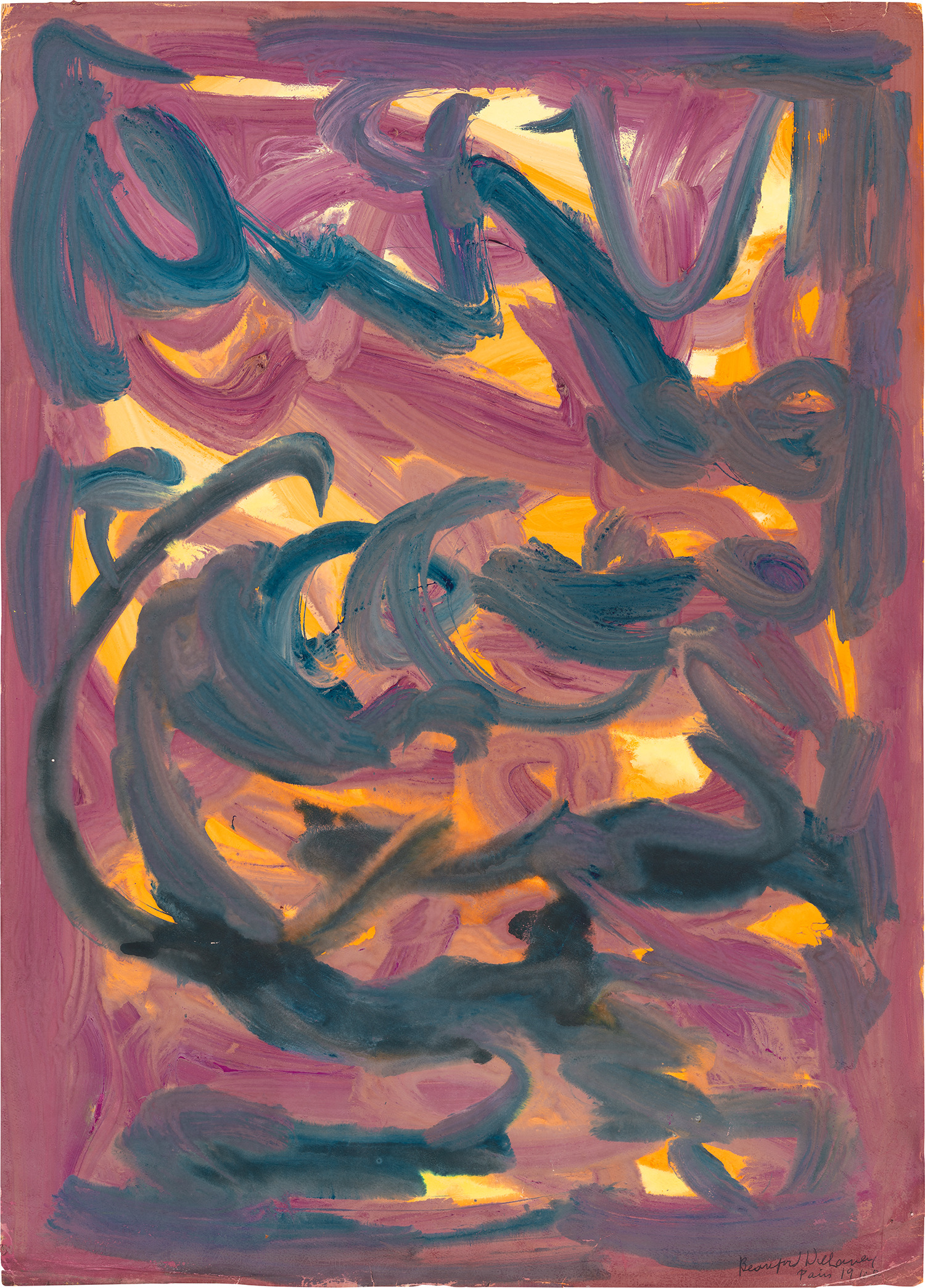
Wine, 1962
From an early age he demonstrated an uncommon gift for observation and for rendering what he saw in light and color, and a local artist named Lloyd Branson recognized his talent and gave him his first formal instruction. That combination of deep spiritual inheritance from his father and rigorous attention to craft shaped everything that followed. In 1924, Delaney left the South for Boston, where he studied at the Massachusetts Normal Art School and the South Boston School of Art, and then continued northward to New York, where he would spend more than two decades finding his voice and building an extraordinary community of friendships. Greenwich Village in the late 1920s and 1930s was the crucible of Delaney's formation as an artist.
He settled in the neighborhood and became a beloved figure in its creative and intellectual life, known equally for his warmth and for the serious purpose behind his work. His studio at 181 Greene Street became a gathering point for writers, musicians, and painters, and among his closest friends was the young James Baldwin, who would later write about Delaney with profound tenderness, describing the painter as the first living proof he had encountered that a Black man could be an artist. During these years Delaney's work was primarily figurative, marked by rich tonal contrasts and an almost devotional attention to the faces and streets of urban life. Works from this period, including street scenes and portraits of Harlem and downtown Manhattan, reveal an artist who understood that paint could carry the full weight of human presence.
Beauford Delaney
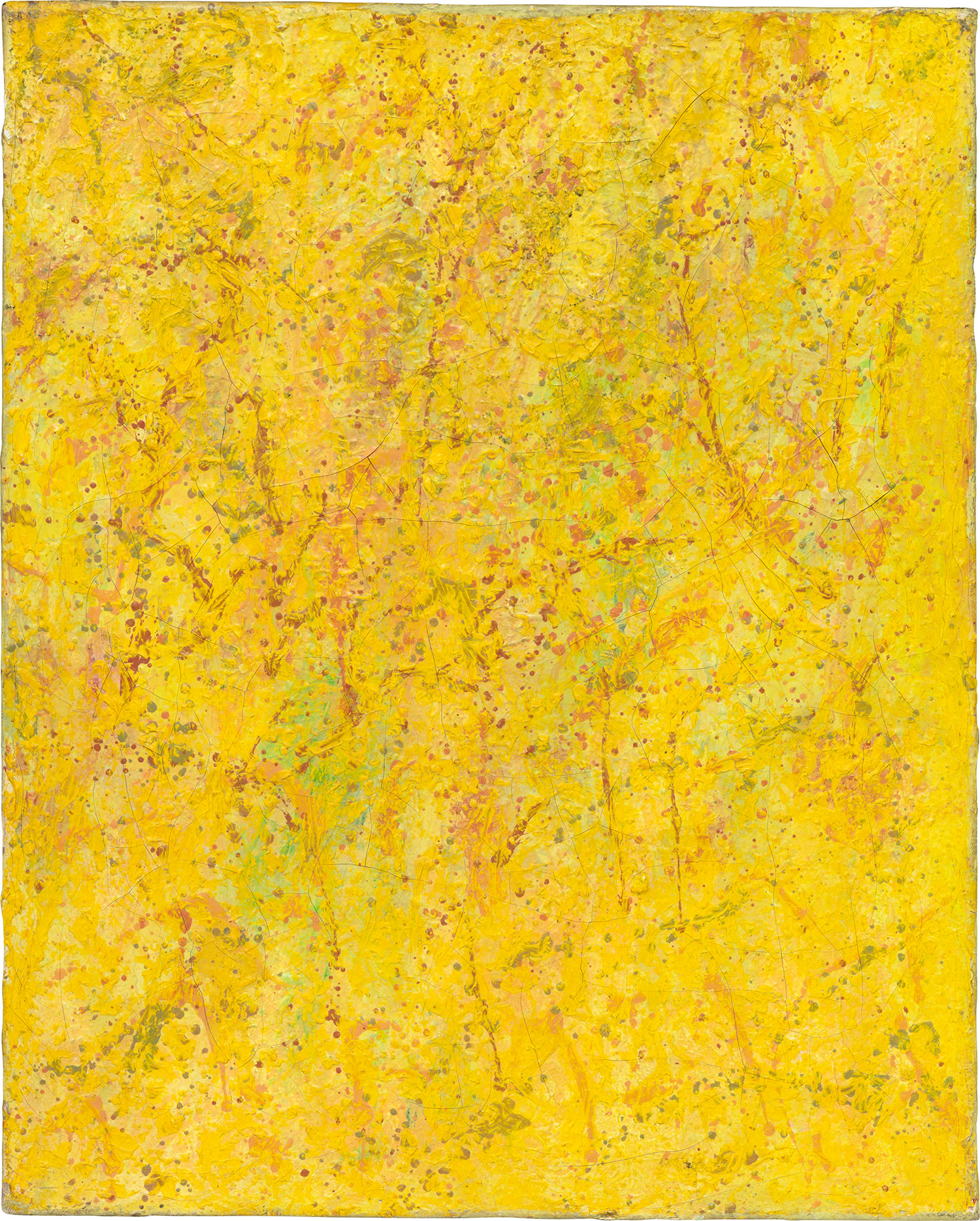
Yellow Abstraction, 1957
The decisive transformation in Delaney's practice came after 1953, when he moved to Paris at the age of 52. The city unlocked something in him. The light of the Ile de France, filtered through the long windows of his studio in Clamart, seemed to answer questions he had been asking all his life. His palette shifted radically toward the yellows and whites that became his signature, colors that read not as decoration but as sensation, as the physical experience of light entering the eye and warming the body.
He encountered and absorbed the lessons of Abstract Expressionism, then at its height in New York, but filtered that influence through his own spiritual and emotional sensibility. His abstractions were never cold or theoretical. They pulsed with feeling, with what one might describe as a kind of ecstatic attentiveness to the world. Among the works available through The Collection, Yellow Abstraction from 1957 stands as a definitive statement of this Paris period.
Beauford Delaney
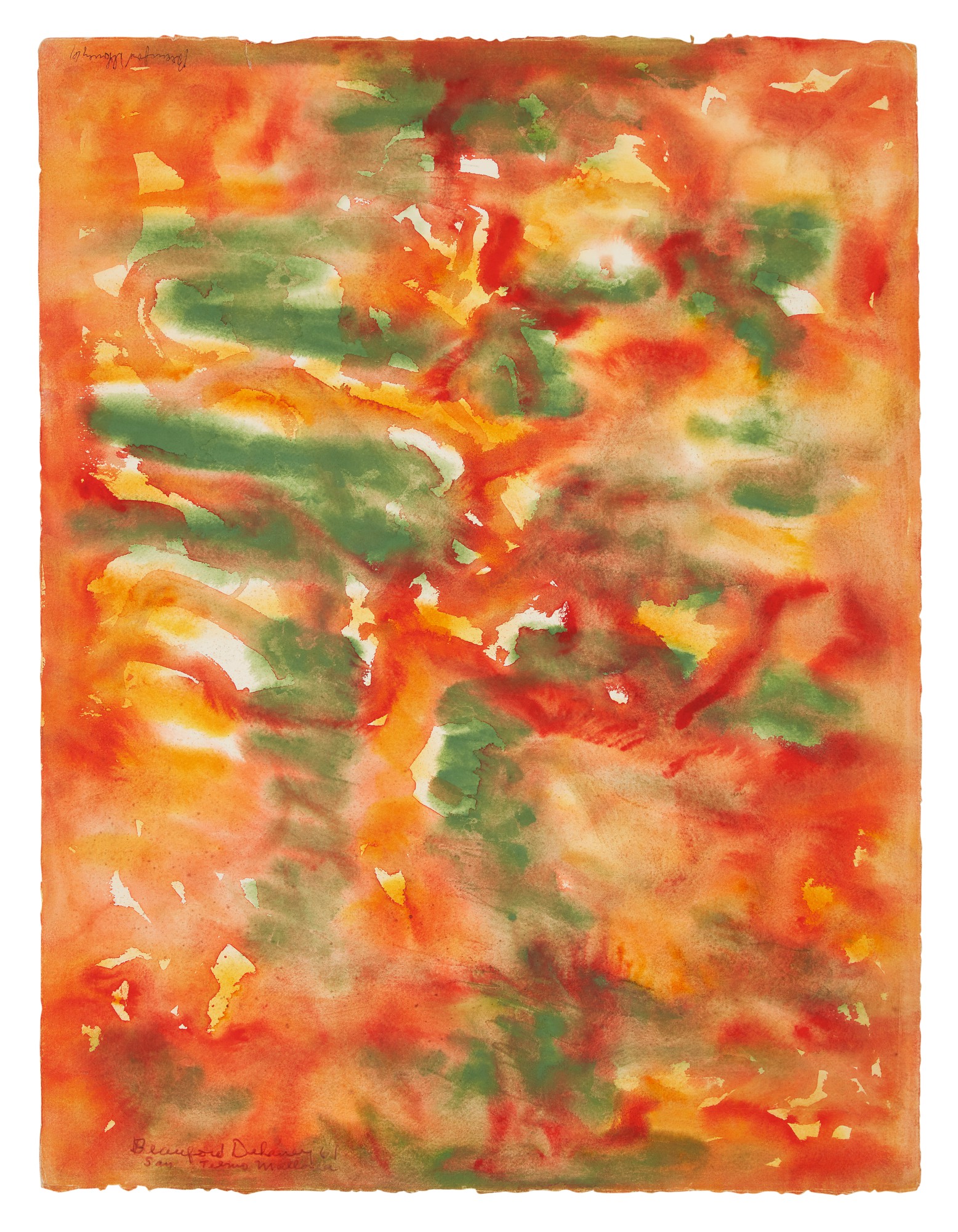
Untitled
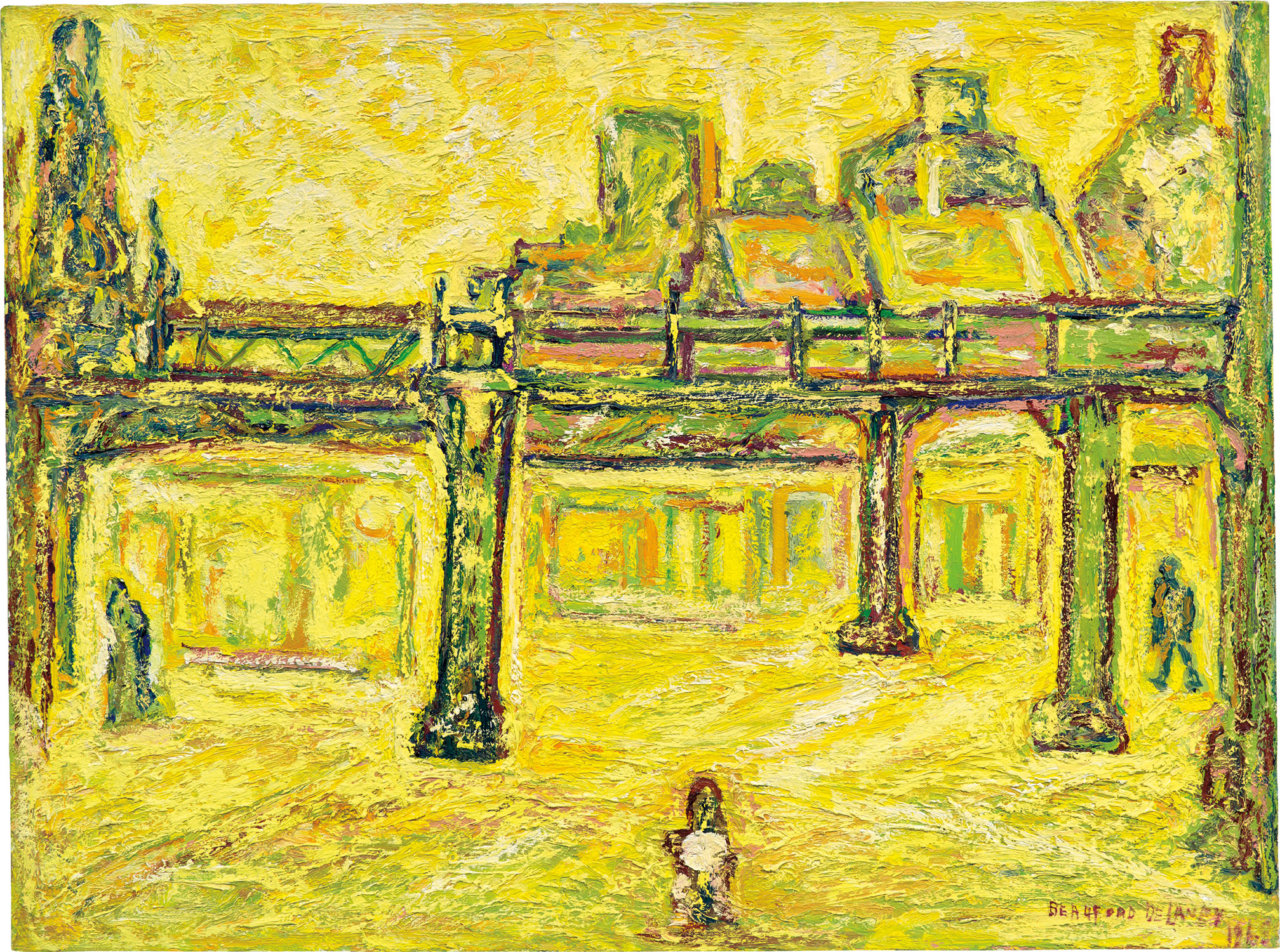
Painted in oil on canvas, it exemplifies the radiant, near incandescent quality that distinguishes Delaney's mature work, the surface alive with gestural marks that accumulate into something almost architectural, a structure of pure feeling. Wine from 1962, rendered in gouache on paper, shows the same intensity operating at a more intimate scale, the medium's translucency allowing light to seem to emanate from within the surface rather than simply reflect off it. His 1964 Self Portrait in oil on canvas is equally compelling, a work in which the figurative and the abstract exist in productive tension, the face both recognizably present and dissolved into the luminous field that surrounds it. Street Scene from 1968 demonstrates that Delaney never fully abandoned his connection to observed life even as abstraction claimed more and more of his attention.
Across all these works, the governing intelligence is the same: an artist for whom paint is not a medium of description but of revelation. From a collecting perspective, Delaney occupies a position of genuine significance and continued opportunity. His work is held by the Smithsonian American Art Museum, the Studio Museum in Harlem, the Tate Modern in London, and the Musee d'Art Moderne de la Ville de Paris, among other major institutions. Auction results for his works have climbed steadily as scholarly and curatorial attention has intensified, with his Paris period abstractions commanding particular interest.
Beauford Delaney
Street Scene, 1968
Works on paper, including the gouaches and watercolors that he produced prolifically throughout his career, represent an accessible entry point into the work while carrying all the essential qualities of his vision. Collectors who approach Delaney now are participating in a revaluation that is still very much in progress, with serious upside in both cultural and market terms. Delaney belongs to a generation of American painters whose work is now understood as essential to any full account of twentieth century art. He shares certain concerns with his contemporaries in the Abstract Expressionist movement, including Mark Rothko's investment in color as emotional field and Sam Gilliam's later explorations of abstraction as a mode of African American expression.
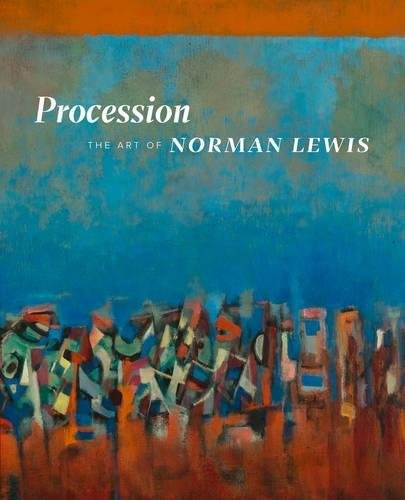
His career also resonates with that of Norman Lewis, who navigated a similar path between figurative commitment and abstract liberation, and with Alma Thomas, whose late explosion into pure color Abstraction parallels Delaney's own late flowering in Paris. Placing Delaney within this constellation is not to diminish his individuality but to understand how extraordinary the work is, how fully it belongs to the serious conversation of its moment while remaining utterly singular. What endures most powerfully in Delaney's legacy is the quality of conviction that runs through every canvas. He made work that cost him something, work produced through periods of considerable personal difficulty, including the mental health struggles that shadowed the last decades of his life, but the paintings themselves never betray exhaustion or defeat.
They insist on joy, on the possibility of light. James Baldwin wrote that Delaney's work revealed to him that beauty was not a luxury but a necessity, and that conviction lives in the paintings themselves. For collectors, for institutions, and for anyone who spends time in front of one of these luminous surfaces, the experience is genuinely transformative. Delaney was an artist who believed that paying close attention to the world, and rendering that attention in paint, was a form of love.
The work proves him right.
Explore books about Beauford Delaney