Barbara Hepworth

Barbara Hepworth, Form Finding Its Freedom
Artist Spotlight · The Collection Editorial
“I rarely draw what I see. I draw what I feel in my body.”
Barbara Hepworth, written statement, 1952
In the spring of 2023, Tate Britain mounted a sweeping reassessment of Barbara Hepworth's work that drew visitors from across Europe and confirmed what serious collectors have long understood: that Hepworth is not merely a figure of historical importance but a living force in contemporary visual culture. Her bronzes, lithographs, and carved forms continue to command extraordinary attention at auction, with major works regularly achieving seven figure results at Christie's and Sotheby's. The renewed institutional appetite for her practice reflects a broader cultural moment in which the relationship between landscape, the human body, and abstract form feels more urgent than ever. Hepworth speaks to our present with a clarity that few of her generation can match.
Barbara Hepworth
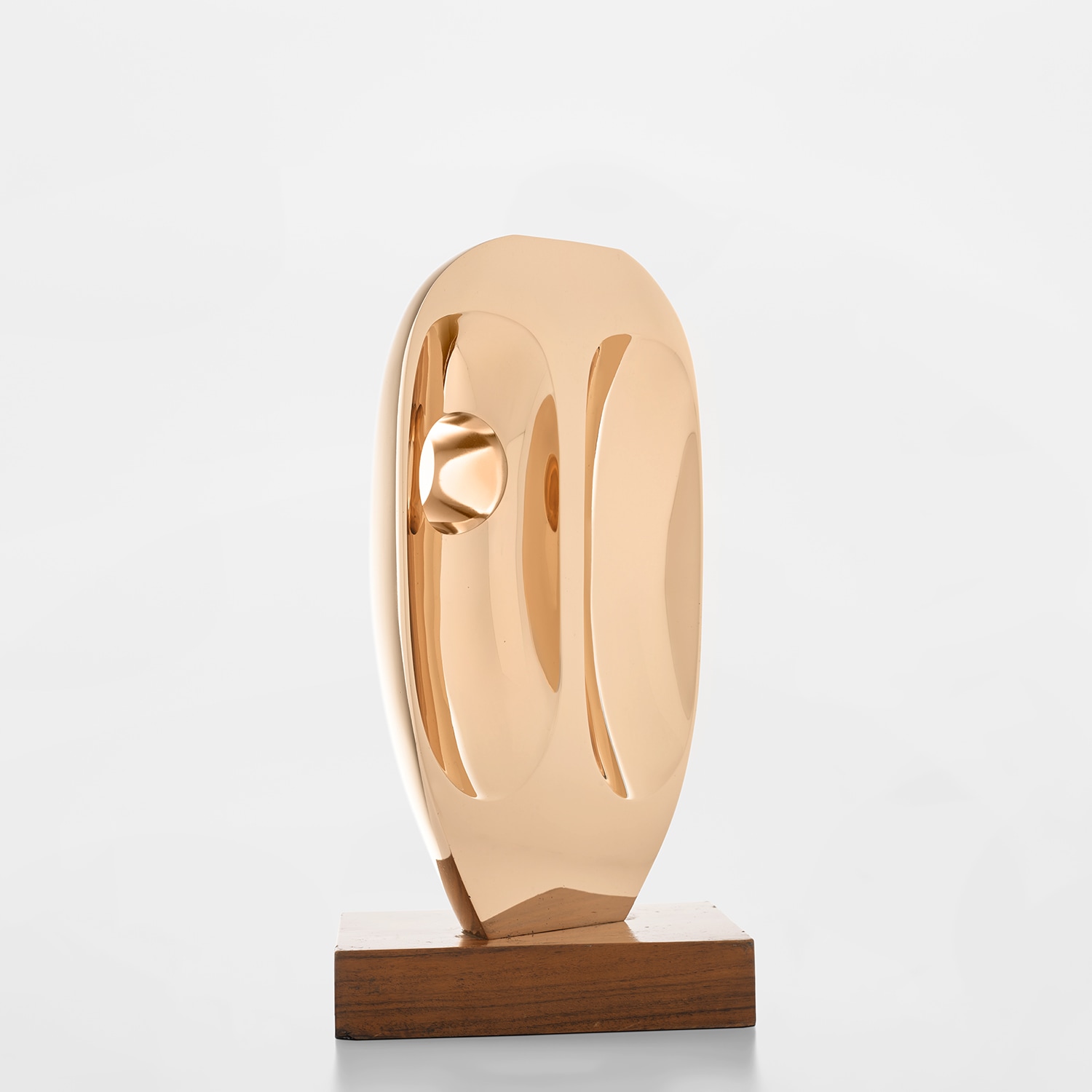
Vertical form (St Ives), 1968
Jocelyn Barbara Hepworth was born in Wakefield, Yorkshire, in 1903, into a world shaped by the rolling moorlands and industrial ambition of the north of England. Her father, Herbert Hepworth, was a civil engineer whose work took the family across the Yorkshire landscape, and Hepworth later credited those early journeys through the hills and valleys as foundational to her understanding of form in space. She won a scholarship to Leeds School of Art at the age of sixteen, where she studied alongside Henry Moore, beginning one of the most generative friendships in twentieth century British art. In 1921 she went on to the Royal College of Art in London, before travelling to Italy on a scholarship that brought her into contact with classical stonecutting traditions and the warm directness of Mediterranean light.
The years in Italy, and particularly her time studying with the master carver Giovanni Ardini in Rome, gave Hepworth a technical foundation that would underpin decades of fearless formal experimentation. She returned to England in the mid 1920s and began exhibiting work that already showed an unusual confidence, a willingness to let the material speak without the mediation of illustrative subject matter. Her first marriage to the sculptor John Skeaping deepened her engagement with carving, and the couple worked side by side through the late 1920s. By the early 1930s, Hepworth had moved decisively toward abstraction, finding in pure form a language that felt both ancient and radically new.
Barbara Hepworth
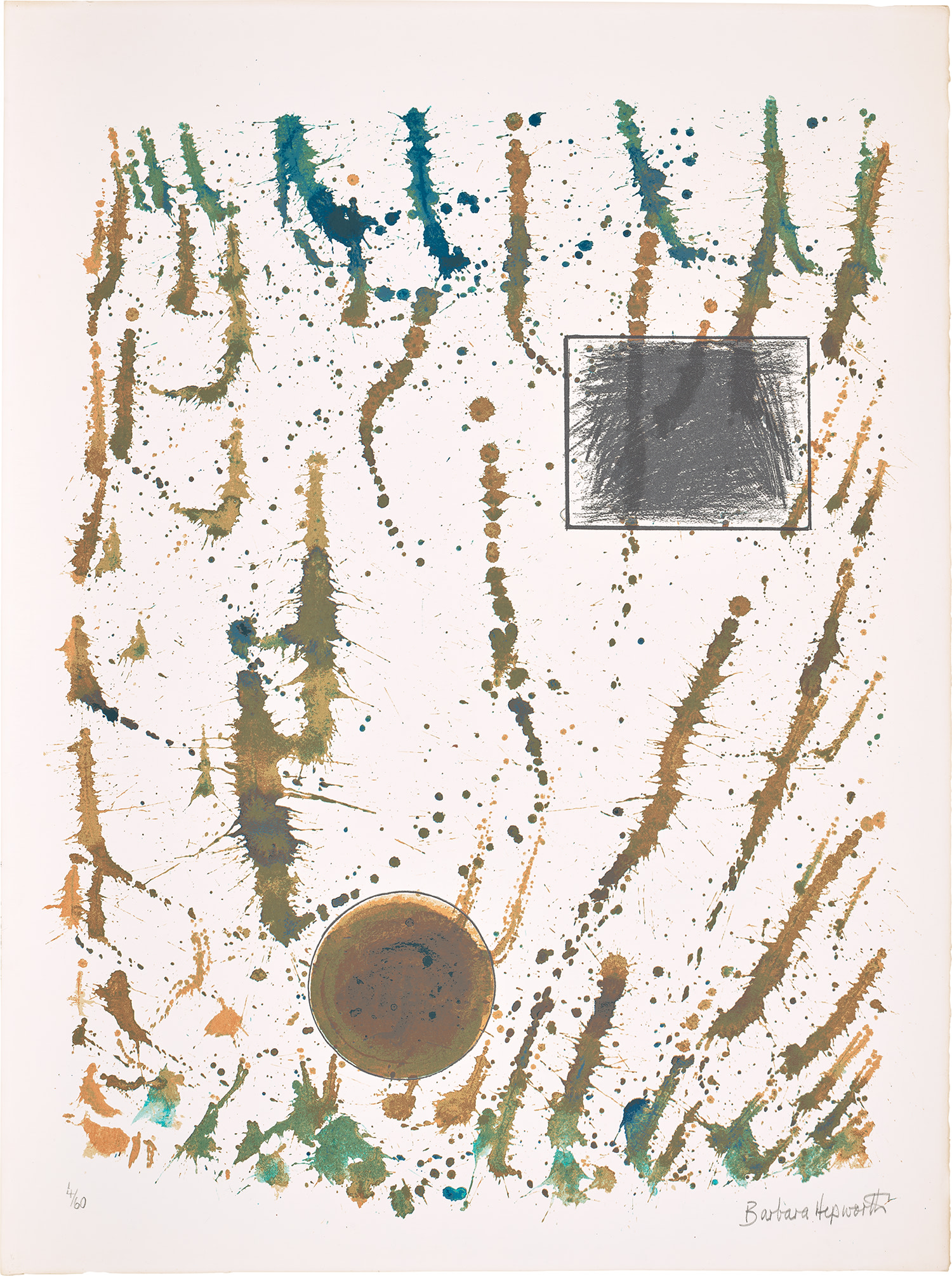
Forms in a Flurry, from Opposing Forms (M. 54, S.A.C. 39)
Her friendship with Ben Nicholson, whom she later married, brought her into the orbit of European modernism at its most electric, connecting her with Naum Gabo, Piet Mondrian, and Constantin Brancusi during visits to Paris. The move to St Ives in Cornwall in 1939, initially prompted by the outbreak of war, proved to be the defining geographical commitment of Hepworth's life. The town, perched between granite cliffs and the Atlantic, offered a landscape that seemed to rhyme perfectly with her artistic preoccupations: the tension between mass and void, the way light moves across curved surfaces, the sense of organic forms reaching toward one another across empty space. Her Trewyn Studio became a place of intense and sustained production, and it is now preserved as the Barbara Hepworth Sculpture Garden, one of the most visited artist spaces in Britain.
“Sculpture is the perception of space, the architecture of light and shadow.”
Barbara Hepworth
The pierced form, that thrilling aperture cut through solid material to reveal the sky or the sea beyond, became her signature gesture during this period, a discovery that changed the history of sculpture. Among the works that define her achievement, the bronzes from the 1960s carry a particular authority. Vertical Form (St Ives) from 1968 demonstrates her mastery of upward thrust and spatial dialogue, the surface holding light with an almost musical quality. Squares (June) from 1969, in polished bronze, shows her interest in geometry not as constraint but as liberation, the interplay of rectangular forms generating a sense of joyful order.
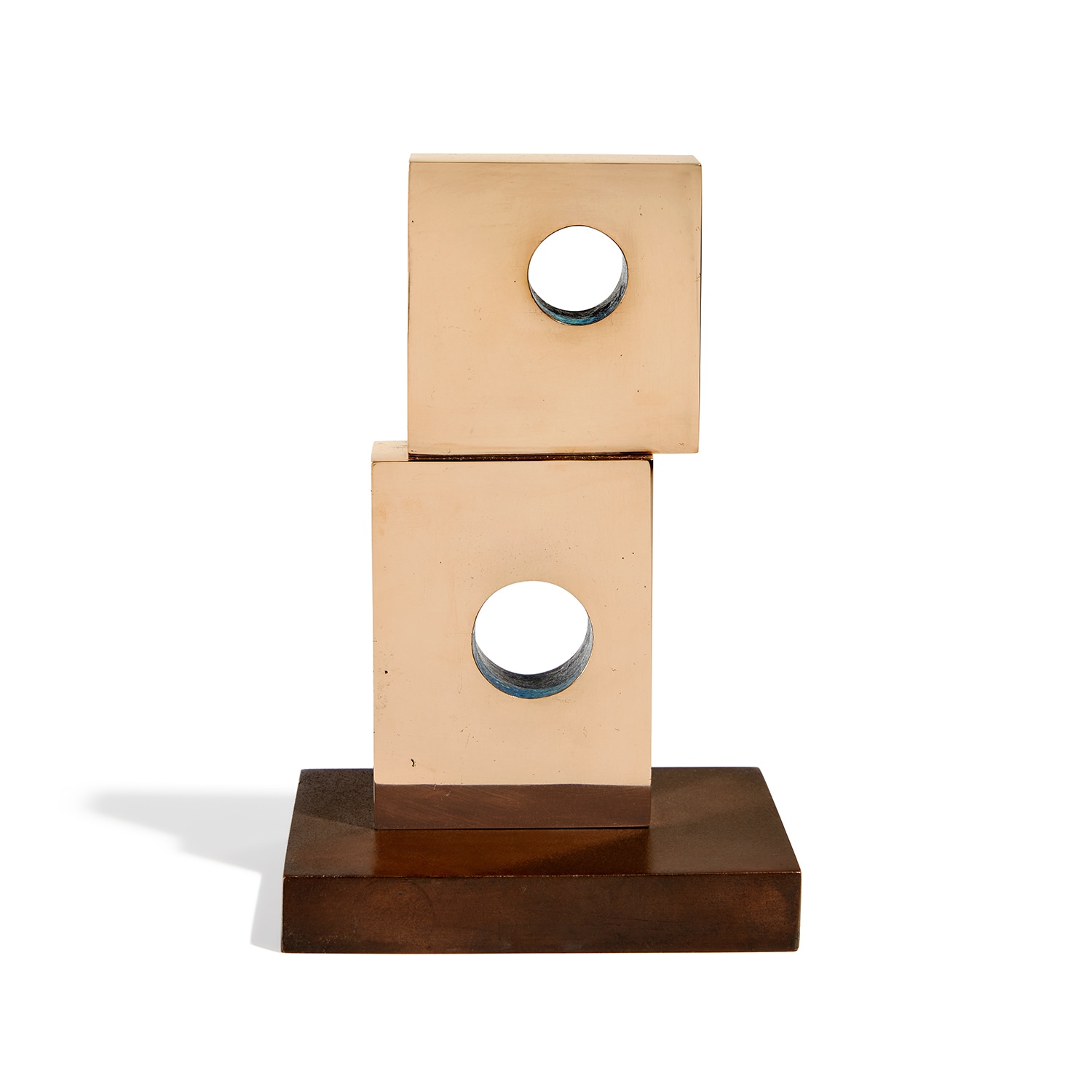
Barbara Hepworth
Squares (June), 1969
The earlier Interlocking Forms from 1957, executed in oil on board, reveals an aspect of her practice that is sometimes overlooked: her work on paper and in paint was not supplementary to her sculpture but a genuine parallel investigation, equally rigorous and equally beautiful. Her screenprints and lithographs, including works from the celebrated Opposing Forms series and the luminous Aegean Suite, translate her sculptural thinking into colour and line with remarkable freshness. For collectors, Hepworth's market offers a range of meaningful entry points. Her works on paper, including lithographs on Japanese paper and screenprints in colours on TH Saunders paper, represent some of the most accessible opportunities to engage with her vision, and they reward close attention over time in ways that photographs cannot fully convey.
“I think every painting, every work of art, is a form of prayer.”
Barbara Hepworth, interview, 1970
The bronzes, particularly the numbered casts from her mature period, have shown consistent long term strength at auction, appreciated both for their formal quality and for the documentary care with which they were produced. Details matter to collectors: the stamped initials, cast dates, and edition numbers that appear on her bronzes are marks of a studio culture that was meticulous and proud. Maquettes such as Three Forms in Echelon from 1961 offer a fascinating window into her working process, preserving the intimate scale at which her largest ideas first took shape. Hepworth belongs to a constellation of artists who transformed the understanding of what sculpture could be in the twentieth century.
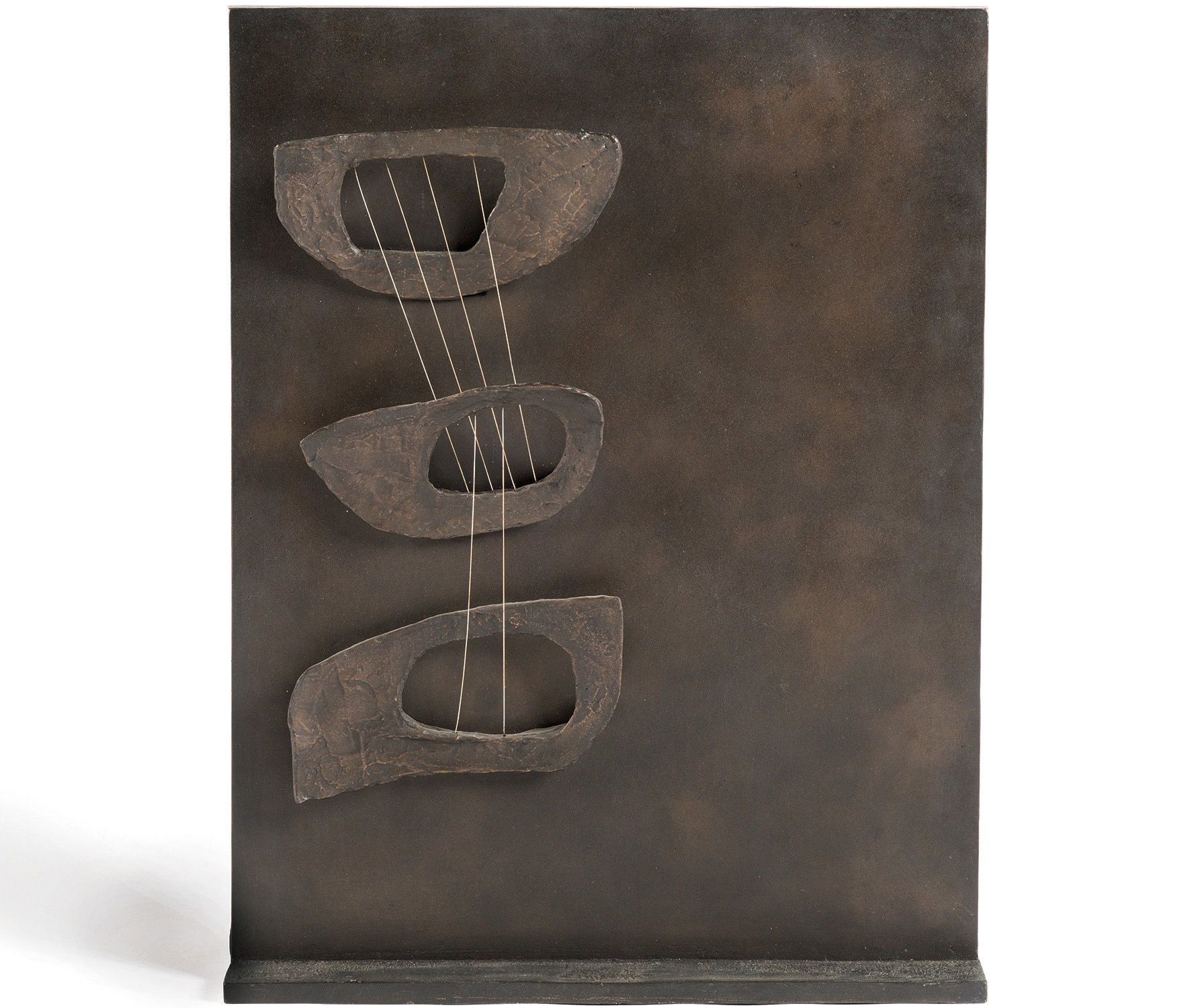
Barbara Hepworth
Maquette, Three Forms in Echelon, 1961
Henry Moore is the inevitable point of comparison, a lifelong interlocutor whose work shares her Yorkshire roots and her absorption in organic abstraction, though their solutions to shared problems were strikingly different. Naum Gabo's constructivism inflected her thinking about transparency and space. The works of Isamu Noguchi, another sculptor deeply committed to the relationship between form and landscape, offer a productive international parallel. Constantin Brancusi, whom she admired enormously, stands behind much of her formal economy, the commitment to distillation over elaboration.
Within British art, she is in conversation with the St Ives painters, particularly Peter Lanyon and Patrick Heron, all of them responding to the same extraordinary coastal light. Hepworth died in a fire at her Trewyn Studio in May 1975, and the loss felt, to those who knew her work, like a genuine rupture in the fabric of British cultural life. Yet her influence has only deepened in the decades since. Contemporary sculptors working with landscape, with abstraction, with the politics of the body in space, return to her again and again as a source of permission and precision.
Her insistence that sculpture was not an object placed in a landscape but a dialogue with it anticipates so much of what is most vital in art today. To collect Hepworth is to participate in one of the great conversations of modern art, a conversation that remains, emphatically, ongoing.
Explore books about Barbara Hepworth