Auguste Rodin

Rodin: The Hands That Remade Sculpture
Artist Spotlight · The Collection Editorial
“The main thing is to be moved, to love, to hope, to tremble, to live.”
Auguste Rodin
Stand before the original plaster of The Gates of Hell at the Musée Rodin in Paris and you understand, almost immediately, why Auguste Rodin remains one of the most visited and collected sculptors in the world more than a century after his death. That monumental work, commissioned in 1880 and never fully completed in his lifetime, contains within its teeming surface over 180 figures, including the seed of what would become The Thinker. It is a universe compressed into bronze, a testament to a mind that never stopped questioning what sculpture could be or say. Major institutions from the Philadelphia Museum of Art to the National Museum of Western Art in Tokyo continue to mount significant exhibitions of his work, and auction rooms in Paris, London, and New York treat each Rodin bronze as a cultural event rather than a simple transaction.
Auguste Rodin
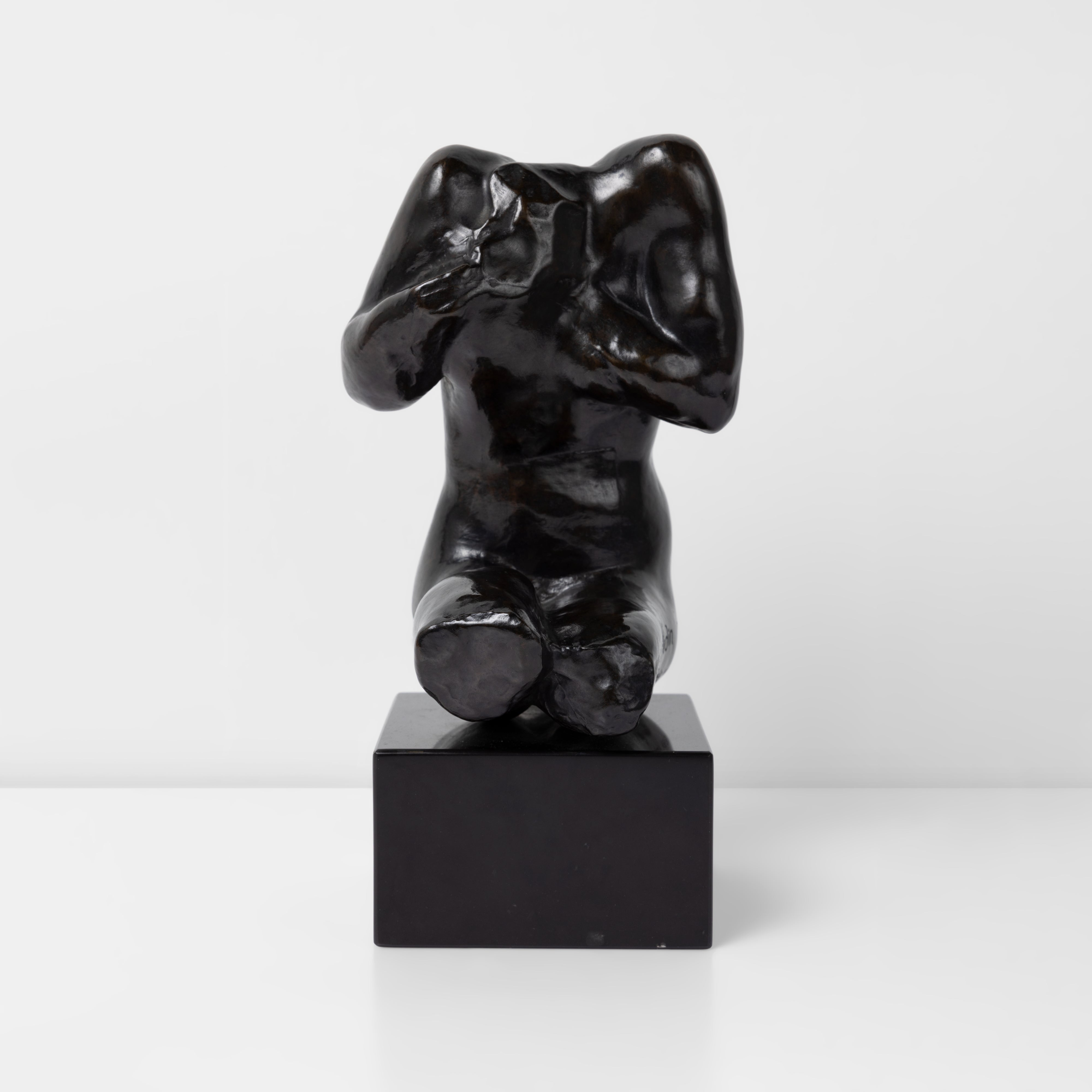
Torse féminin assis sans tête, petit modèle (Headless Seated Female Torso, Small Model)
Auguste René Rodin was born on November 12, 1840, in the Mouffe Goutard district of Paris, the son of a police inspector and a woman of modest origins. His early education was unremarkable by conventional standards, but his time at the Petite École, where he received his first serious training in drawing and decorative arts, revealed a ferocious appetite for looking. He attempted three times to gain admission to the prestigious École des Beaux Arts, the institution that defined academic sculptural success in Second Empire France, and was rejected each time. That triple refusal, which might have broken a lesser talent, instead sent Rodin on a path entirely his own, one that would ultimately make the academy's ideals look timid by comparison.
To survive, Rodin spent years working in the studios of decorative artists and craftsmen, learning the practical, physical intimacy with material that would later define his touch. His most formative professional relationship was with the accomplished sculptor Albert Ernest Carrier Belleuse, under whom he worked in Brussels during the early 1870s. That period in Belgium was industrious and formative, sharpening his technical command while stoking his ambition. His first major independent work, The Age of Bronze, exhibited in Paris in 1877, caused a scandal: critics accused him of casting directly from a living model because the figure was simply too alive, too convincingly human to have been invented.
Auguste Rodin
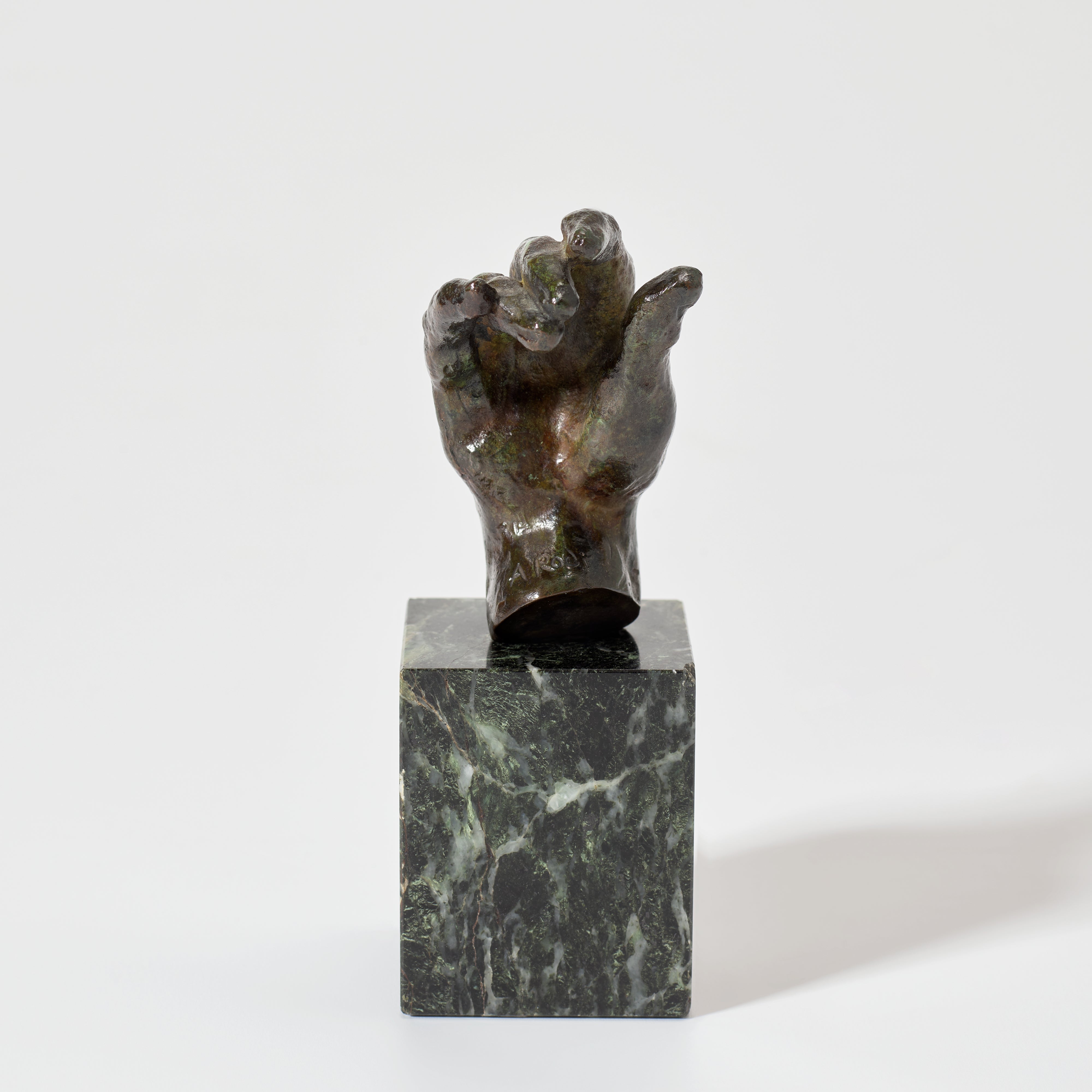
Main droite n° 07, petit modèle, 1880
The accusation was eventually disproven, but it announced something important. Rodin was doing something that French academic sculpture was not. The key to understanding Rodin's practice is the surface. Where his contemporaries pursued the smooth, idealized finish descended from Canova and the Greco Roman tradition, Rodin allowed the material to breathe and tremble.
“To any artist, worthy of the name, all in nature is beautiful, because his eyes, fearlessly accepting all exterior truth, read there the inner truth.”
Auguste Rodin, "On Art and Artists"
He studied Michelangelo's unfinished works during a transformative trip to Italy in 1875, and he absorbed the lesson of figures emerging from raw stone as if life itself was the subject rather than its representation. He employed a vast and sophisticated studio operation, working with skilled assistants and multiple enlargements and reductions of the same composition, which is why collectors today encounter his works in a range of scales and states. This practice was entirely conventional for the period and does not diminish the authority of any individual cast. It reflects, rather, a deeply modern understanding of sculpture as a living, multiplying form.
Auguste Rodin
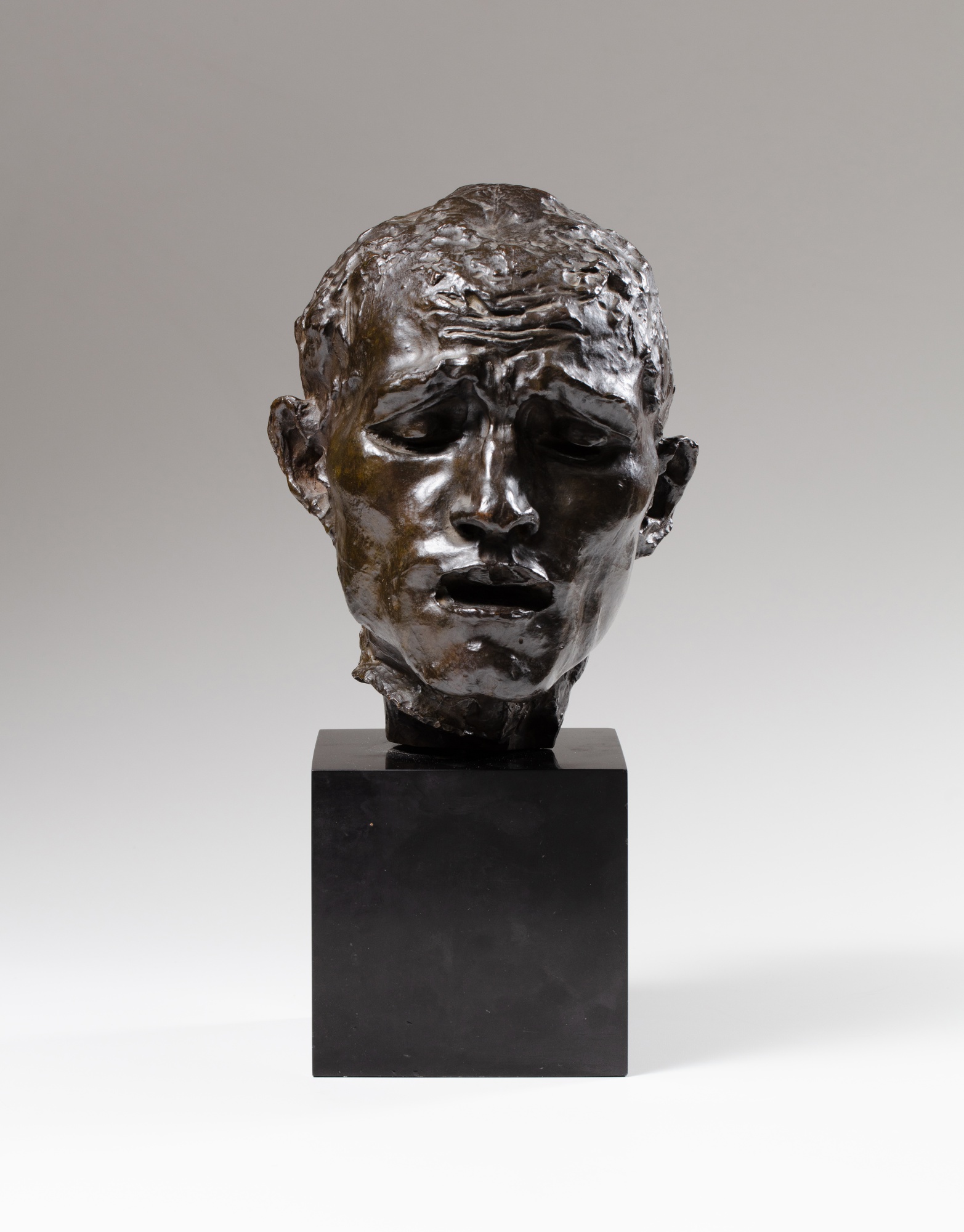
L'un des Bourgeois de Calais : Tête de Pierre de Wissant, étude type B , 1885
Among the works available to serious collectors, several reward particular attention. The various casts and states of Éternel printemps, conceived in 1884, represent Rodin at his most lyrical: two figures locked in an embrace that seems to defy gravity and material alike, the bronze itself appearing almost warm to the touch. The Bourgeois de Calais series, from which the arresting Tête de Pierre de Wissant emerges as a standalone bronze, shows a different register entirely, one of psychological weight and moral seriousness. Rodin's hands and torsos, including the remarkable Main droite petit modèle and the headless seated female torso studies, are not fragments or studies in any diminished sense.
“Patience is also a form of action.”
Auguste Rodin
They are complete philosophical statements about the sufficiency of the body as an expressive instrument, anticipating Brancusi and the entire trajectory of modern sculpture by decades. His works on paper, including the charcoal Portrait de Luisa de Morla Vicuña from 1888, demonstrate that his genius was by no means limited to three dimensions. From a collecting perspective, Rodin occupies a singular position in the market. His works appear regularly at Christie's, Sotheby's, and Bonhams, with bronze casts routinely achieving results in the hundreds of thousands and, for significant works, into the millions of dollars.
Auguste Rodin
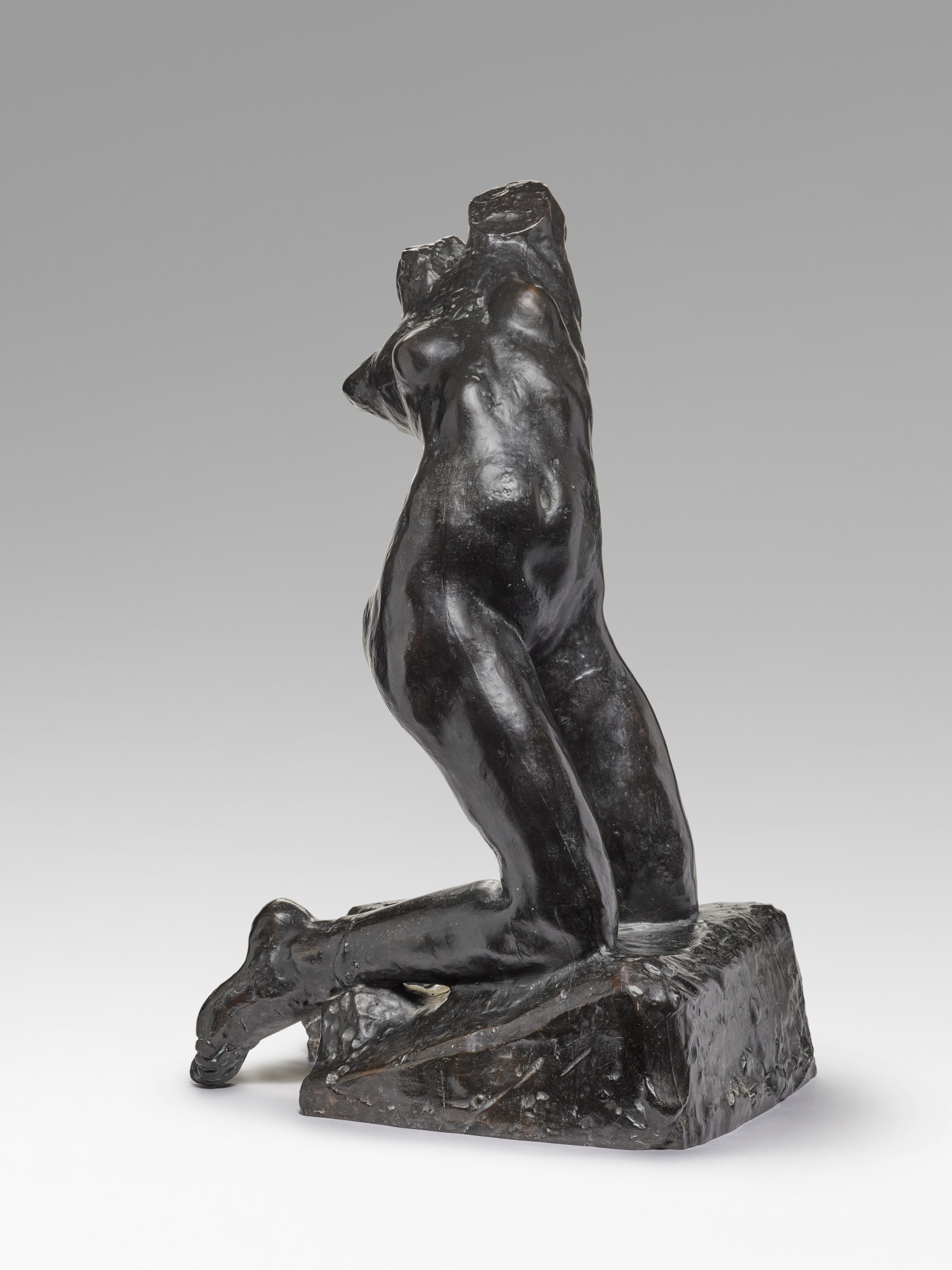
Nu féminin agenouillé en torsion
Collectors should attend carefully to the foundry marks, the date of casting, and the edition number, as the Musée Rodin in Paris has exercised legal authority over posthumous casts and maintains strict limits on editions for authorized bronzes. Works cast during Rodin's lifetime are exceptionally rare and command significant premiums. Posthumous casts authorized by the Musée Rodin carry full scholarly legitimacy and have proven to be excellent long term holdings, combining art historical importance with genuine aesthetic power. The range of price points, from works on paper to small bronzes to monumental casts, makes Rodin one of the few artists of his stature accessible to collectors at multiple stages of their journey.
To place Rodin in art historical context is to appreciate how many directions he simultaneously pointed. His textured surfaces and psychological intensity prefigure the Expressionism of Ernst Barlach and Wilhelm Lehmbruck. His fragmented figures anticipate the formal reductionism of Constantin Brancusi, who briefly worked in his studio before breaking away to find his own radical simplicity. Medardo Rosso, the Italian sculptor working in Paris at the same moment, shared Rodin's interest in surfaces that dissolve into light, and the two artists represent twin peaks of a sculptural revolution that changed everything that came after.
Camille Claudel, his student and intimate collaborator for many years, produced work of comparable emotional ferocity and deserves her own serious study alongside him. Rodin's legacy is not simply a matter of historical importance, though that alone would be sufficient. His insistence that sculpture must convey inner life, that the body is a vehicle for feeling rather than an exercise in formal perfection, remains the animating principle of figurative sculpture to this day. When a contemporary sculptor reaches for psychological truth over decorative refinement, the lineage leads back to Rodin.
Collectors who live with his work report that it does not become familiar in any diminishing sense: the surfaces continue to reveal themselves, the figures continue to move. That is the rarest quality in art, and it is why Rodin endures not as a monument from the past but as a living presence in the most discerning collections of our time.
Explore books about Auguste Rodin
Rodin: A Biography
Ruth Butler
The Sculptures of Rodin
Ionel Jianou
Rodin: The Man and His Art
Frederic V. Grunfeld
Auguste Rodin: Readings on Life and Work
Marta Sofaer
The Gates of Hell by Rodin
Charles Elsen
Rodin: Sculpture and Drawings
Alain Beausire
The Art of Rodin
Gsell, Paul
Rodin: The B. Gerald Cantor Collection
Beausire, Alain and Schmoll genannt Eisenwerth, J.A.