Antonio Lopez
Antonio Lopez, The Man Who Drew Life
Artist Spotlight · The Collection Editorial
In 2023, the fashion and art worlds converged with renewed intensity around the legacy of Antonio Lopez, as major retrospective attention and a surge of institutional scholarship brought his work back to the center of conversations about illustration, identity, and the meaning of beauty. The 2021 documentary "Antonio Lopez 1970: Sex Fashion and Disco," directed by James Crump, had already reintroduced Lopez to a generation of collectors and fashion devotees who recognized in his work something that transcended trend or era. His illustrations now appear regularly in curated sales at Sotheby's and Christie's, fetching prices that confirm what a quieter circle of collectors has known for decades: Lopez was not merely a fashion illustrator. He was a visionary artist whose paper and canvas became a stage for the most alive, electric, and multicultural vision of modern humanity that the twentieth century produced.
Antonio Lopez
Jerry Hall / New York City, 1976
Antonio Lopez was born in Utuado, Puerto Rico in 1943, and his family relocated to New York City when he was a young child, settling in the Bronx and later in the garment district neighborhoods of Manhattan where the rhythms of fashion, fabric, and ambition were woven into daily life. That transplantation shaped everything. Lopez grew up between two worlds, fluent in both the warmth and color of his Caribbean heritage and the kinetic energy of New York in the postwar years. He enrolled at the Fashion Institute of Technology, where his talent was immediately apparent, and by the early 1960s he had already begun contributing illustrations to Women's Wear Daily.
It was a beginning that felt almost too rapid, too assured, as though Lopez had arrived in the world already knowing what he wanted to say. His artistic development accelerated through a defining creative partnership with Juan Ramos, his collaborator and lifelong companion, who brought a conceptual sharpness and graphic sensibility that deepened Lopez's already formidable instincts. Together they moved between New York and Paris with a freedom and fluency that made their studio one of the most sought after creative environments of the era. Lopez worked with Karl Lagerfeld during his years at Chloe, collaborated regularly with Interview magazine under the orbit of Andy Warhol, and produced some of the most celebrated pages in the history of American Vogue.
Antonio Lopez
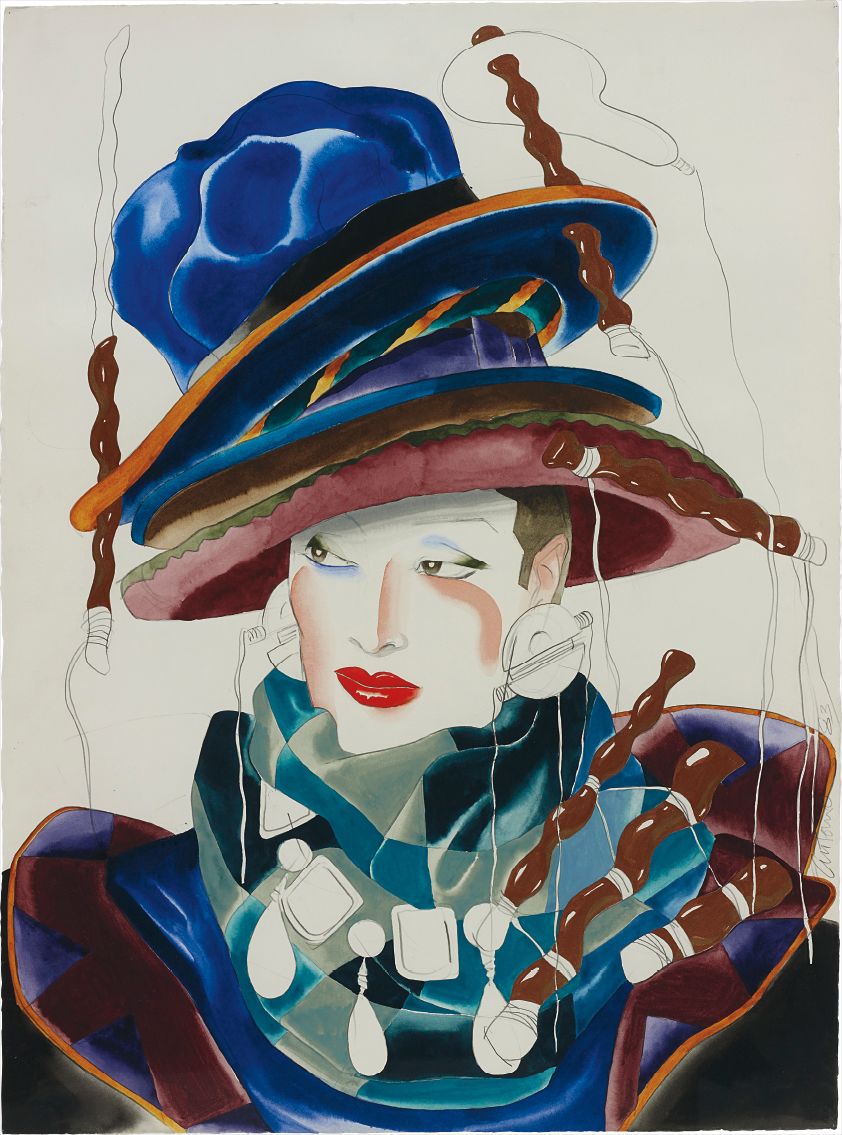
Maria Snyder, Personal Study, 1983
His line was confident without being cold, sensuous without being soft. He drew bodies that moved, faces that breathed, figures that seemed to insist on being seen as full human beings rather than mannequins for clothing. The works held in The Collection offer a remarkable window into the range and depth of Lopez's practice across two decades. "Mr.
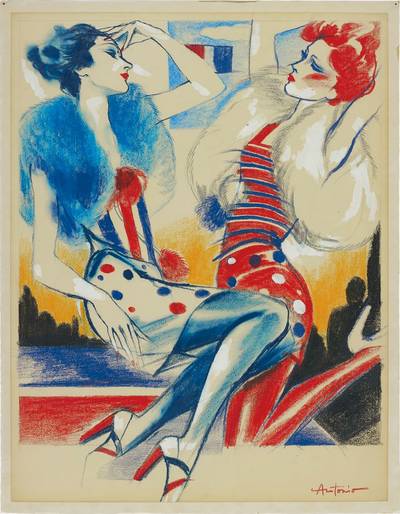
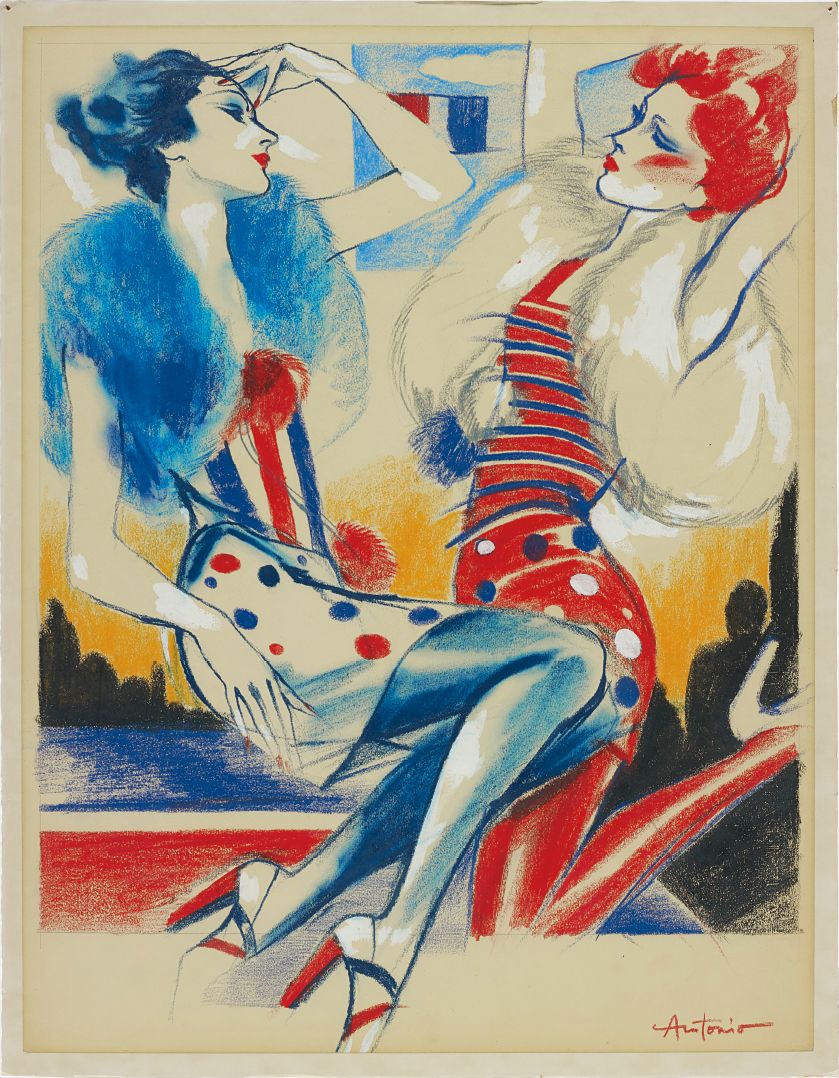
Chow's Drawing: Paris III" from 1973, rendered in pastel and gouache on paper, captures the louche glamour of the Paris years with a warmth that feels almost tactile. The 1976 work "Jerry Hall and New York City" is among his most iconic images, a portrait of the Texas model who became one of his great muses, rendered with the kind of electric specificity that makes the viewer feel they are standing in the room. "Maria Snyder, Personal Study" from 1983, combining pencil, metallic paint, and watercolour on paper, shows Lopez in a more intimate and experimental register, the metallic elements catching light in ways that feel almost sculptural. These are not illustrations in any diminished sense of the word.
Antonio Lopez
Mr. Chow's Drawing: Paris III, 1973
They are finished works of art that reward close looking. For collectors, Lopez represents a category of opportunity that remains genuinely compelling. His market has grown steadily as the critical framework around illustration has expanded, with institutions like the Museum of Arts and Design in New York and the Victoria and Albert Museum in London increasingly treating illustration as a primary rather than secondary art form. Works on paper by Lopez in strong condition, particularly those with personal inscriptions or documentary provenance connecting them to specific editorial commissions, carry additional resonance.
Collectors who have built holdings around the New York scene of the 1970s, or who collect adjacent figures such as Andy Warhol, Patrick Nagel, or the French illustrator Rene Gruau, frequently find that a Lopez work becomes the most discussed piece in any room. His prices remain accessible relative to his historical significance, which experienced advisors tend to read as an invitation. Lopez belongs to a lineage of artist illustrators who transformed commercial work into something that demanded to be considered on its own terms. In the earlier twentieth century, figures like Erte and Carl Erickson had elevated fashion illustration toward fine art.
Antonio Lopez
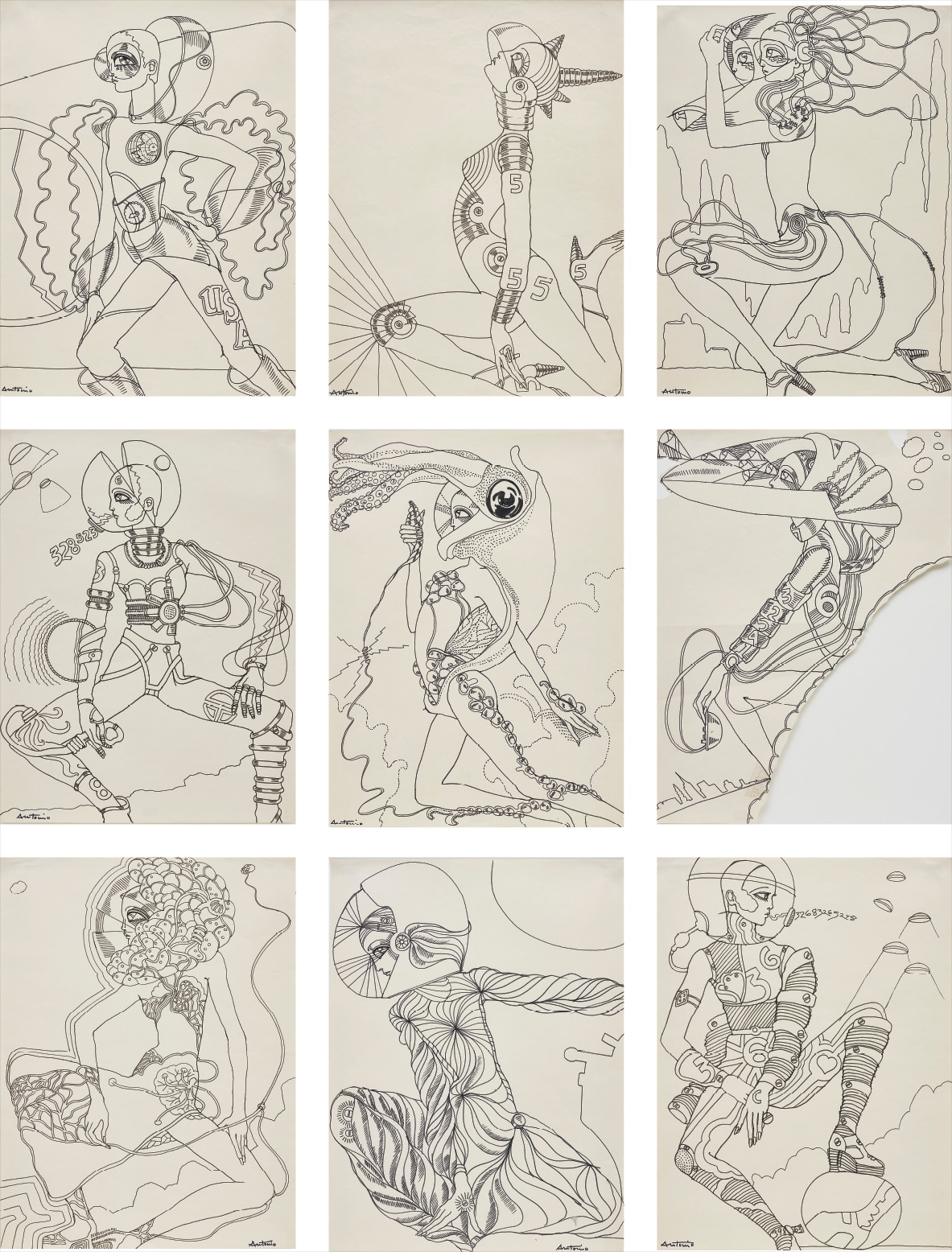
Personal Studies Space People, 1965
Lopez arrived at a moment when that tradition was being challenged by photography, and rather than retreat he pushed forward, insisting that the drawn line could do something the photographic lens could not: it could carry the artist's entire nervous system, their appetite and admiration and curiosity, into the image itself. His contemporaries included Warhol, who had of course made the same transition from commercial illustration to art world phenomenon, and the parallel between their careers is instructive. Lopez never fully made that institutional leap in his own lifetime, partly because his life was cut short by AIDS in 1987 at the age of forty four. But the work he left behind has made that argument on his behalf, with increasing persuasiveness, ever since.
The legacy of Antonio Lopez is inseparable from the question of whose beauty gets celebrated and by whom. Lopez drew Black women, Latina women, Asian women, and gender nonconforming figures at a time when mainstream fashion imagery remained strikingly narrow in its vision of desirability. He did not do this as activism, exactly, though the effect was political. He did it because it reflected the world he actually lived in, the world of downtown New York and the Paris demimonde, of discotheques and couture salons, of friends and lovers and collaborators who happened to be among the most beautiful and interesting people alive.
That generosity of vision, that insistence on drawing the full spectrum of human vitality, is what makes his work feel not dated but prophetic. To encounter a Lopez today is to understand that he was, in the most essential sense, ahead of his time.
Explore books about Antonio Lopez