Annie Leibovitz

Annie Leibovitz, Life Seen With Love
Artist Spotlight · The Collection Editorial
“A thing that you see in my pictures is that I was not afraid to fall in love with these people.”
Annie Leibovitz, At Work, 2008
In the autumn of 2023, the Fotografiska museum in New York presented a sweeping survey of Annie Leibovitz's work that drew queues around the block and reminded a new generation why her photographs feel less like documents and more like encounters. The show gathered decades of work spanning Rolling Stone covers, Vanity Fair commissions, and personal projects, placing them in conversation with one another in a way that revealed something essential: Leibovitz has always been making one continuous, deeply human argument about what it means to truly see another person. That argument, pursued across more than fifty years, has produced some of the most recognizable images in the history of photography. To stand before her prints is to understand that celebrity, in her hands, becomes something far more interesting than fame.
Annie Leibovitz
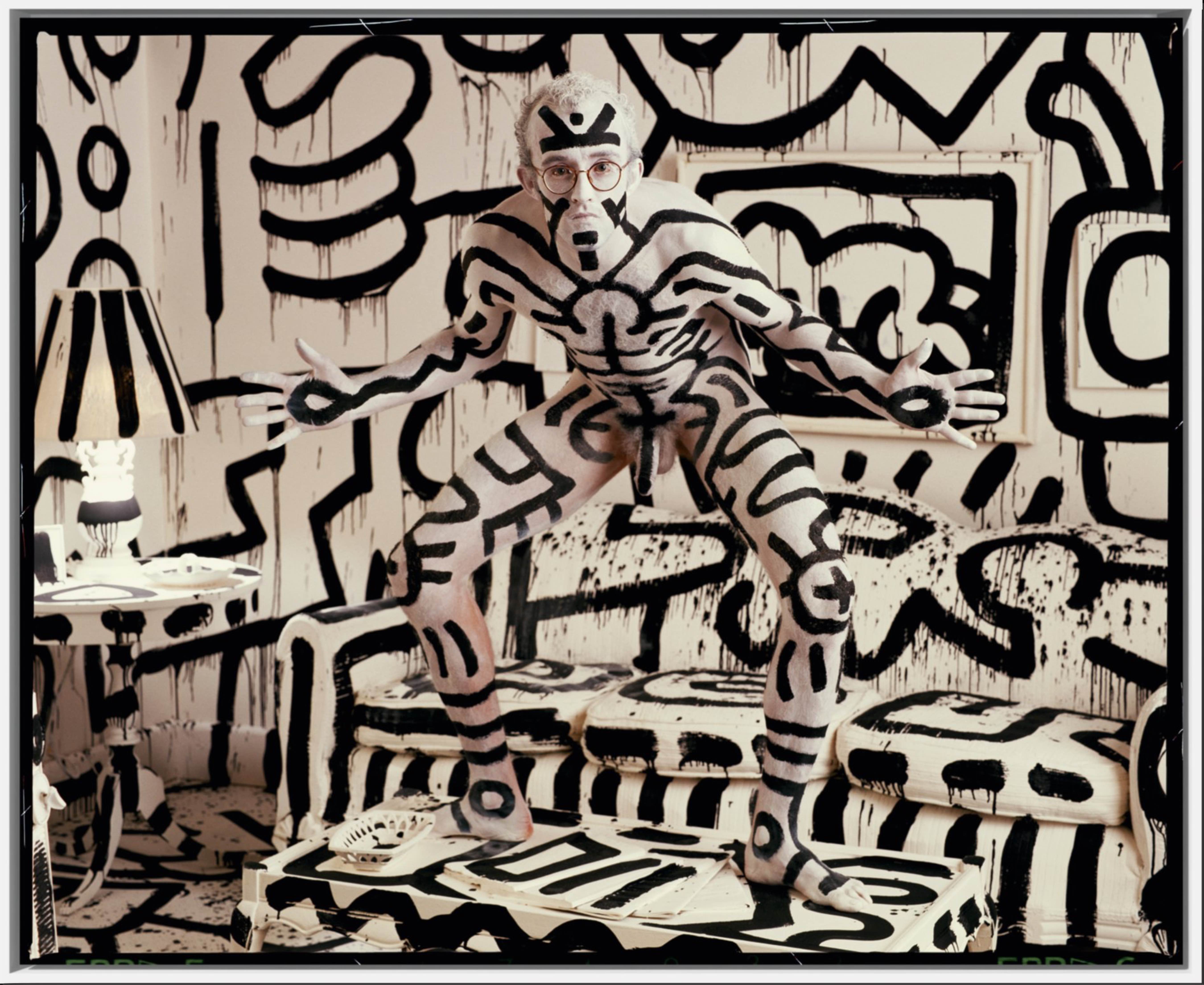
Keith Haring, 2023
Annie Leibovitz was born in 1949 in Waterbury, Connecticut, the third of six children in a military family that moved frequently, following her father's postings across the United States and abroad. That nomadic upbringing, she has said, trained her eye early, sharpening her attention to the particular character of places and the way people carry their environments with them. She studied painting at the San Francisco Art Institute, where she encountered photography almost by accident, taking a night class that would redirect the entire course of her life. The combination of a painter's instinct for composition and a documentarian's hunger for authentic presence would become the twin engines of everything she created.
Her career at Rolling Stone, which began in 1970 when she was just twenty years old, was a kind of apprenticeship conducted at full speed and in public. She was shooting the defining cultural figures of the era, traveling with the Rolling Stones on their 1975 North American tour and developing an approach that collapsed the distance between photographer and subject. By the time she became chief photographer at Rolling Stone, she had already established a signature: the willingness to go further, to stay longer, to wait for the moment when artifice gives way to something truer. Her 1980 photograph of John Lennon curled naked against Yoko Ono, taken hours before his death, became one of the most discussed and emotionally loaded images of the twentieth century, a picture that seemed to condense an entire era of cultural history into a single frame.
Annie Leibovitz
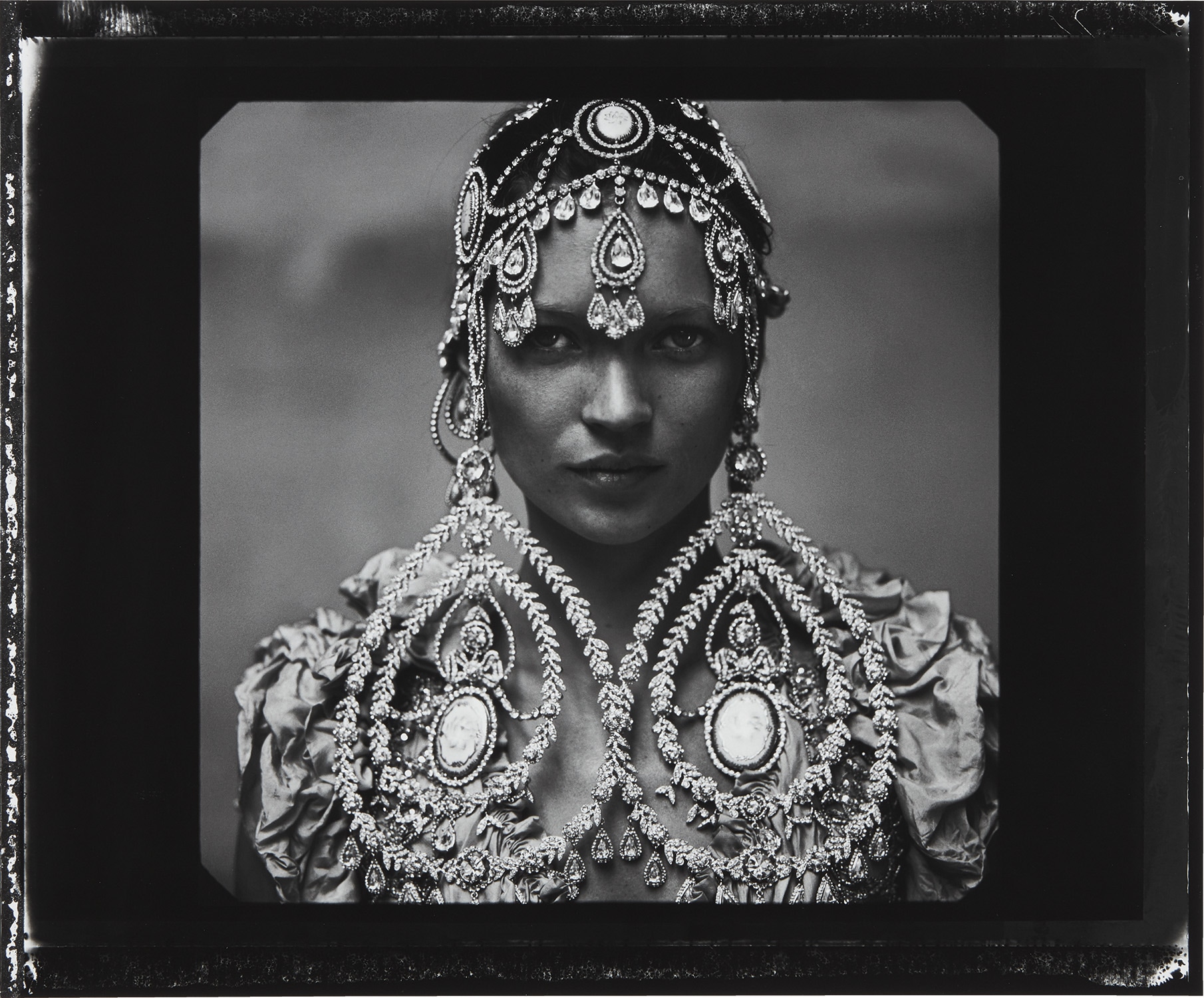
Kate Moss
The move to Vanity Fair in 1983 opened a new chapter and a larger canvas. The magazine's resources allowed Leibovitz to develop her theatrical instincts more fully, staging elaborate, conceptually rich portraits that drew on art history, cinema, and her subjects' own mythologies. It was here that she produced the image of a very pregnant Demi Moore on the magazine's August 1991 cover, a photograph that genuinely changed the visual culture of its moment and is still cited as a watershed in the representation of women's bodies in mainstream media. Her portraits of Queen Elizabeth II, Whoopi Goldberg, Kate Moss, Cindy Sherman, and countless others from this period share a quality that is difficult to name but immediately felt: a sense that the subject has consented to be truly known rather than merely seen.
“The camera makes you forget you're there. It's not like you are hiding but you forget, you are just looking so hard.”
Annie Leibovitz
What makes Leibovitz's prints so compelling to collectors is precisely this layering of intimacy and formal mastery. Her portrait of Whoopi Goldberg, submerged in a bath of milk in Berkeley, California, is at once a formally exquisite study in tonal contrast and a bold, joyful, politically resonant image. Her photographs of the dancer Julie Worden for the Mark Morris Dance Group project demonstrate her range beyond celebrity, revealing the same attentiveness to the body in motion that she brings to her most famous subjects. The Keith Haring portrait, available as a dye sublimation ChromaLuxe aluminum print, captures the artist with the electric, generous energy that defined his brief and brilliant life.
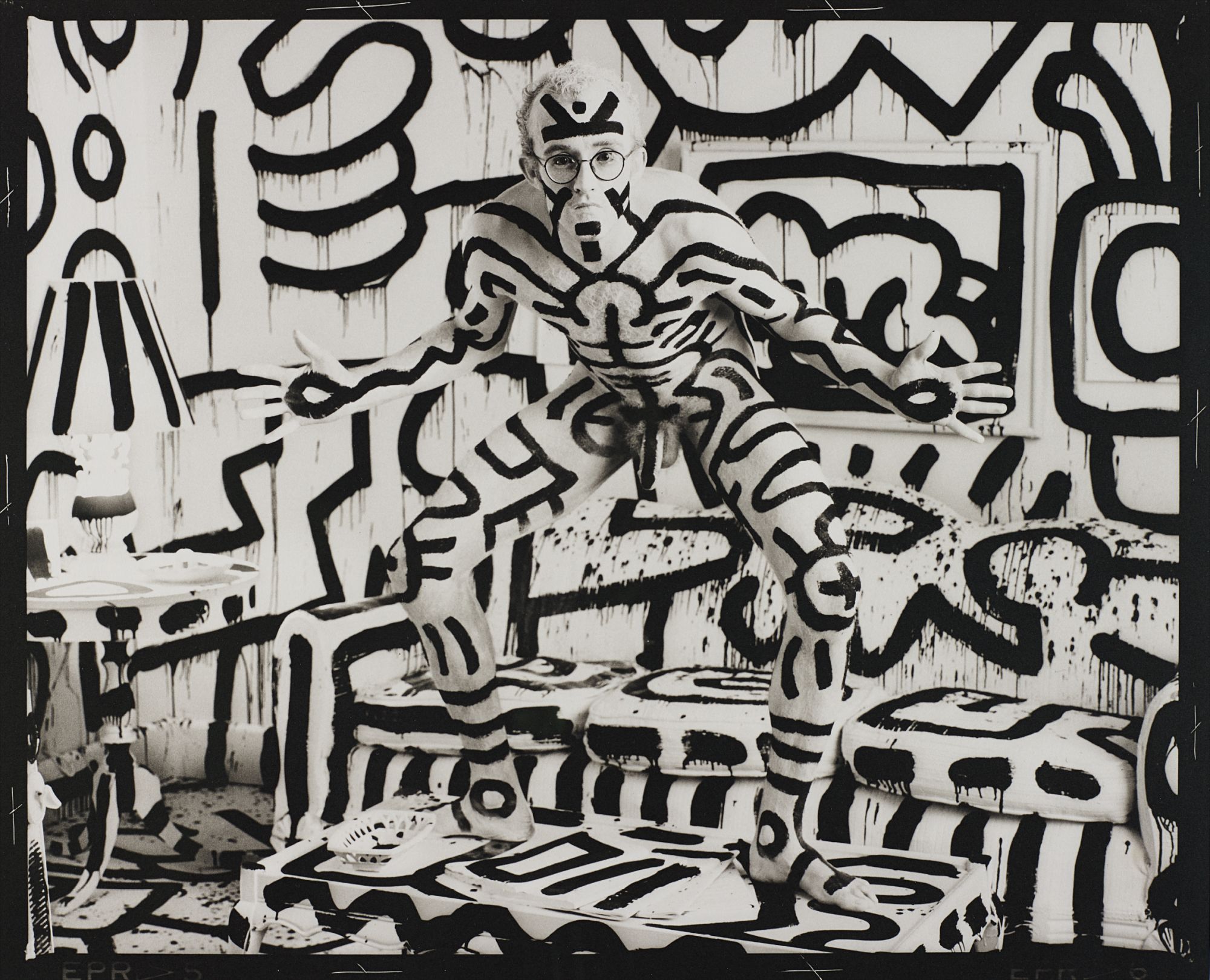
Annie Leibovitz
Keith Haring, New York
Each of these works rewards close looking, offering compositional decisions and tonal nuances that become richer the more time one spends with them. From a collecting perspective, Leibovitz occupies a position that is both culturally central and remarkably accessible relative to her historical significance. Her works are held in major institutional collections and have achieved strong results at auction through houses including Phillips and Christie's, where signed and numbered prints in desirable editions have demonstrated consistent demand. Collectors are drawn not only to the canonical celebrity portraits but increasingly to her less expected work, the dance photographs, the personal landscapes, the quieter images that sit alongside the iconic ones and reveal the full breadth of her vision.
Works on archival pigment and dye destruction processes offer excellent longevity, and signed artist's proofs carry particular appeal for serious collections. To understand Leibovitz within the broader history of photography is to place her in a lineage that includes Richard Avedon, whose psychological penetration she inherited and extended, and Irving Penn, whose formal elegance she shares without ever sacrificing warmth. Among her contemporaries, there are clear affinities with Herb Ritts in the celebration of the body and with Nan Goldin in the commitment to intimacy, though Leibovitz's theatrical range distinguishes her from both. Her long engagement with Vanity Fair also places her in a tradition of photographer as cultural chronicler, a role she has fulfilled with a seriousness of purpose that elevates commercial work to the level of art history.
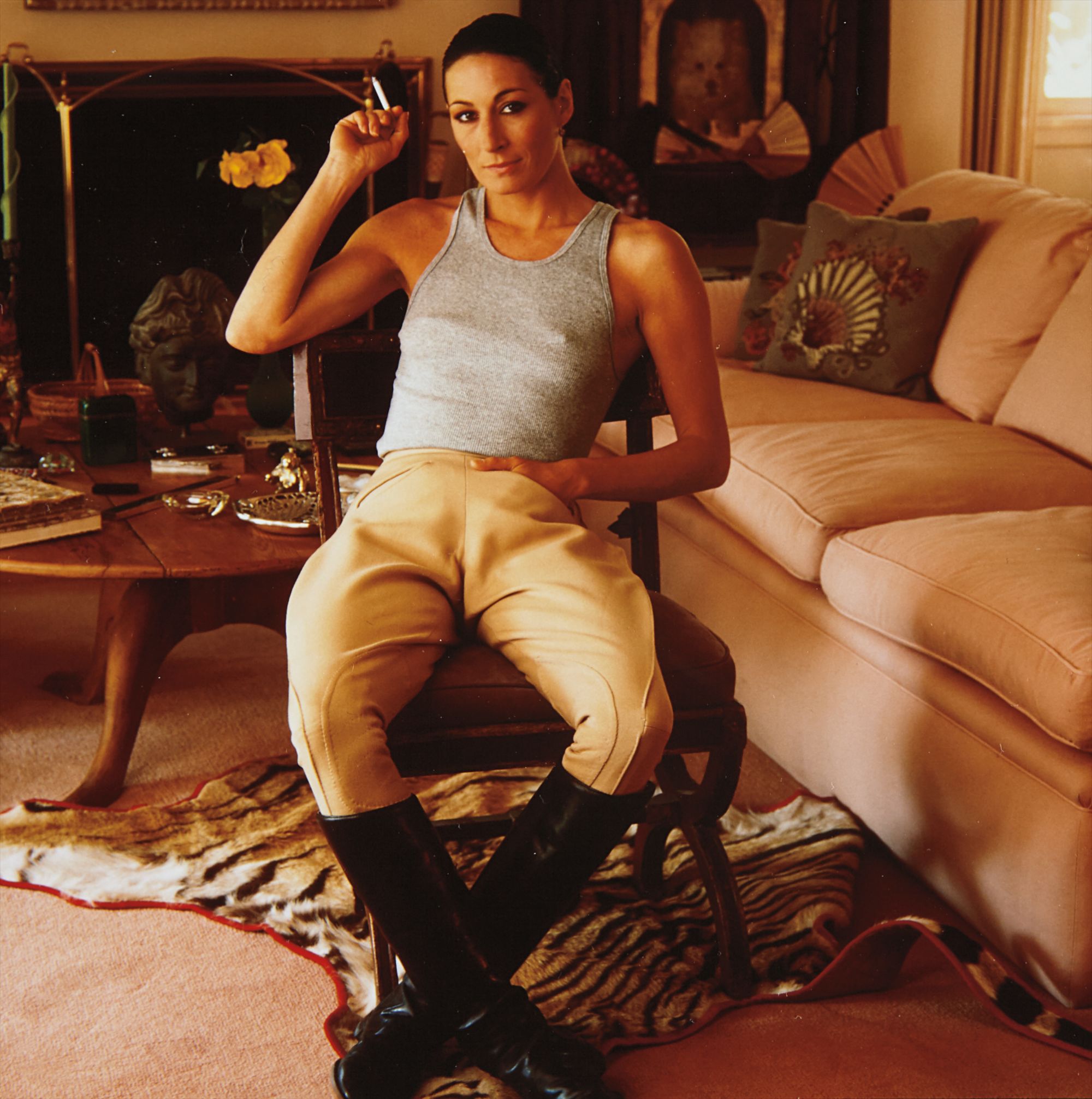
Annie Leibovitz
Selected portraits from Vanity Fair
The legacy of Annie Leibovitz is still being written, which is one of the things that makes her so vital as a collecting proposition. She continues to work at full intensity, bringing the same hunger for connection and revelation to new subjects and new formats. Her influence is visible everywhere in contemporary portrait photography, in the willingness to stage, to collaborate, to treat the subject as a creative partner rather than a passive object. To collect her work is to hold a piece of the visual memory of our era, but more than that, it is to live with photographs that return something generous every time you look at them.
That generosity, earned through decades of craft and commitment, is ultimately what makes Annie Leibovitz irreplaceable.
Explore books about Annie Leibovitz