Anna Weyant
Anna Weyant Paints the World Anew
Artist Spotlight · The Collection Editorial
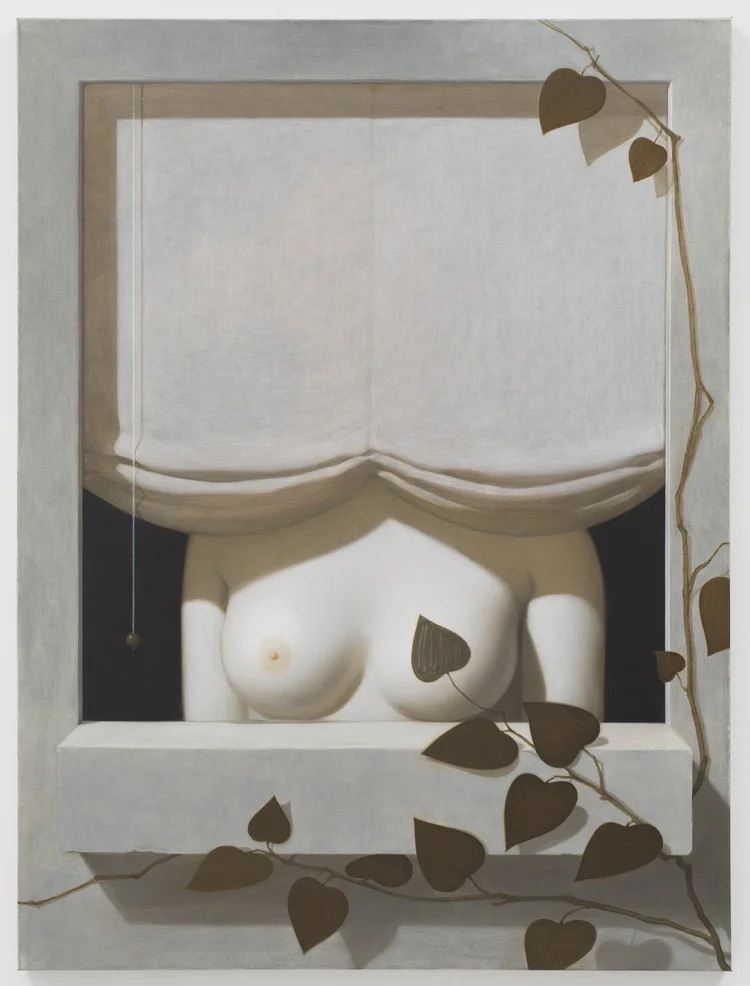
Something remarkable has happened in contemporary figurative painting over the past several years, and Anna Weyant is at the center of it. Her 2024 canvas "Who's Afraid of the Big Bad Wolves?" encapsulates everything that has made her one of the most talked about painters of her generation: a deceptively composed scene rendered in luminous oil, populated by figures whose inner lives feel simultaneously guarded and utterly exposed. At just twenty nine years old, Weyant has achieved what many artists spend decades pursuing, a singular visual language that feels both historically rooted and urgently of the moment.
Anna Weyant
Who’s Afraid of the Big Bad Wolves?, 2024
The art world has taken notice, and collectors across institutions and private hands have followed. Weyant was born in 1995 and grew up in Calgary, Alberta, before making her way to the United States to pursue her artistic education. She studied at the Rhode Island School of Design and later the New York Academy of Art, institutions that grounded her in the rigorous observational traditions of European academic painting. This dual formation was decisive.
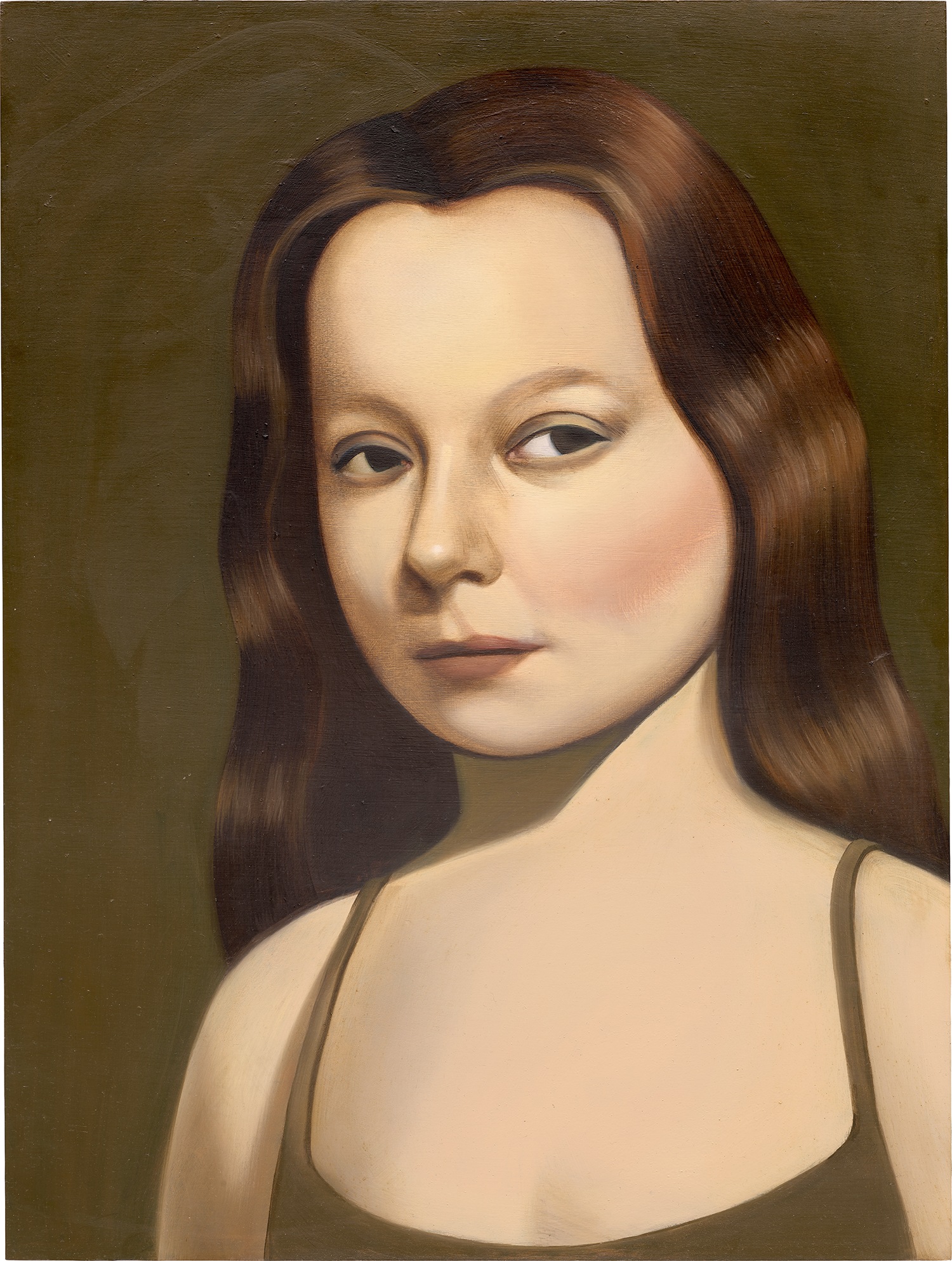
RISD gave her a broad creative foundation while the New York Academy immersed her in the discipline of the figure, in anatomy, light, and the patient, exacting craft of representational oil painting. New York itself became a formative environment, a city that rewards ambition and sharpens perception, and Weyant absorbed both its energy and its undertow. Her early works, including pieces from 2019 such as "Cynthia," "So Bored," and "Bath Time," announced a painter of unusual psychological intelligence. These small and intimate oil panels depicted young women in poses that felt borrowed from Old Master portraiture yet inflected with a mood entirely contemporary.
Anna Weyant
Untitled, 2021
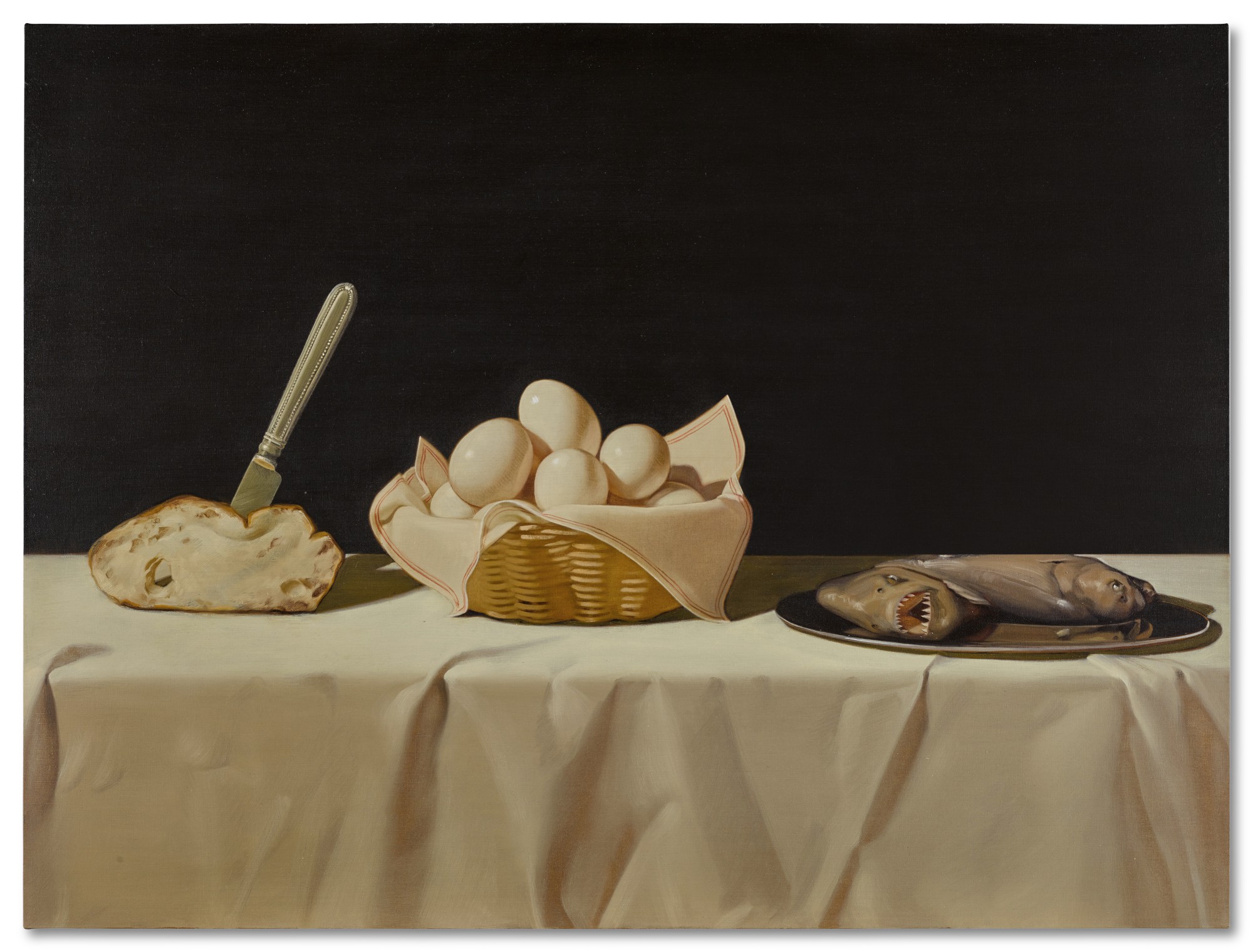
There is something of John Currin's knowing engagement with art historical precedent in her approach, and echoes of Eric Fischl's unsettling domesticity, yet Weyant's vision is unmistakably her own. Where those predecessors often trafficked in irony or provocation, Weyant holds something softer and more melancholy in her compositions, a tenderness for her subjects even as she frames them in moments of quiet psychological suspension. By 2020, with works like "Cut Flowers" and "Buffet," Weyant's practice had expanded in ambition and scale. The flowers in her paintings are never simply decorative; they carry the full weight of vanitas tradition, petals already beginning their turn toward dissolution.
Her figures inhabit domestic spaces that feel simultaneously familiar and slightly off, rooms that might be remembered rather than observed, lit with the golden softness of a Northern European interior painter but charged with a contemporary unease. This is the essential tension in her work: the beauty of the surface and the disquiet beneath it. Collectors and critics recognized immediately that something new and lasting was being built, canvas by canvas. The relationship with Gagosian, one of the most significant gallery partnerships any young painter could hope for, brought Weyant's work to an international audience and placed her in conversation with the broadest history of figurative painting the gallery represents.
Anna Weyant
Cynthia, 2019
Her exhibitions have drawn sustained critical attention, with reviewers consistently noting the paradox at the heart of her practice: that she uses the most traditional of methods to articulate a psychological landscape recognizable to anyone who has grown up in the digital age. The phrase "millennial anxiety" gets applied to her work frequently, and while it is not wrong, it perhaps undersells the universality of what she captures. Loneliness, self consciousness, the performance of ease, these are not generational conditions; they are human ones. From a collecting perspective, Weyant represents precisely the kind of opportunity that serious collectors look for: a young artist with demonstrable technical mastery, a coherent and evolving body of work, institutional validation, and a primary market relationship with a major gallery.
Her auction results have reflected the genuine enthusiasm of the secondary market. Works on paper such as the 2019 "Drawing for Uh Huh Honey" offer an entry point into her practice while revealing the confident draftsmanship that underpins her painted work. For collectors building a collection around contemporary figurative painting, Weyant sits naturally alongside names like Cecily Brown, whose painterly bravura shares a certain emotional directness, and Lynette Yiadom Boakye, whose invented figures carry a comparable interior mystery. She also speaks to the lineage of painters like Lucian Freud and Alice Neel, artists who understood that the human figure, treated with patience and honesty, can bear almost unlimited psychological weight.
Anna Weyant
Buffet, 2020
The 2023 work associated with "The Guitar Man" exhibition gestures toward a slightly more expansive register in her practice, suggesting a painter who is not content to repeat what has already succeeded. This willingness to test the edges of her visual world, to introduce new figures, new moods, new narrative ambiguities, is one of the most encouraging signs for the long arc of her career. Great painters grow, and Weyant shows every indication of being among them. Her 2024 canvas "Who's Afraid of the Big Bad Wolves?
" feels like a summation and a new beginning simultaneously, a painting that looks back at everything she has learned and forward into territory she has not yet fully explored. Anna Weyant matters today because she has reminded a generation of viewers that oil painting, that most ancient and demanding of mediums, is still capable of saying something no photograph or screen can say. In an era saturated with images, her canvases require and reward sustained looking. They do not give themselves up immediately.
The longer you spend with a Weyant, the more the surface yields: a shift in expression, a strange quality of light, a compositional decision that at first seemed conventional and reveals itself as quietly radical. That is the measure of a painter worth collecting, worth living with, worth returning to across decades. She is, in every sense, one to watch.