Alphonse Legros

Alphonse Legros: A Master Quietly Transformed Everything
Artist Spotlight · The Collection Editorial
There is a particular pleasure in standing before a Legros etching and feeling the full weight of a human life pressing through the paper. His peasant women, his fishermen, his monks and wanderers exist in a register of quiet dignity that feels startlingly contemporary, the kind of unflinching, tender observation that contemporary figurative artists spend careers attempting to achieve. Alphonse Legros accomplished it before he was twenty years old, and the legacy he built across France, Britain, and the wider art world remains one of the most singular and underappreciated achievements of the nineteenth century. Legros was born in Dijon in 1837, the son of an accountant, and his early years offered little in the way of privilege or artistic advantage.
Alphonse Legros
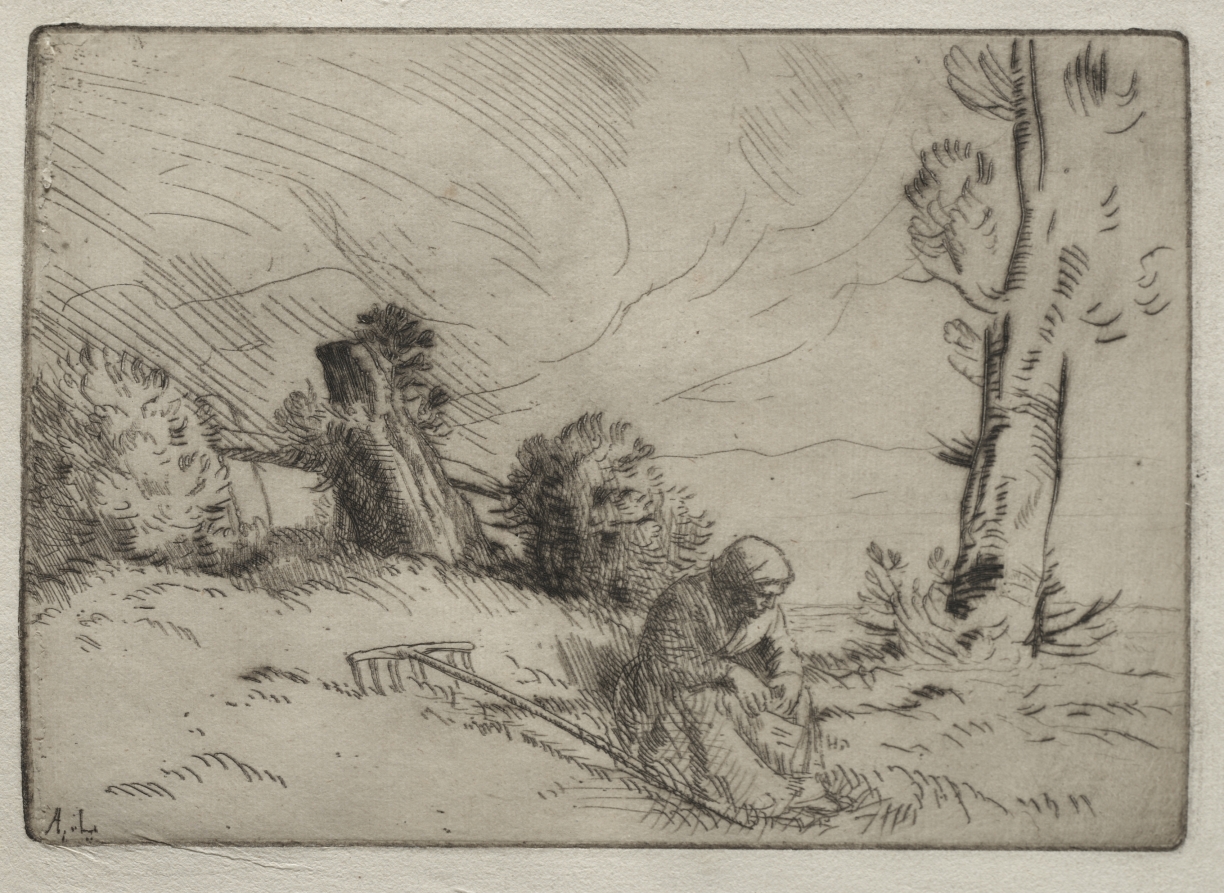
Peasant Woman Seated near a Hedge, 1857
He made his way to Paris as a young man and studied under Lecoq de Boisbaudran at the École des Beaux Arts, a teacher whose revolutionary method of training visual memory rather than relying on constant reference to the model would prove formative. Lecoq's studio was a gathering place for restless, observant talents, and among Legros's fellow students were Henri Fantin Latour and Carolus Duran, artists with whom he would maintain lasting friendships and shared aesthetic convictions. From the beginning, Legros was drawn not to the grand allegorical machinery of academic painting but to the textures of ordinary life, the calloused hands, weathered faces, and laboring bodies that the Salon often preferred to overlook. His breakthrough came at the Salon of 1857, where he exhibited works that announced a vision fully formed and fiercely independent.
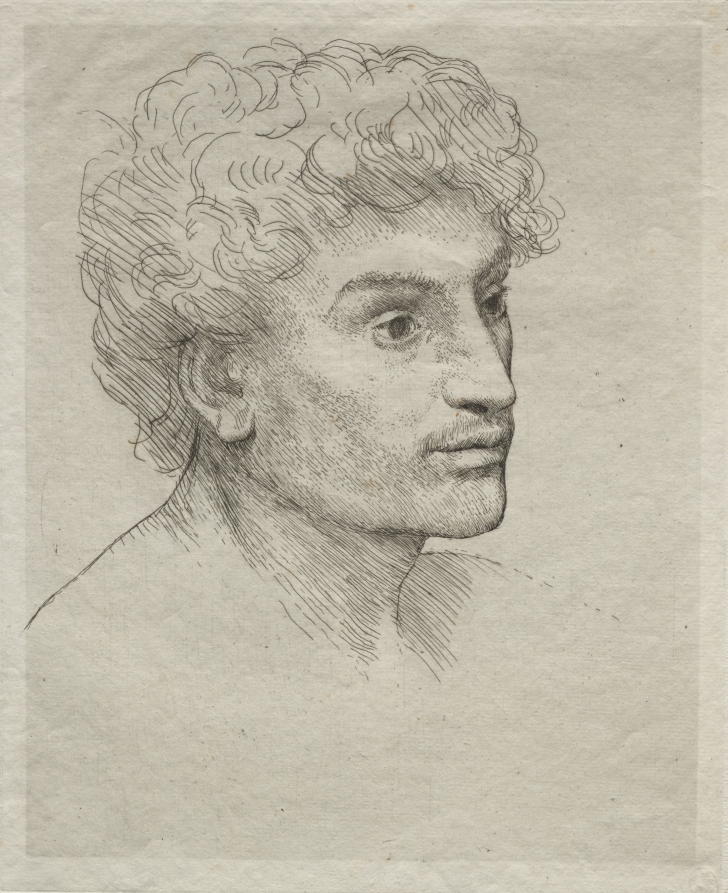
The etchings and drypoints he produced in that year, including "Peasant Woman Seated near a Hedge," "Head of a Young Man," and "Fishermen on the Wharf at Boulogne," remain among his most celebrated achievements. These are works of remarkable economy and psychological depth, rendered with a confidence that belies the artist's youth. The influence of the Spanish masters, particularly Velázquez and Ribera, is palpable in his handling of shadow and in his refusal to sentimentalize poverty or labor. Legros looked at the people around him and found them worthy of the same gravity and attention that earlier centuries had reserved for saints and kings.
Alphonse Legros
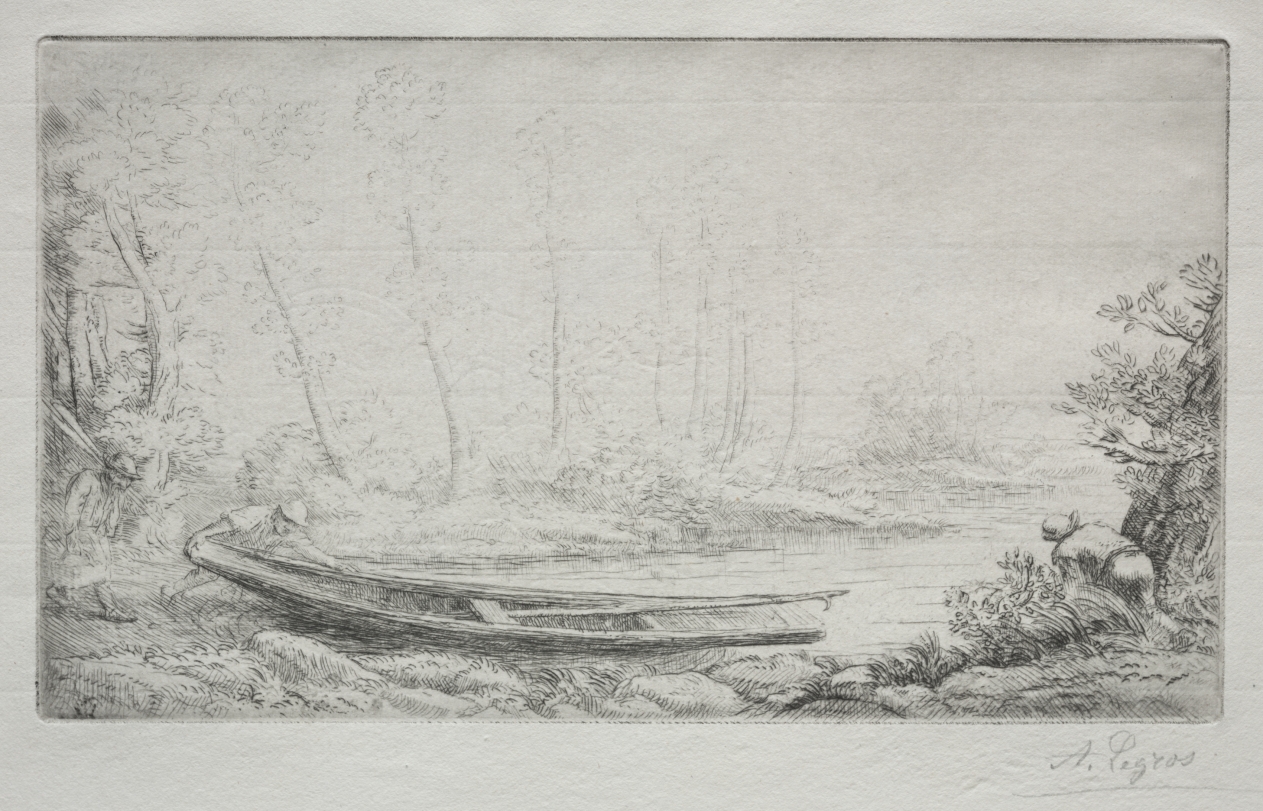
Le Départ pour le pêche, dans les brumes, 1890
In 1863, Legros made the decisive move to London, encouraged in part by James McNeill Whistler, with whom he shared a commitment to printmaking as a serious artistic discipline. The two men had met in Paris through the circle around Gustave Courbet, and Whistler recognized in Legros a kindred spirit, someone who believed that etching was not merely illustration or reproduction but an art form capable of the most nuanced expressive effects. London proved receptive to Legros in ways that Paris, with its entrenched academic hierarchies, sometimes did not. He became a professor at the Slade School of Fine Art in 1876, eventually serving as Slade Professor until 1892, a position that placed him at the center of British art education for a formative generation.
His students included future luminaries of British art, and his insistence on drawing from life and on the primacy of craftsmanship shaped the Slade's character for decades. The range of Legros's practice is itself a source of wonder. He worked across painting, etching, drypoint, lithography, and sculpture with equal authority. His etchings, which form the backbone of his surviving output and remain the works most actively sought by collectors, number in the hundreds and demonstrate a consistent evolution from the vigorous directness of his early Salon period through the more atmospheric, symbolically charged work of his later decades.
Alphonse Legros
Head of a Young Man, 1857
"La mort dans le piorier" from 1869 reveals a darker, more allegorical imagination at work, connecting his practice to the broader currents of Symbolism that were beginning to stir across European art. His lithographic portrait of Henry Wadsworth Longfellow, produced in the very year of his death in 1911, shows an artist whose hand remained assured and sensitive to the very end. His portrait work in particular carries a sense of profound attention, each sitter rendered as though Legros had spent long hours simply looking before he ever picked up a tool. For collectors, Legros represents a compelling confluence of historical significance and relative accessibility.
His prints appear regularly at auction and in specialist print dealers, and they occupy a fascinating position in the market: serious enough to attract the attention of major print collectors and museum curators, but not yet so aggressively sought that acquiring a fine example requires competition at the highest levels. Works on paper from his hand carry the marks of genuine technical mastery, and condition, as with all works on paper of this period, is the primary consideration. Collectors drawn to Rembrandt's intimate etchings or to the social realism of Jean François Millet will find in Legros a natural and deeply rewarding companion. His affinities with Fantin Latour in his sensitivity to surface and mood, and with Courbet in his democratic subject matter, place him at the intersection of several of the most critically admired tendencies of nineteenth century European art.
Alphonse Legros
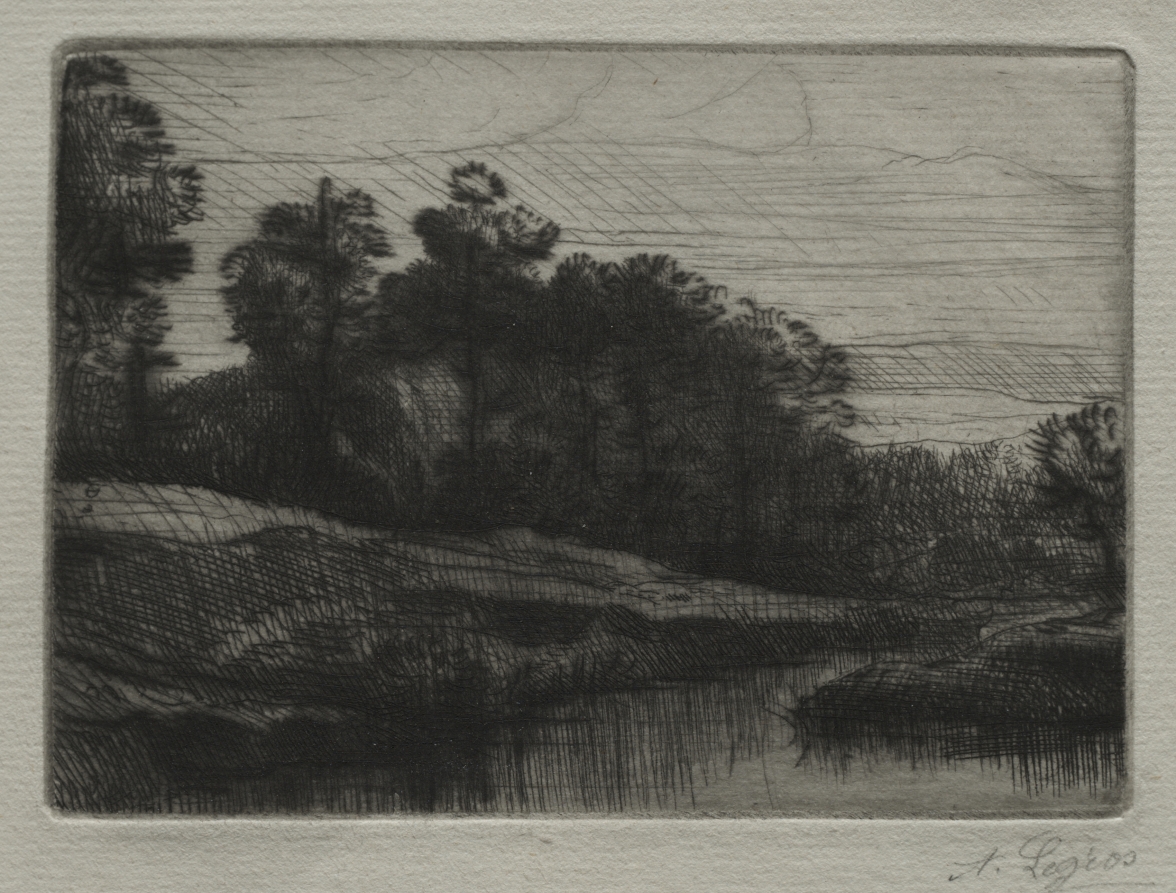
Evening, 1857
Legros became a British citizen in 1881, and his long residence in Britain gave him an unusual position in art history, a French artist shaped by the Parisian avant garde who became a central figure in the development of British printmaking and art education. He was a founding member of the Society of Painter Etchers in 1880, an organization whose advocacy for the etching revival transformed how prints were collected and valued in Britain and beyond. Rodin admired his sculpture. Whistler publicly acknowledged his gifts.
And yet Legros has often been consigned to the supporting cast of nineteenth century art history, a figure who is noted and then moved past, when the truth is that sustained attention to his work reveals a career of extraordinary richness and integrity. What makes Legros matter today is precisely what made him difficult to categorize in his own time. He was not a joiner of movements or a follower of fashion. He looked at the world with steady, compassionate eyes and translated what he saw into marks on copper and stone and paper with a fidelity that is still deeply moving.
In an era when figurative art is once again central to the most urgent conversations in contemporary practice, the example of Legros, his seriousness, his technical command, and his profound respect for ordinary human dignity, feels not like history but like instruction. To spend time with his work is to be reminded that art does not require spectacle to achieve greatness. Sometimes it requires only a hedgerow, a seated woman, and an artist willing to look long enough to truly see.
Explore books about Alphonse Legros
Alphonse Legros: Catalogue Raisonné of His Prints
Loys Delteil
Alphonse Legros and His Influence on Modern Art
André Breton
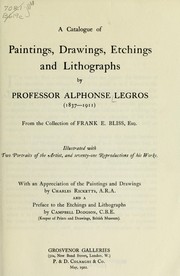
The Etchings and Lithographs of Alphonse Legros
Frederick Wedmore
Alphonse Legros: French Master of the Nineteenth Century
Gabriel P. Weisberg

L'Oeuvre d'Alphonse Legros
Henri Beraldi