Alexander Calder
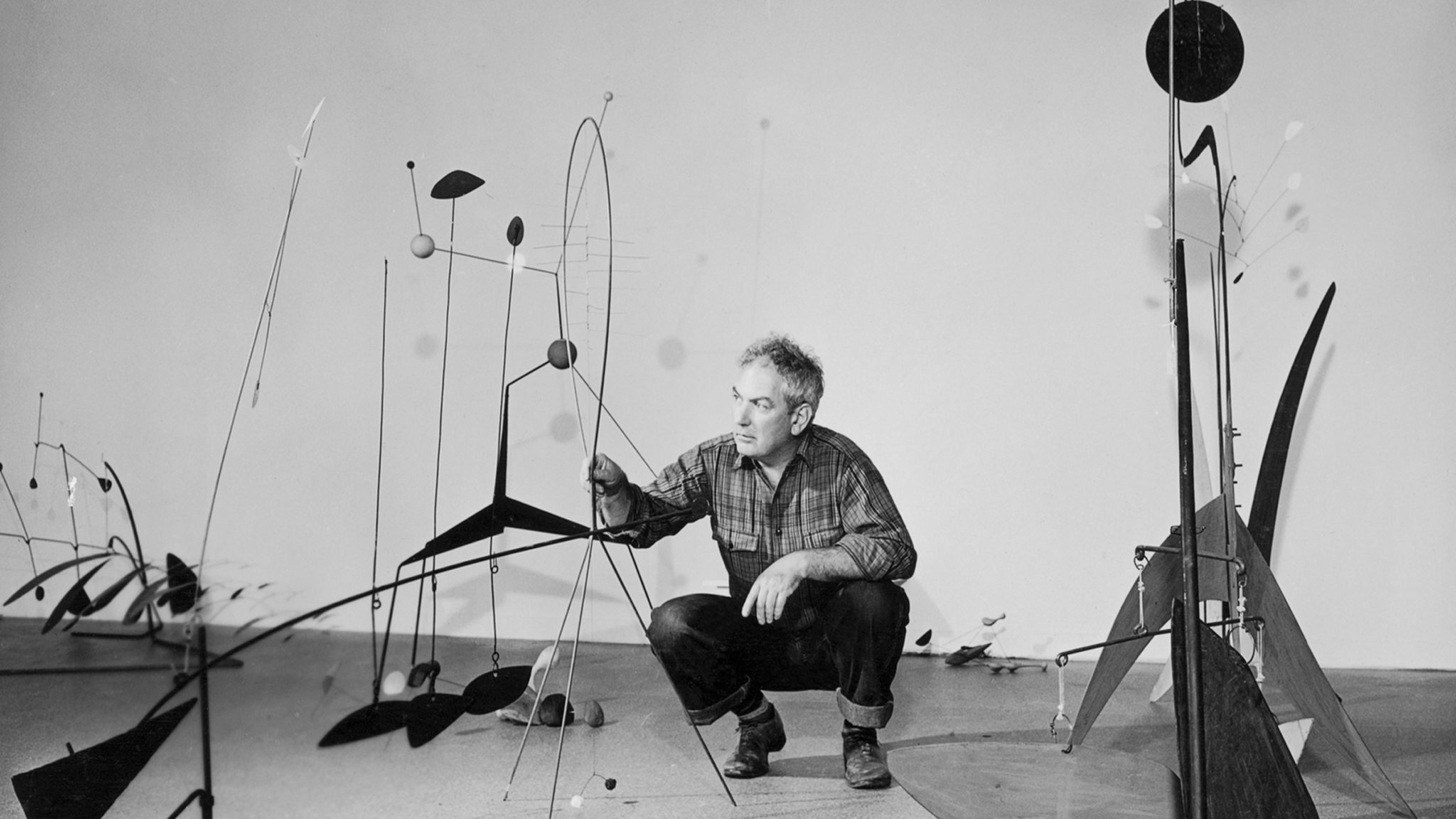
Alexander Calder: The Art of Pure Motion
Artist Spotlight · The Collection Editorial
“Just as one can compose colors, or forms, so one can compose motions.”
Alexander Calder, "What Abstract Art Means to Me", Museum of Modern Art Bulletin, 1951
There is a moment, standing beneath one of Alexander Calder's great mobiles, when the ordinary world falls away. The steel arcs dip and rise, the painted discs catch the light, and something that seems impossible becomes self evident: sculpture can breathe. That sensation has captivated audiences since Calder first suspended his painted forms from wire in the early 1930s, and it continues to animate museum atria, corporate plazas, and private collections around the world. Recent retrospectives at the Calder Foundation and the ongoing institutional reassessment of mid century American modernism have only deepened appreciation for an artist whose work feels, paradoxically, more alive with each passing decade.
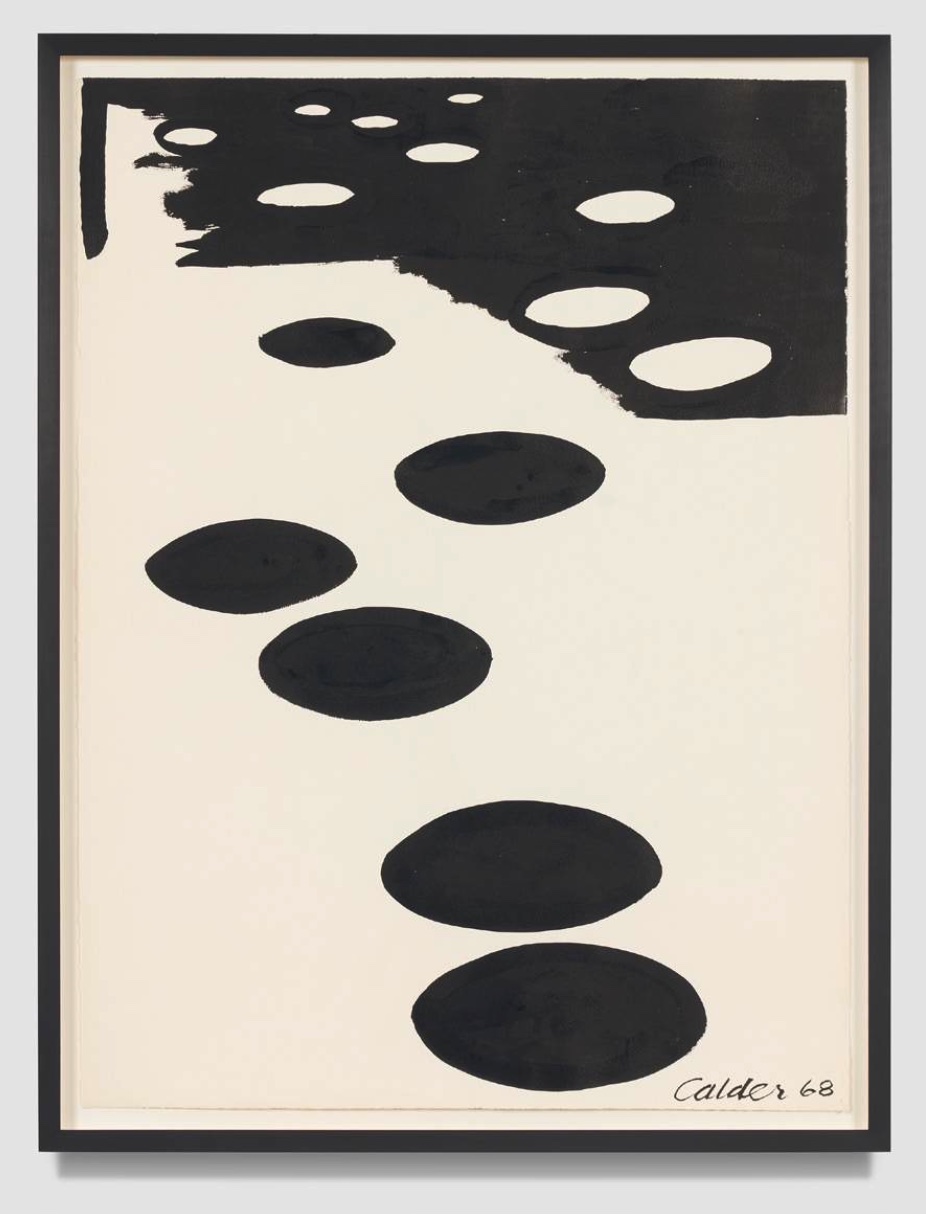
Alexander Calder
Untitled, 1968
Alexander Calder was born in 1898 in Lawnton, Pennsylvania, into a family that understood artistic ambition as a birthright. His father, Alexander Stirling Calder, was a distinguished sculptor whose own work graced the streets of Philadelphia, and his grandfather, Alexander Milne Calder, created the monumental bronze figure of William Penn that crowns Philadelphia's City Hall. Growing up surrounded by clay, tools, and the serious business of making things gave the young Calder a tactile confidence that would serve him throughout his career. Yet his formal education took a conspicuously different turn: he enrolled at the Stevens Institute of Technology in New Jersey and graduated in 1919 with a degree in mechanical engineering, a training that would prove anything but irrelevant.
After working variously as a hydraulics engineer, a timekeeper in a logging camp, and an illustrator for the National Police Gazette, Calder enrolled at the Art Students League in New York in 1923. There he studied under George Luks and John Sloan, absorbing the energy of the Ashcan School while developing a gift for quick, confident line drawing that would define his work on paper for the rest of his life. In 1926 he made the decisive move to Paris, arriving in a city electric with Surrealism, Constructivism, and the ambitions of the international avant garde. He rented a small studio and began building what would become known as the Cirque Calder, an astonishing miniature circus assembled from wire, cork, cloth, and found objects that he performed for delighted audiences in Montparnasse living rooms.
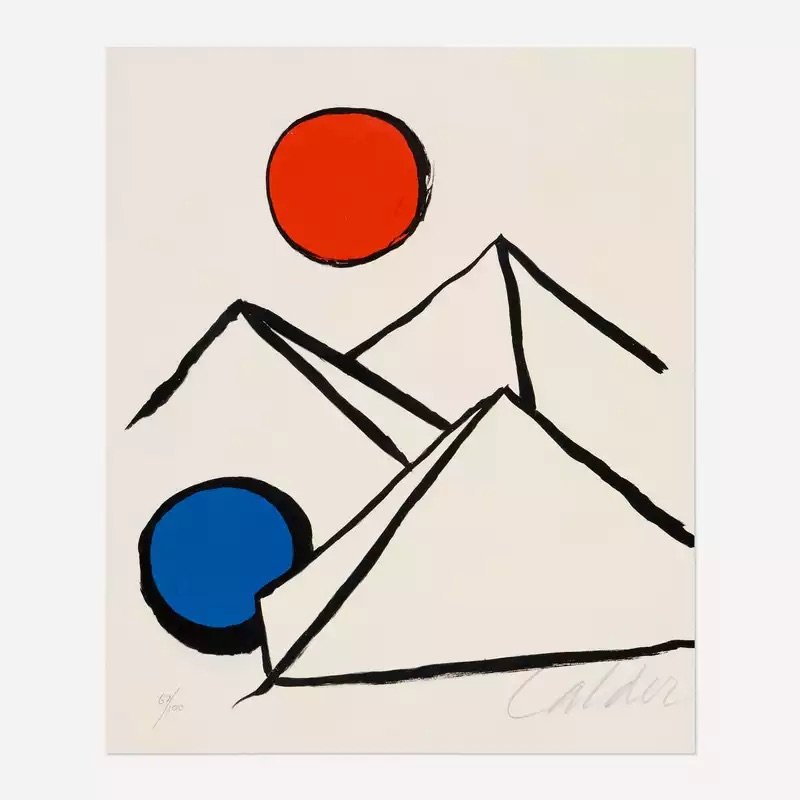
Alexander Calder
Fits and Starts, 1973
The Cirque brought Calder into contact with some of the most consequential figures in modern art. His visit to Piet Mondrian's Paris studio in 1930 was, by his own account, the turning point of his artistic life. Mondrian's colored rectangles pinned to the studio wall seemed to Calder to practically vibrate with potential movement, and he left determined to set abstraction in motion. He began producing hand cranked and motor driven abstract sculptures that Marcel Duchamp, who saw them in 1931, christened mobiles.
“To an engineer, good enough means perfect. With an artist, there is no such thing as perfect.”
Alexander Calder
Jean Arp, with characteristic wit, supplied the complementary term stabiles for the stationary works. Calder had, in a few concentrated years, invented an entirely new category of art. The mobiles that followed through the 1930s and 1940s established Calder's mature language: biomorphic forms in primary colors, suspended on wire armatures of extraordinary tensile elegance, calibrated to respond to the slightest air current. Works such as Lobster Trap and Fish Tail, commissioned by the Museum of Modern Art in New York in 1939, demonstrated that sculpture could occupy time as well as space, that it could perform.
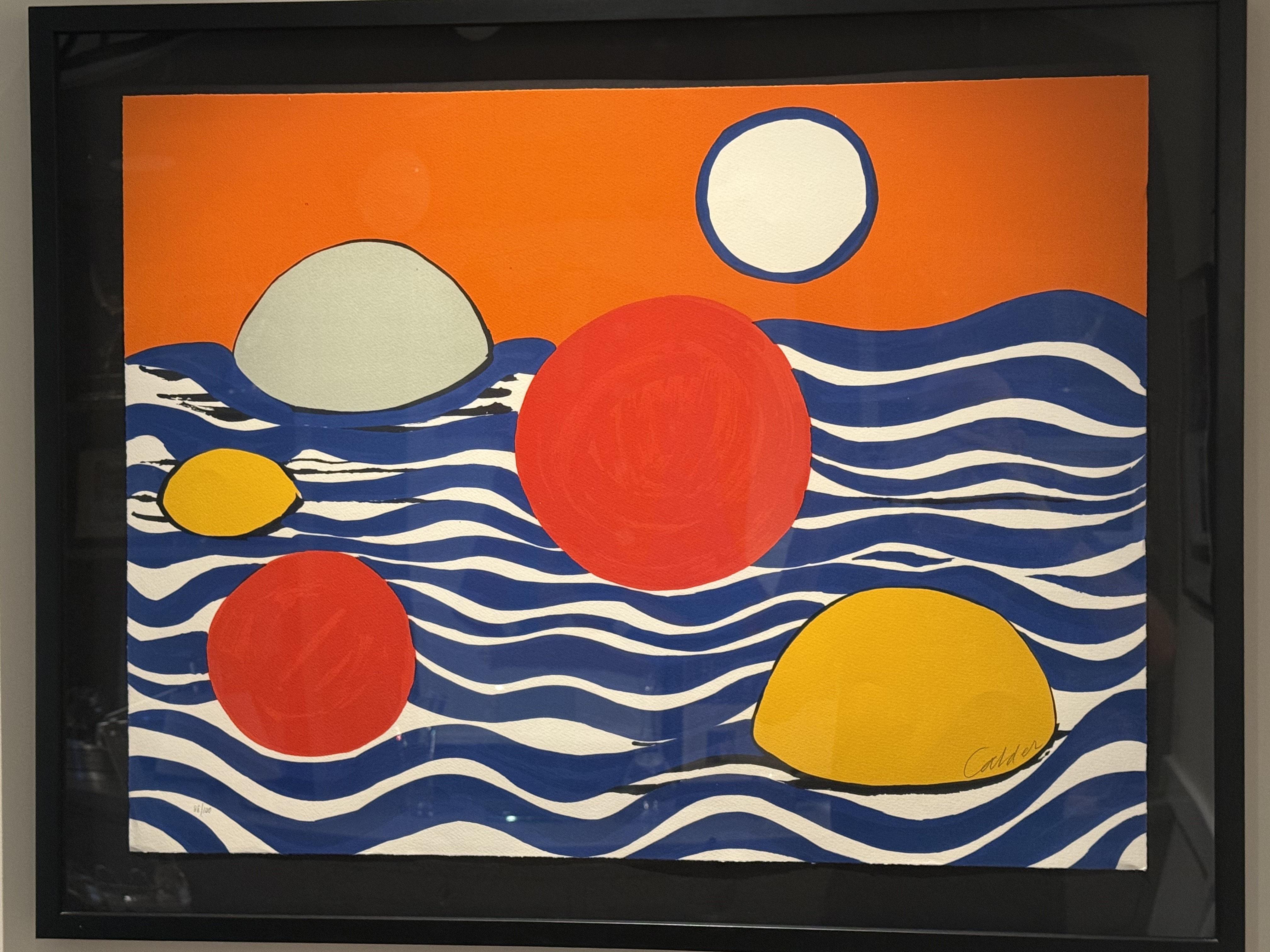
Alexander Calder
Waves and Circles, 1975
The stabiles, developed in parallel and growing increasingly monumental from the 1950s onward, brought this logic to a different register: anchored, weighty, architecturally scaled, yet animated by the same geometric boldness. The Arch, one of the great late stabiles in painted steel from 1975, exemplifies how Calder could make immovable steel feel light and inevitable. Calder worked prolifically across multiple mediums throughout his career, and this versatility is central to what makes his work so compelling to collectors at every level of engagement. His works on paper, including the vigorous ink drawings he produced across five decades, show the same spatial intelligence and organic confidence as his sculpture but in an accessible and intimate form.
His printmaking practice, pursued seriously from the 1960s onward, produced a substantial and consistently joyful body of work. Lithographs such as Fits and Starts from 1973, Waves and Circles from 1975, and the vibrant Un drôle de poisson from 1965 translate his sculptural vocabulary into layered color with remarkable freshness. His etching series, including the warmly playful Untitled Santa Claus prints of 1974, reveal an artist who never confused gravitas with solemnity. For collectors, Calder represents one of the great blue chip propositions in the market for twentieth century American art.
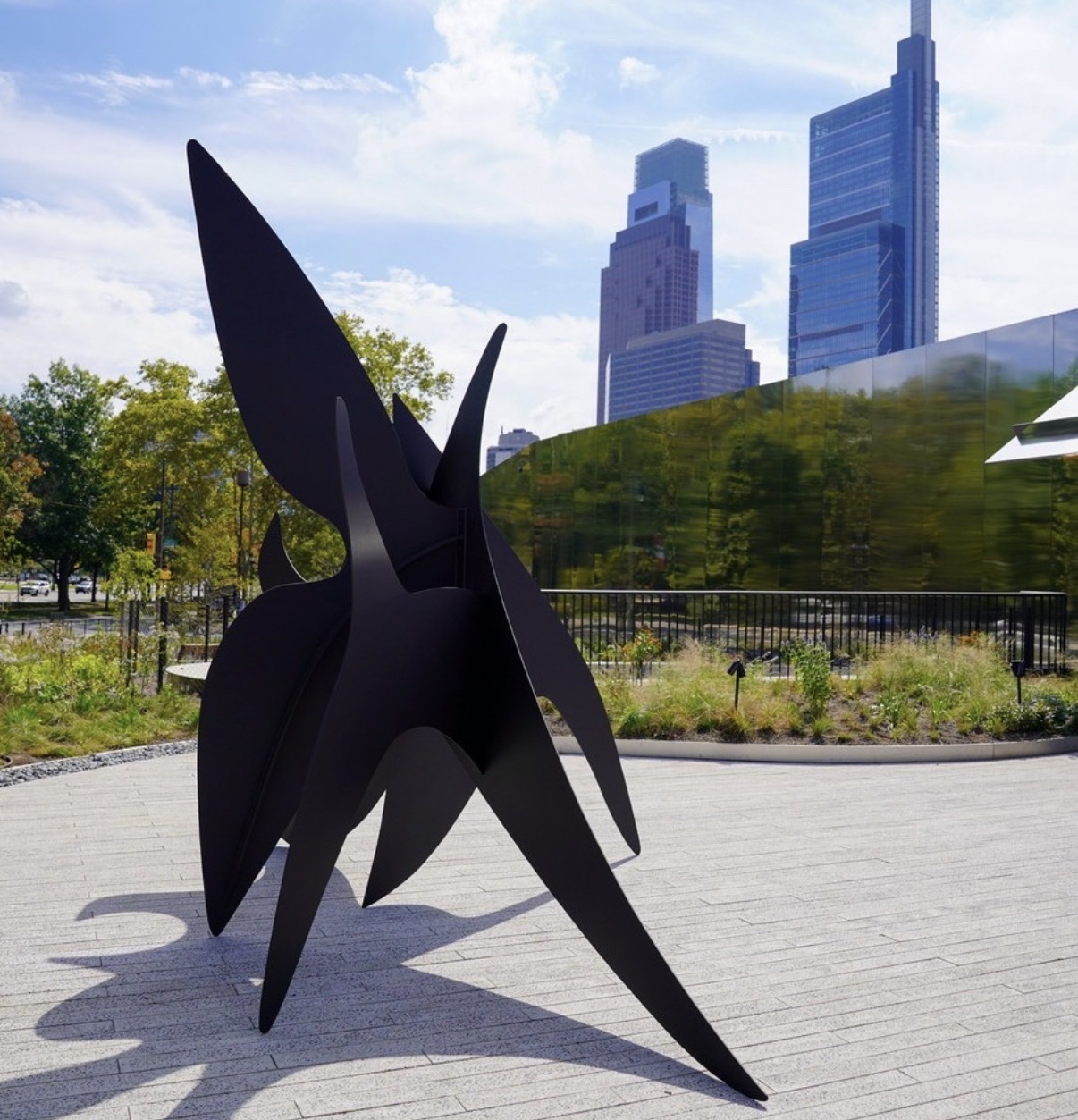
Alexander Calder
Untitled
His auction record has been built steadily across the major international houses, with major mobiles and stabiles commanding prices that reflect both their art historical significance and their sheer physical presence as objects that transform any space they inhabit. Works on paper and prints offer a more accessible entry point without sacrificing quality or authenticity, and the consistency of Calder's graphic style means that even modest works carry the full charge of his artistic personality. The Calder Foundation, established by the artist's family and based in New York, maintains a rigorous authentication process that provides collectors with essential reassurance. Provenance and documentation matter enormously in this market, and working with specialists who know the catalogue thoroughly is always advisable.
Calder's place in art history is both singular and deeply relational. He drew on the Constructivist tradition of Alexander Rodchenko and László Moholy Nagy, shared the biomorphic vocabulary of Joan Miró and Jean Arp, and influenced generations of sculptors including George Rickey, who extended the kinetic tradition, and the minimalist generation of the 1960s who absorbed his lesson that form could be both reduced and expressive. Yet no one else quite did what Calder did, and the attempt to place him within a single movement, whether Constructivism, Surrealism, or Abstract Expressionism, always falls slightly short. He was, finally, himself: an engineer who became a poet of physical space, a circus performer who turned gravity into an aesthetic medium.
Alexander Calder died in New York in November 1976, just weeks after attending the opening of a major retrospective at the Whitney Museum of American Art, a symmetry that feels almost too perfect for an artist whose life was defined by elegant balance. His legacy is alive in every sense of the word: in the mobiles that still turn in the world's great museums, in the stabiles that anchor public squares from Chicago to Spoleto, and in the prints and drawings that continue to find new admirers. To collect Calder is to bring into your life something that moves, that responds, that insists on the present moment. That is a rare and lasting gift.
Explore books about Alexander Calder
Alexander Calder: A Retrospective Exhibition
Museum of Modern Art
Calder: An Autobiography with Pictures
Alexander Calder
Alexander Calder
H. H. Arnason
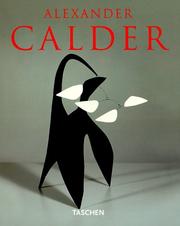
Calder: Mobilist
Jean Lipman
Alexander Calder: A Life
Jean Lipman and Margaret L. Lipman
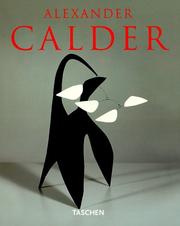
Calder: Monumental
Michelle White
Alexander Calder: Form and Space
Jed Perl