Alex Olson
Alex Olson Paints the Space Between Knowing
Artist Spotlight · The Collection Editorial
There is a particular kind of attention that Alex Olson's paintings demand, and it is not the rushed, scrolling glance of the contemporary moment. Standing before one of her works, whether at a gallery opening in Los Angeles or in the quieter light of a private collection, you feel compelled to slow down, to lean in, and then to step back again. Her canvases and linens hold a conversation with the viewer that unfolds over time, revealing new passages of color, texture, and mark as the eye adjusts. It is this quality of sustained discovery that has made Olson one of the most genuinely compelling painters working in abstraction today, and it is why her work continues to find devoted collectors across the United States, Europe, and beyond.
Alex Olson
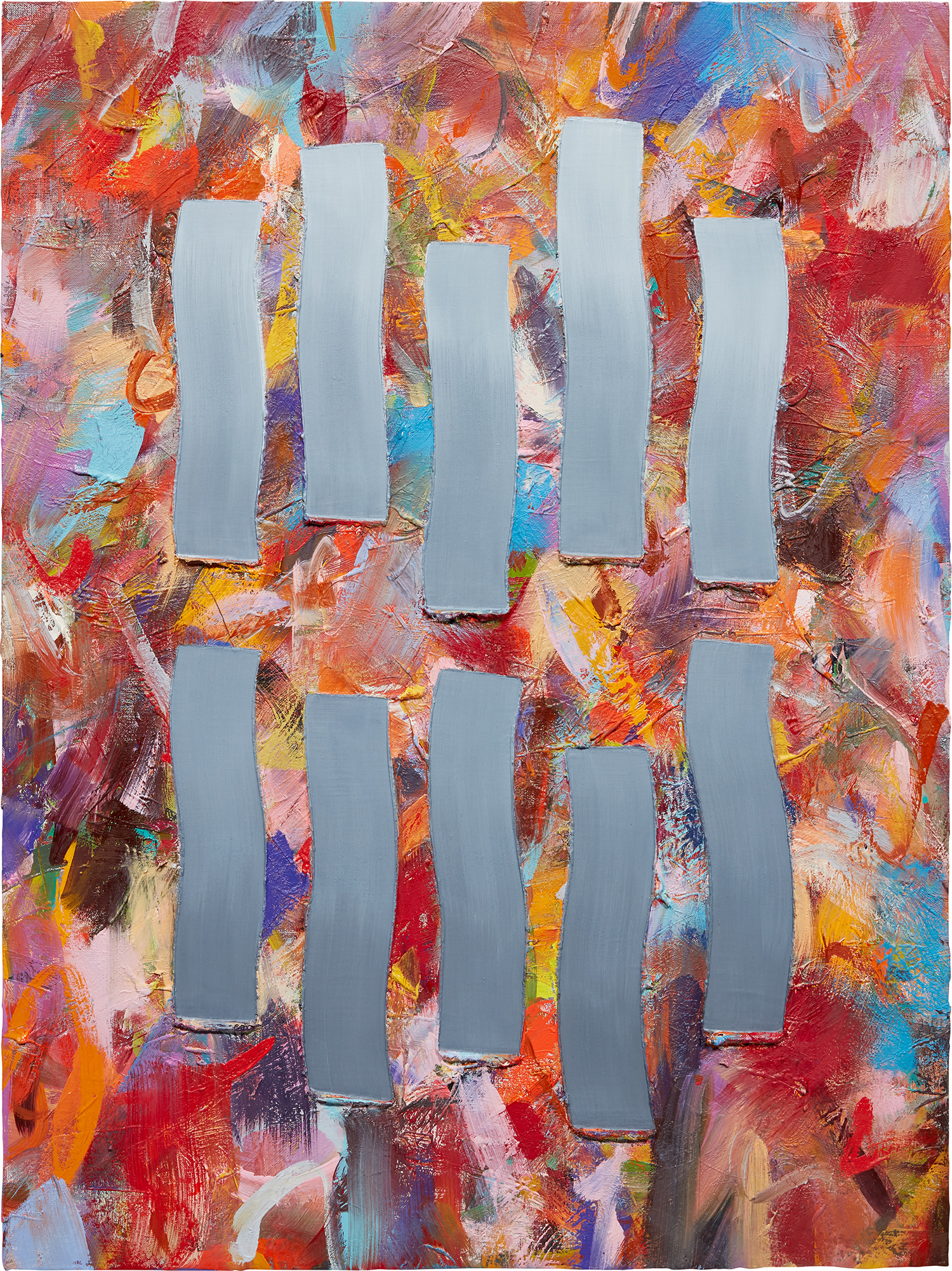
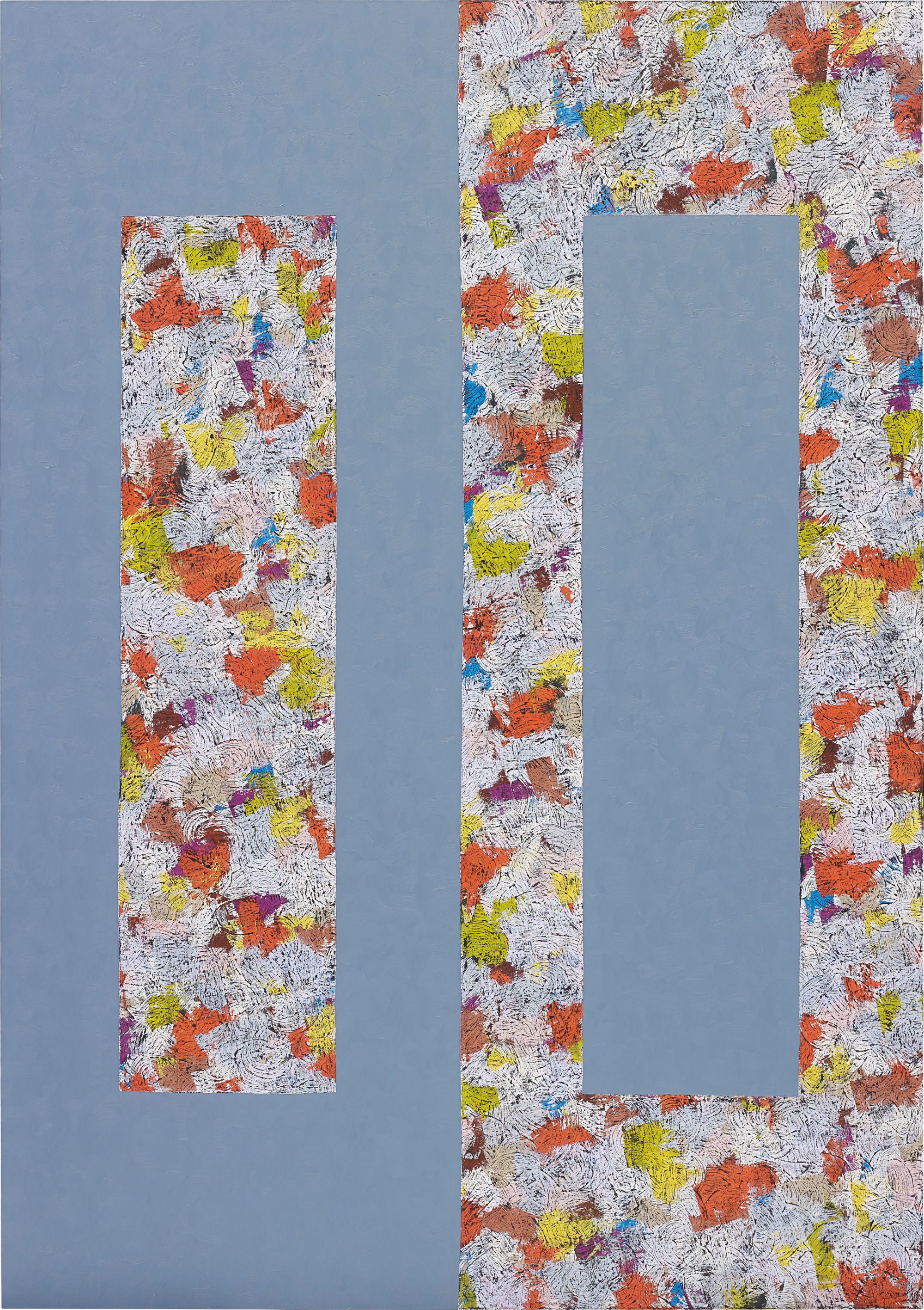
Mirror, 2014
Born in 1983, Olson came of age in a moment when painting itself was being vigorously renegotiated. The so called death of painting had long been declared and then cheerfully refuted, and a generation of young artists was finding fresh urgency in the medium by returning to its most fundamental questions. What does a surface remember? What does it mean to add and then take away?
How much of a composition can be surrendered to chance before intention reasserts itself? These were not merely academic questions for Olson. They became the engine of a practice that has grown steadily more assured and more resonant with each passing year. Her formation as an artist was shaped by deep engagement with these problems, and her work shows the kind of rigor that only comes from someone who has genuinely wrestled with the history she is inheriting.
Alex Olson
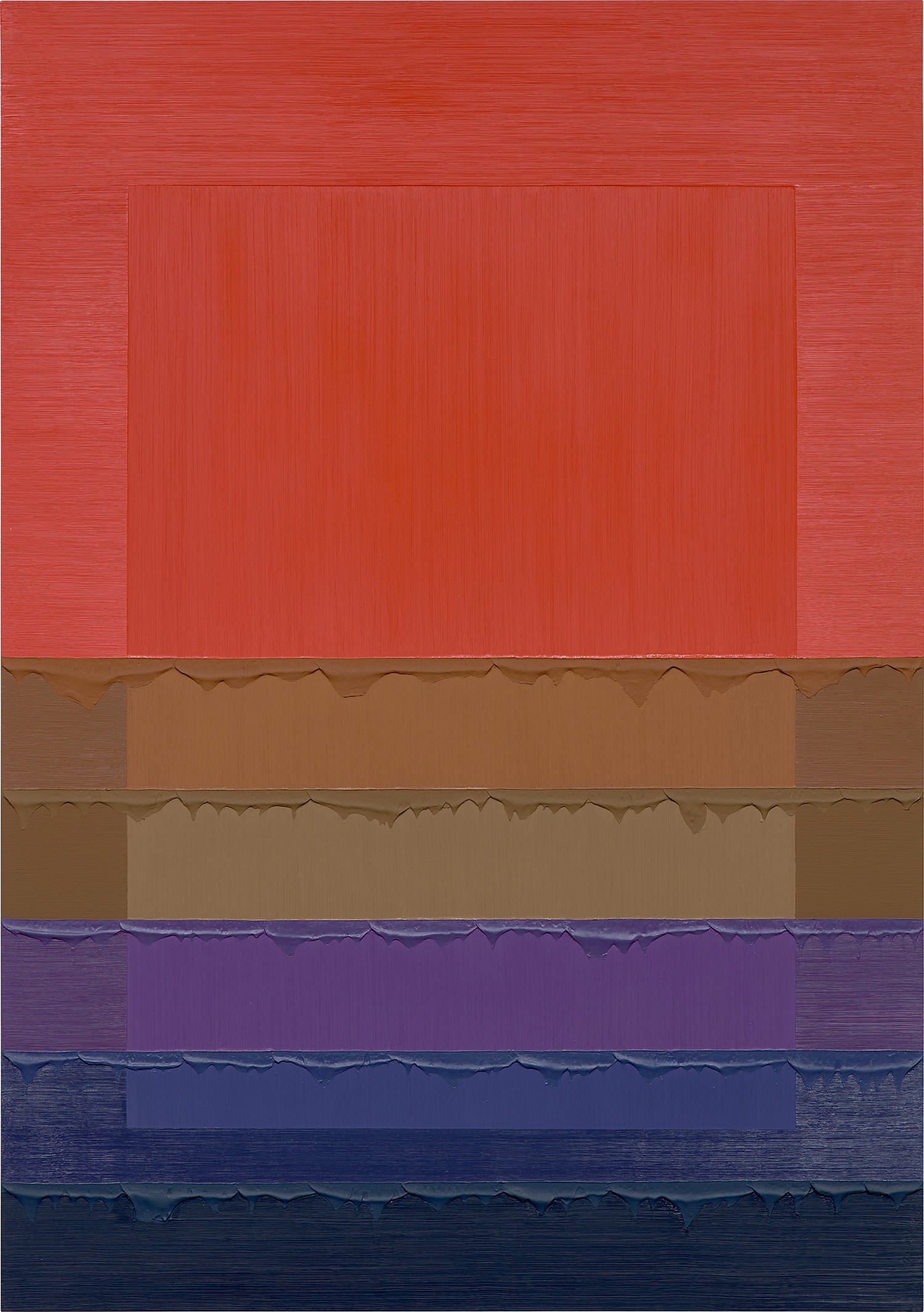
Reflect, 2015
Olson works primarily out of Los Angeles, a city whose particular quality of light and whose culture of material experimentation have long attracted painters drawn to the physical properties of their medium. The Los Angeles context matters for understanding her work. She belongs to a lineage of West Coast artists who have pushed against the perceived dominance of New York conceptualism by insisting on the intelligence of the hand, the eye, and the surface. Her practice is process driven in the most authentic sense of that phrase, meaning that the process is not a concept applied after the fact but the actual generative core of how each work comes into being.
She layers, scrapes, and erases with a deliberateness that is also a form of listening, attending to what the painting is asking of her rather than simply imposing a predetermined vision. The works that have earned Olson her reputation are remarkable for how much they hold in productive tension. "Mirror," made in 2014 with oil and modeling paste on linen, is exemplary in this regard. The modeling paste introduces a relief quality to the surface, so that the painting exists not only as image but as object, catching and redirecting light as you move around it.
Alex Olson
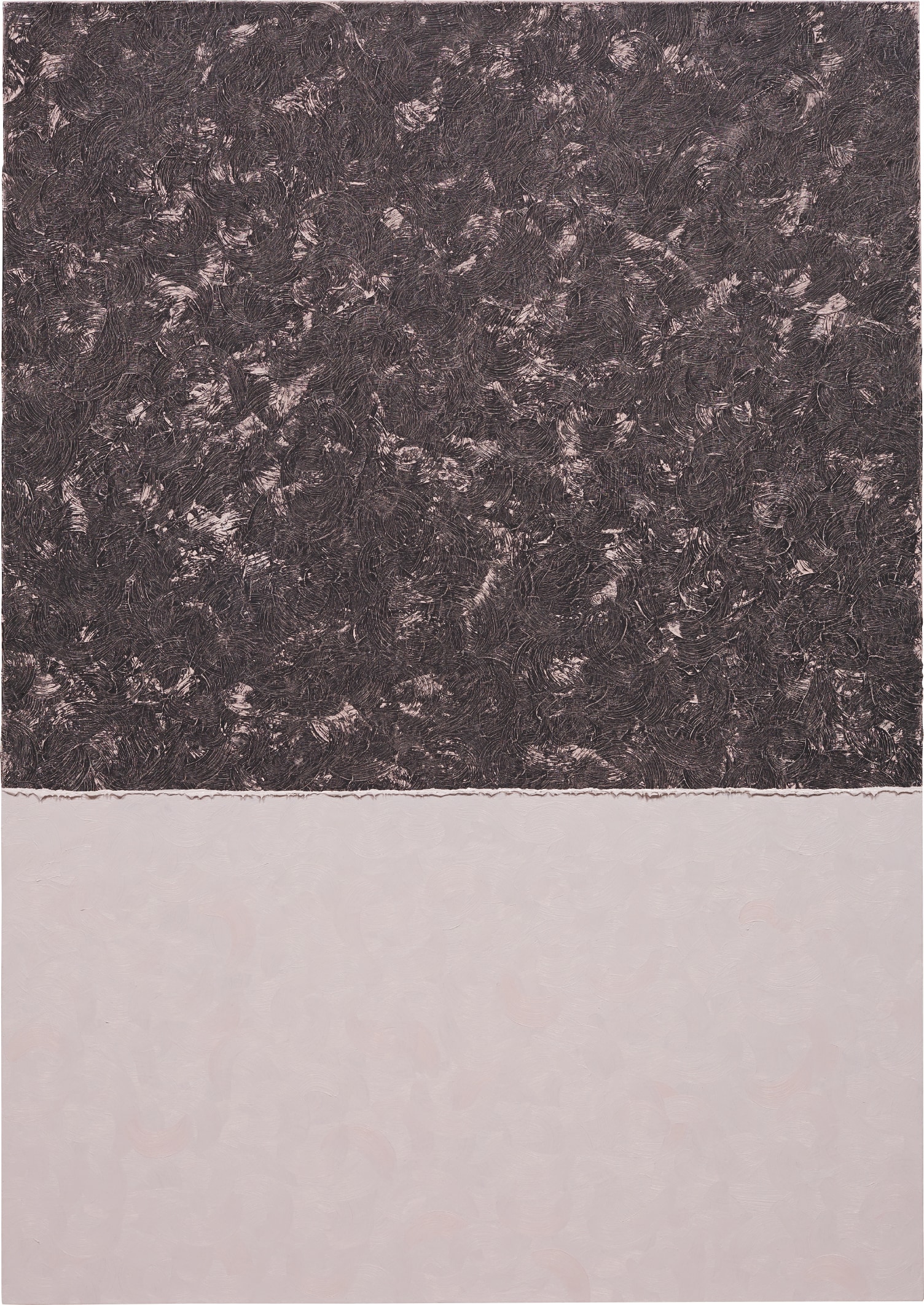
Turn of Phrase
"Cloak," also from 2014 and made with the same combination of materials on canvas, shares this quality of surface complexity, as if the painting were simultaneously revealing and concealing something beneath its skin. The 2015 work "Reflect" extends this investigation, and the title itself speaks to Olson's interest in surfaces that bounce meaning back toward the viewer rather than simply transmitting it. These are paintings that are confident enough in their own complexity to let the viewer do some of the work. Earlier works like "Verse" from 2010 show where these concerns were forming.
The use of oil on canvas in that period feels more openly exploratory, the marks more provisional, and there is something moving about seeing the foundations of a practice being laid. By the time of works like "Turn of Phrase" and "Proposal 7," both on linen, Olson has arrived at a kind of compression, where the accumulated decisions of years of working distill into paintings that feel both economical and inexhaustibly rich. Linen as a support is itself a choice laden with art historical weight, evoking the long European tradition of oil painting while also offering a particular warmth and resistance that Olson clearly prizes. The titling of her works is also worth noting.
Alex Olson
Proposal 7
Words like "Verse," "Proposal," and "Turn of Phrase" suggest a relationship between painting and language that is not illustrative but structural, as if the paintings were organized by something like syntax, by the logic of how meaning accumulates and shifts. For collectors, Olson's work offers something that is increasingly rare in the contemporary market: a practice with genuine intellectual depth that also delivers profound visual pleasure. Her paintings live well. They are not works that exhaust their effects on first encounter and then recede into decoration.
Instead, they tend to deepen with familiarity, offering new aspects of surface and color as light changes through the day and seasons. The appearance of her work in major auction house sales, including at Phillips, signals the broader market's recognition of her standing, and the international reach of her collecting base reflects the fact that her concerns, while rooted in a very specific material practice, are legible and resonant across different cultural contexts. Collectors who have been with her work for a decade are among its most vocal advocates, and that kind of loyalty speaks to the sustaining power of what she makes. Within the broader landscape of contemporary abstraction, Olson occupies a distinctive position.
She shares with artists like Laura Lancaster and Amy Sillman a commitment to painting as a site of genuine inquiry rather than stylistic statement. Her work resonates with the traditions of post war American abstraction while refusing mere homage. There are echoes of the close attention to surface and materiality that one finds in the work of Helen Frankenthaler and Joan Mitchell, but Olson's vocabulary is entirely her own, arrived at through the specific pressures of her own moment and her own temperament. She is also part of a generation that has thought seriously about the relationship between touch and meaning, about what it signifies to make a mark, to cover it, and to reveal it again.
What ultimately makes Alex Olson matter, and matter beyond the conversations of any particular season, is the commitment her work models. At a time when the art world can seem seduced by the instantaneous, by images that communicate everything in a single glance, Olson makes paintings that ask for duration, for return, for the kind of sustained looking that feels increasingly like a radical act. Her studio in Los Angeles is a place where questions are being posed seriously and answered with patience and skill. The collectors, curators, and fellow artists who have found their way to her work understand that they are in the presence of something built to last.