Alex Melo
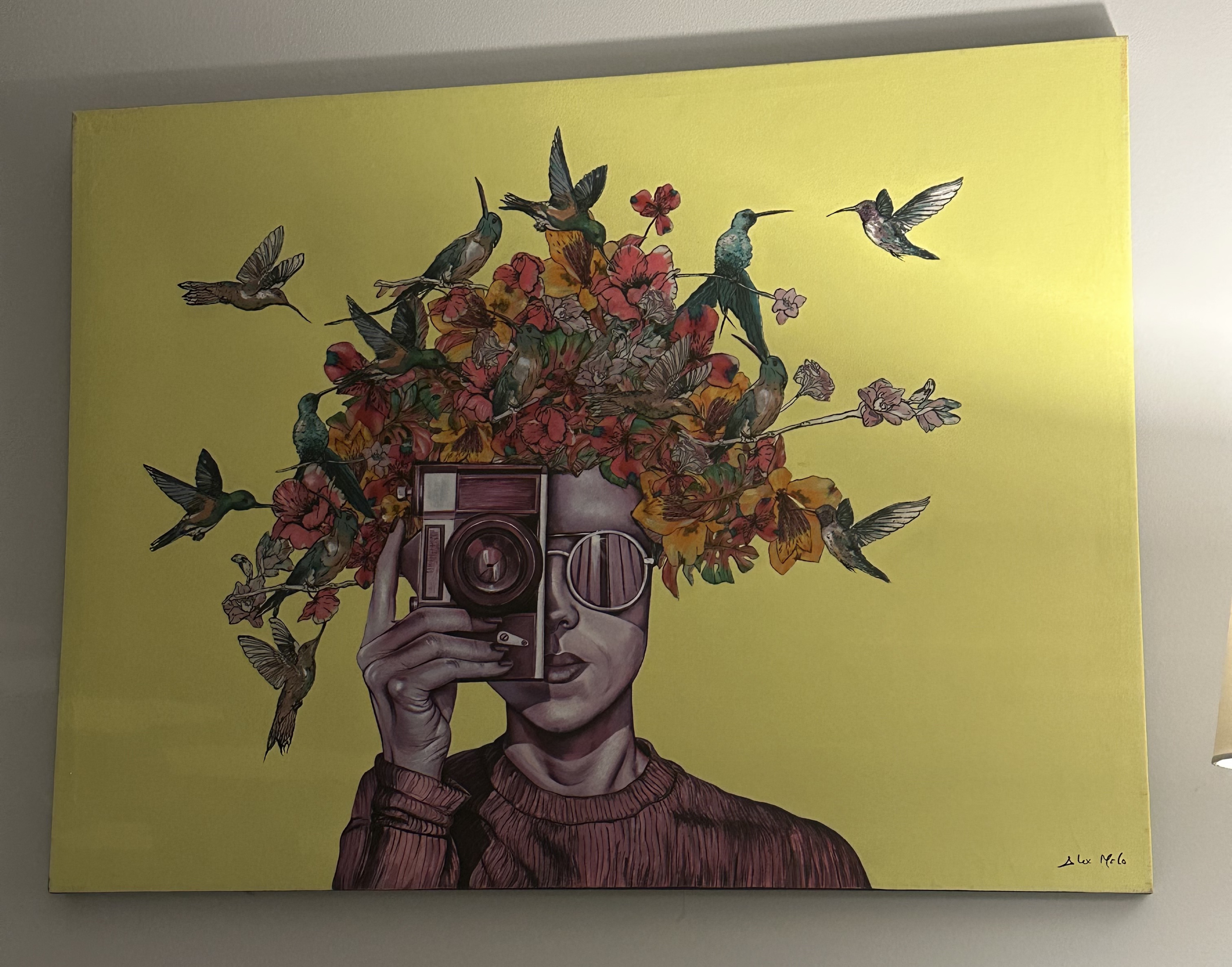
Alex Melo Paints Brazil Brilliantly Alive
Artist Spotlight · The Collection Editorial
Something is happening in contemporary Brazilian painting, and Alex Melo is at the center of it. Born in 1979, Melo has spent the better part of two decades building a practice that feels urgently of this moment: loud with color, restless with energy, and deeply committed to the idea that painting can hold the full complexity of modern urban life. His large scale canvases arrive with the force of a city at rush hour, pulling the viewer into compositions that refuse to settle, that shift between abstraction and figuration the way a crowded street shifts between chaos and choreography. For collectors seeking work that speaks directly to contemporary Brazil while resonating across international art conversations, Melo represents one of the most compelling voices of his generation.
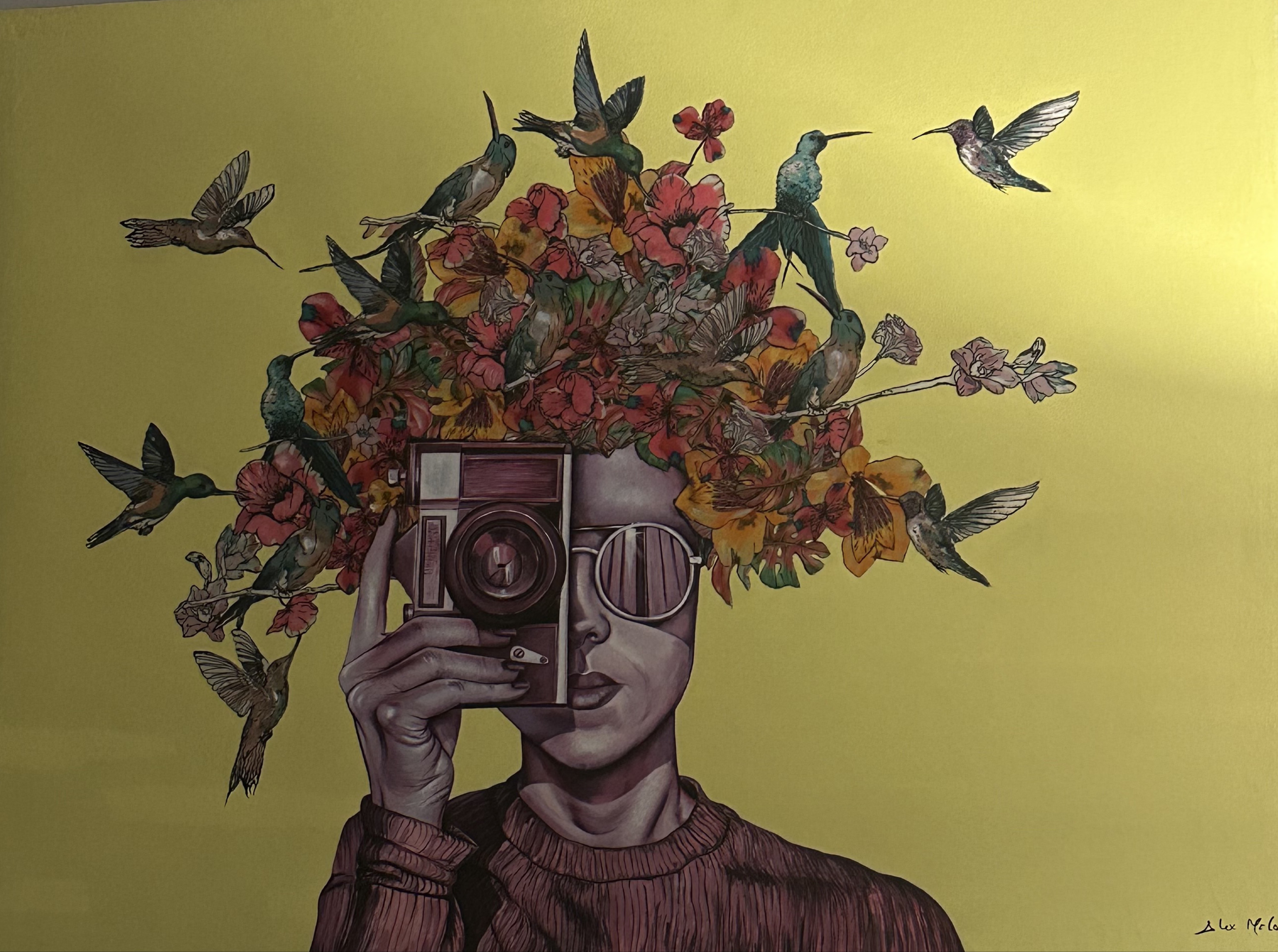
Alex Melo
Untitled, 2024
Melo grew up shaped by the visual language of Brazilian cities, where the boundary between sanctioned art and street level expression has always been porous. Brazil has a uniquely democratic visual culture, one where muralism, graffiti, and carnival aesthetics have long existed in productive tension with gallery and museum traditions. Artists like Hélio Oiticica and Lygia Clark established decades ago that Brazilian art need not defer to European or North American frameworks, and Melo carries that spirit of autonomous invention into the present. His formation was less about any single institution and more about absorbing the visual cacophony of urban Brazil, learning to see the way a city teaches you to see: quickly, selectively, and with a hunger for meaning in the midst of noise.
Over the course of his career, Melo has developed a practice that sits confidently at the intersection of painting, mixed media, and the broader visual culture of the streets. He works primarily on canvas, often at large scale, deploying acrylic and mixed media in ways that allow for both spontaneous gesture and deliberate compositional structure. His color palette is one of his most immediately recognizable qualities: saturated, bold, and unapologetic, drawing from the chromatic intensity of Brazilian popular culture without ever feeling decorative or superficial. There is always something at stake in a Melo painting, some tension between the legible and the abstract, between the individual figure and the swirling forces of the social world around them.
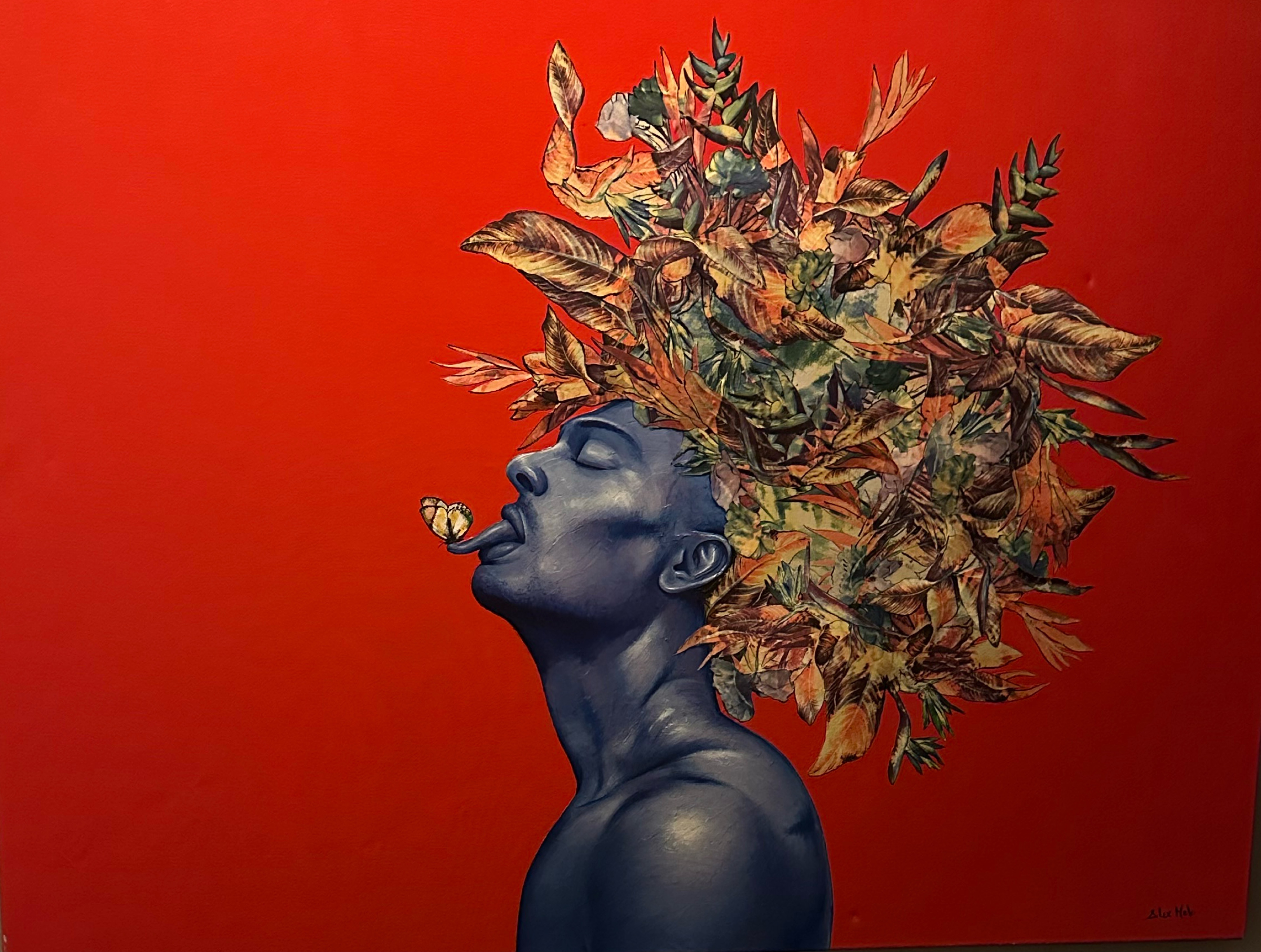
Alex Melo
Untitled
What distinguishes Melo from painters who simply borrow graffiti aesthetics for institutional contexts is the depth of his engagement with questions of identity and urban belonging. His fragmented compositions are not formal exercises but rather visual arguments about what it means to exist in a contemporary Brazilian city, where questions of class, race, culture, and aspiration collide daily. The fractured picture plane in his work mirrors the fractured nature of urban experience itself, the sense that identity is never singular or stable but always assembled from multiple sources, influences, and pressures. This gives his paintings a psychological dimension that rewards sustained looking, revealing new layers of meaning the longer you spend with them.
Among the works currently available through The Collection, his recent mixed media on canvas from 2024 demonstrates just how far his practice has evolved. The work reflects a mature command of his visual language, with the kind of confidence that comes from years of sustained inquiry into the same essential questions. His acrylic on canvas works show a painter fully in control of his medium, able to generate complexity and emotional resonance through the accumulation of mark, color, and form. Collectors encountering Melo for the first time through these works are seeing an artist who has done the difficult work of building a genuine and coherent body of practice.
In terms of collecting context, Melo occupies a particularly interesting position in the current market for Brazilian contemporary art. International interest in Latin American art has grown significantly over the past decade, with major auction houses dedicating increasing attention to artists from Brazil, Colombia, Mexico, and Argentina. Within that broader trend, painters who work at the intersection of urban culture and serious painterly ambition have attracted particular attention from collectors in Europe, the United States, and Asia who are looking for work that feels both globally legible and culturally specific. Melo fits that profile precisely, offering paintings that communicate their energy and intelligence regardless of where they are encountered while remaining deeply rooted in a Brazilian visual sensibility.
For collectors considering where Melo sits within the broader art historical conversation, the relevant comparisons are illuminating. His engagement with graffiti and street aesthetics connects him to a global lineage that includes Jean Michel Basquiat and Futura, while his commitment to the painted canvas as a space for social and political reflection places him in dialogue with artists like Kehinde Wiley and Titus Kaphar, who have similarly insisted on the relevance of figuration and representation in contemporary practice. Within Brazil, his work continues the legacy of artists who have refused the separation between high art and popular culture, from the tropicalist generation forward. He is a painter who knows where he comes from and where the conversation is going.
What ultimately makes Alex Melo a painter worth watching, worth collecting, and worth celebrating is the seriousness with which he has pursued a genuinely difficult artistic problem. How do you paint a city that is always moving? How do you use the static space of a canvas to capture the dynamism, the beauty, and the difficulty of contemporary urban life in one of the world's most visually extraordinary countries? Melo has spent his career working toward answers that feel earned rather than assumed, building a body of work that honors the complexity of its subject.
For collectors who believe that painting still has the power to transform how we see the world, his work offers exactly that possibility.