Alberto Giacometti
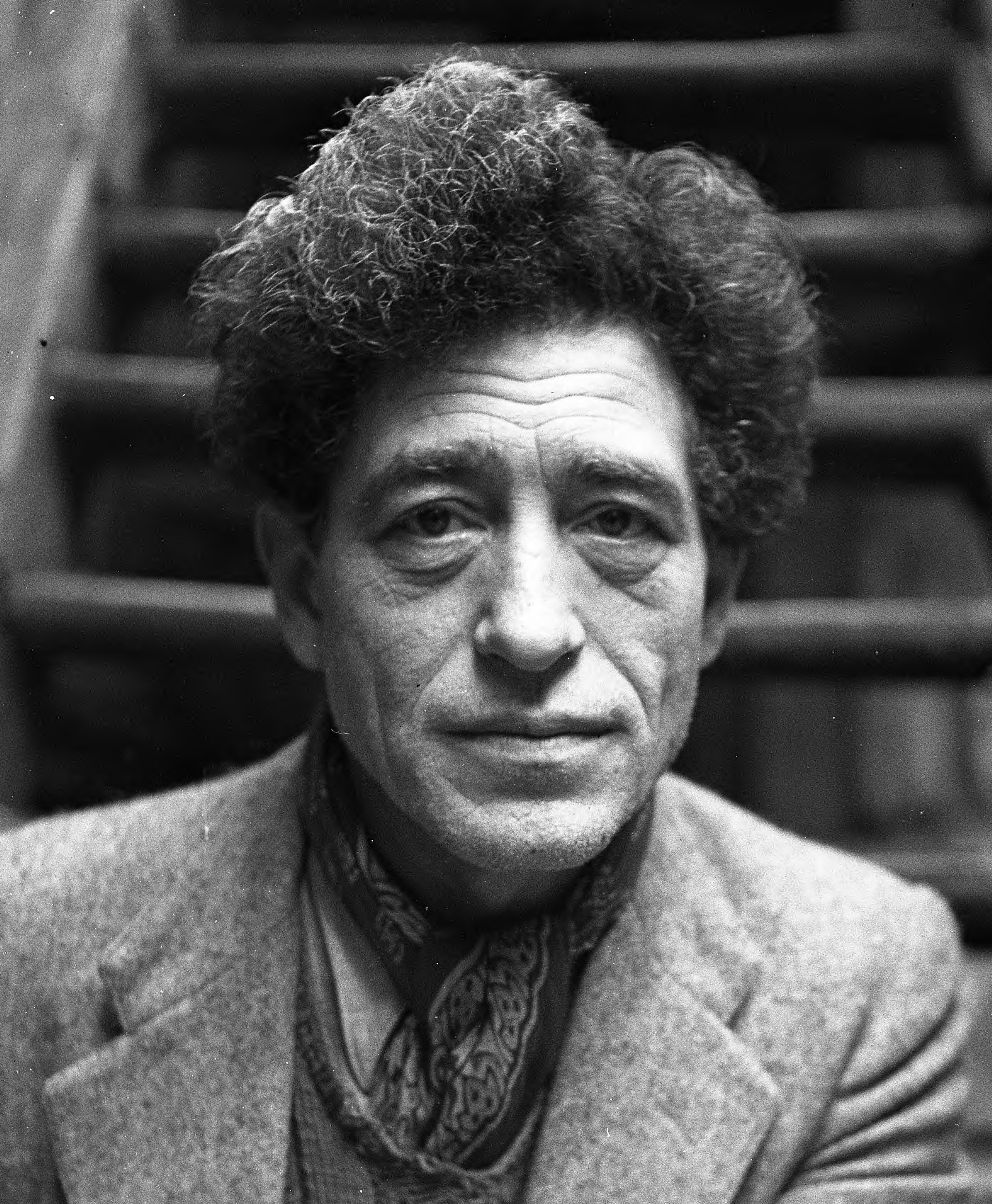
Alberto Giacometti: The Figure That Endures Forever
Artist Spotlight · The Collection Editorial
“The object of art is not to reproduce reality, but to create a reality of the same intensity.”
Alberto Giacometti
In the grand atrium of the Fondation Beyeler in Basel, visitors still stop mid stride when they encounter a roomful of Giacometti bronzes. The figures stand apart from one another, reaching upward, each one solitary and luminous against the white gallery walls. It is one of the most reliably affecting experiences in contemporary art pilgrimage, a testament to the fact that Giacometti's work does not diminish with familiarity. If anything, it deepens.
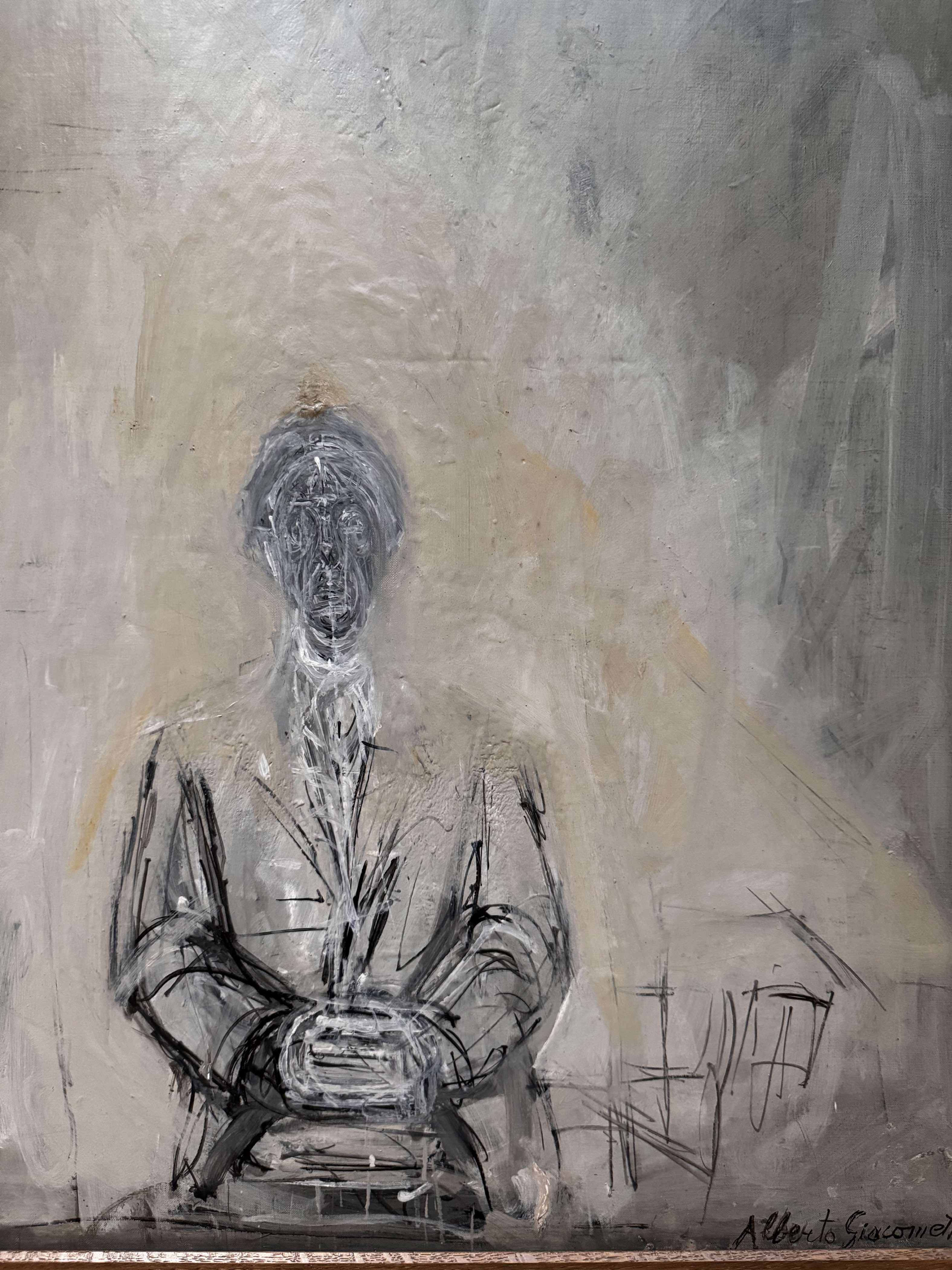
Alberto Giacometti
Isaku Yanaihara Seated Full-Length
His elongated men and women have come to feel like permanent citizens of our visual consciousness, as necessary and as mysterious as the questions they embody. Alberto Giacometti was born on October 10, 1901, in Borgonovo, a small village in the canton of Graubünden in the Swiss Alps. He was the eldest son of Giovanni Giacometti, a Post Impressionist painter of some renown, which meant that art was not a distant aspiration in the family home but a daily practice and a living conversation. The landscape of his childhood, its stark mountain light and its sense of vast elemental space, would leave a permanent imprint on his imagination.
He began drawing and painting seriously as a boy, and by his teens he had produced accomplished works that showed a precocious sensitivity to form and the human presence within it. After studying in Geneva, Giacometti arrived in Paris in 1922, the city that would become his permanent creative home and the theater of his greatest transformations. He studied under the sculptor Antoine Bourdelle at the École des Arts et Métiers, absorbing classical discipline while keeping his eyes open to everything the Parisian avant garde was discovering. By the late 1920s he had fallen into the orbit of the Surrealists, befriending André Breton and contributing works to Surrealist exhibitions throughout the early 1930s.
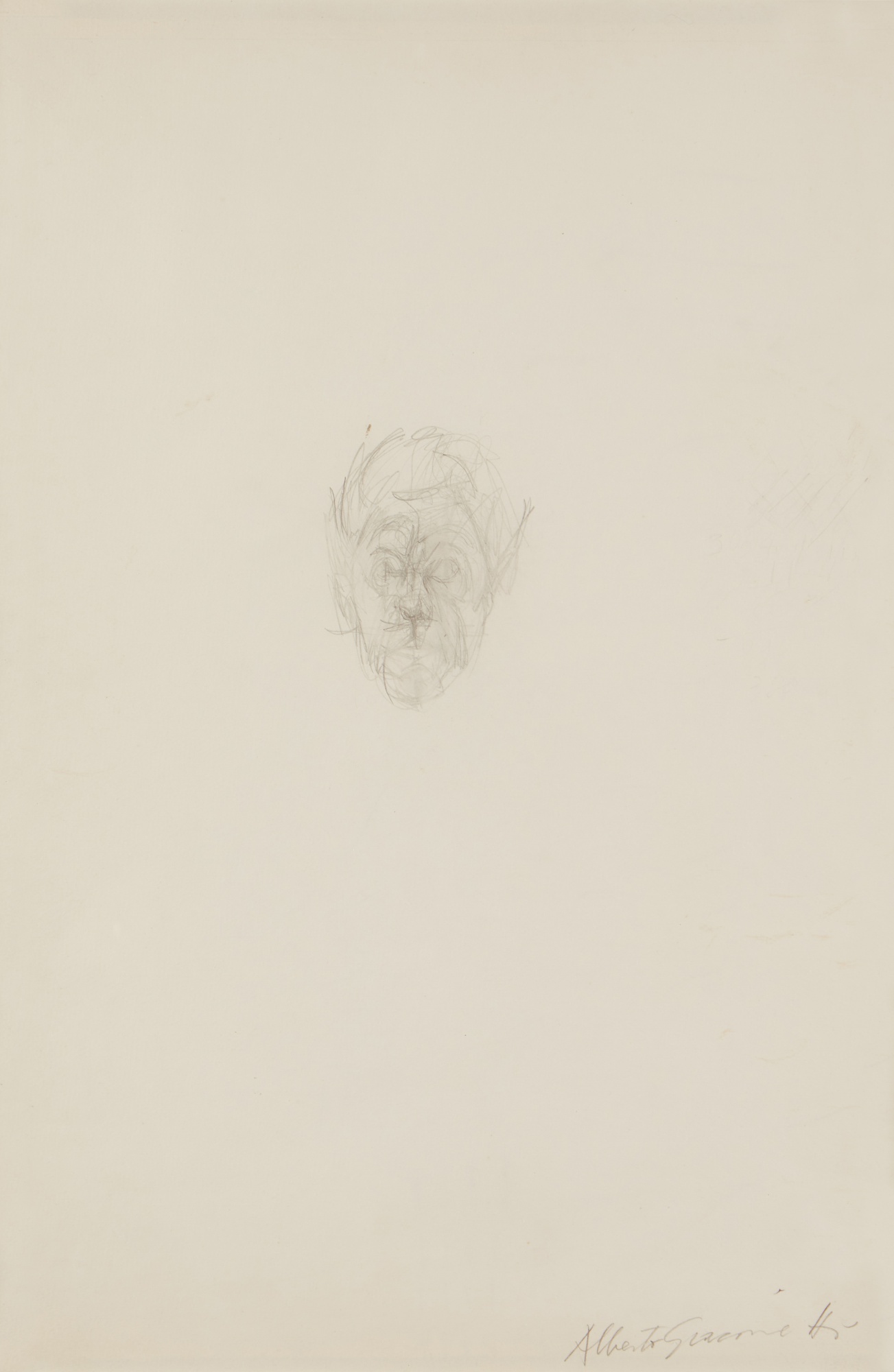
Alberto Giacometti
Autoportrait
Pieces such as The Palace at 4 a.m., constructed in 1932 and now housed at the Museum of Modern Art in New York, showed a sculptor capable of building psychological landscapes as much as physical objects. These open, cage like constructions were unlike anything being made at the time, and they secured his reputation as a radical innovator.
“I work in order to see, and I see in order to work. It is the same thing.”
Alberto Giacometti
His break from the Surrealist circle in the mid 1930s marked the beginning of the most consequential chapter of his career. Giacometti turned his attention back to the human figure, working obsessively from life, often with his brother Diego as his model. What emerged over years of intense, frustrated, and ultimately visionary labor were the signature elongated forms for which he is universally known. The figures grew taller and thinner, eroded as if by time or distance, until they seemed to exist at the very threshold between presence and disappearance.
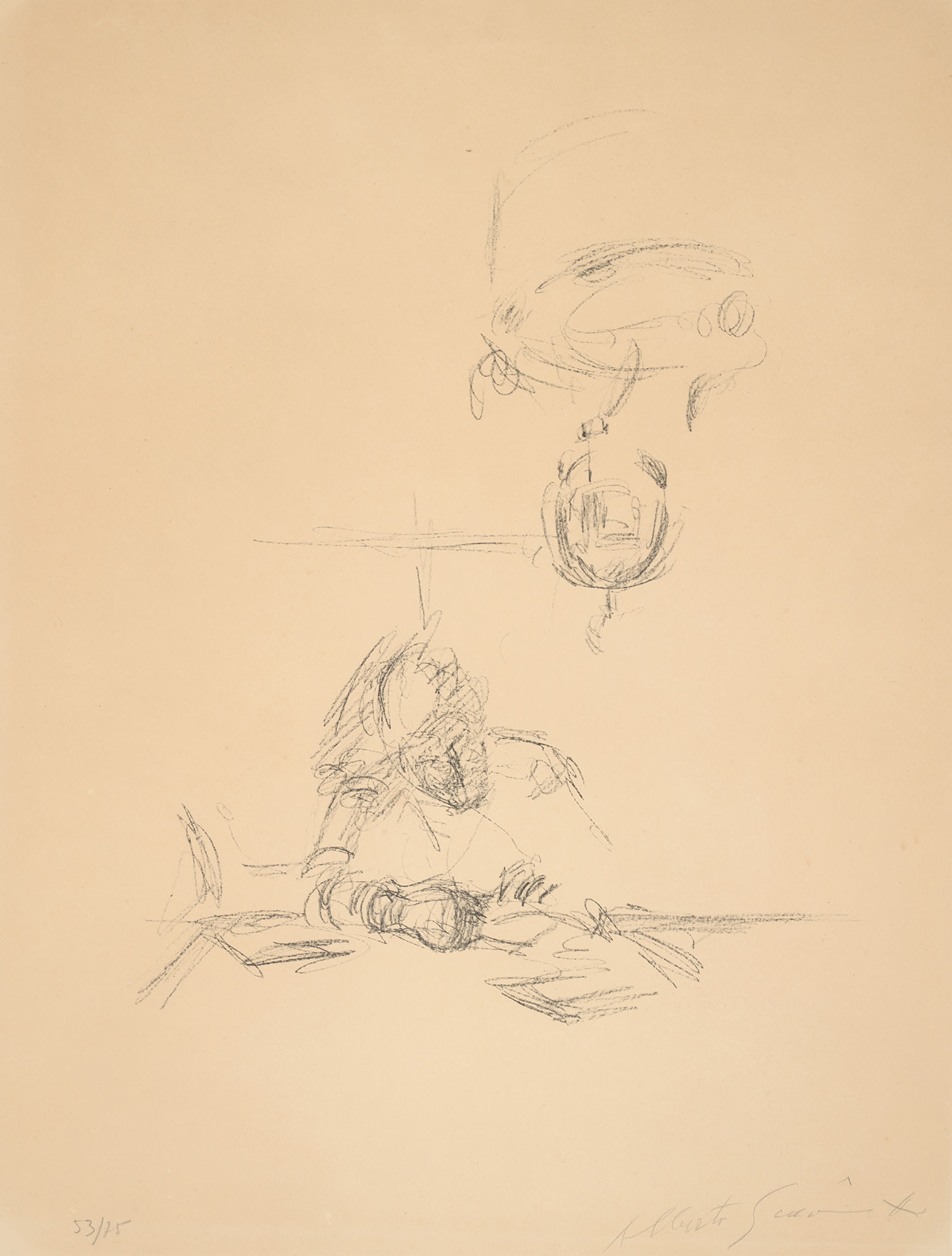
Alberto Giacometti
Mère de l'artiste lisant III (The Artist's Mother Reading III)
By the time Paris was liberated in 1944 and Giacometti returned from wartime exile in Geneva, he was ready to articulate a new and urgent sculptural language. The existential atmosphere of postwar Europe, shaped by the writings of Jean Paul Sartre and Albert Camus, aligned perfectly with what his hands had already been discovering on their own. The late 1940s and the 1950s represent the full flowering of his genius. Works such as Trois hommes qui marchent, created in 1948 and represented on The Collection in its painted bronze version, distill his vision with extraordinary force.
Three figures cross a shared surface without touching, without acknowledging one another, each one locked in its own forward momentum. The sculpture is at once a study in isolation and a meditation on human persistence. His painted bronze surfaces, often rough and tactile, give the figures a quality of emergence, as though they are still being formed by an invisible process. His paintings from this period, including searching portraits of his wife Annette and the Japanese philosopher Isaku Yanaihara, achieve something equally remarkable: a sense that the sitter is both intimately known and forever out of reach.
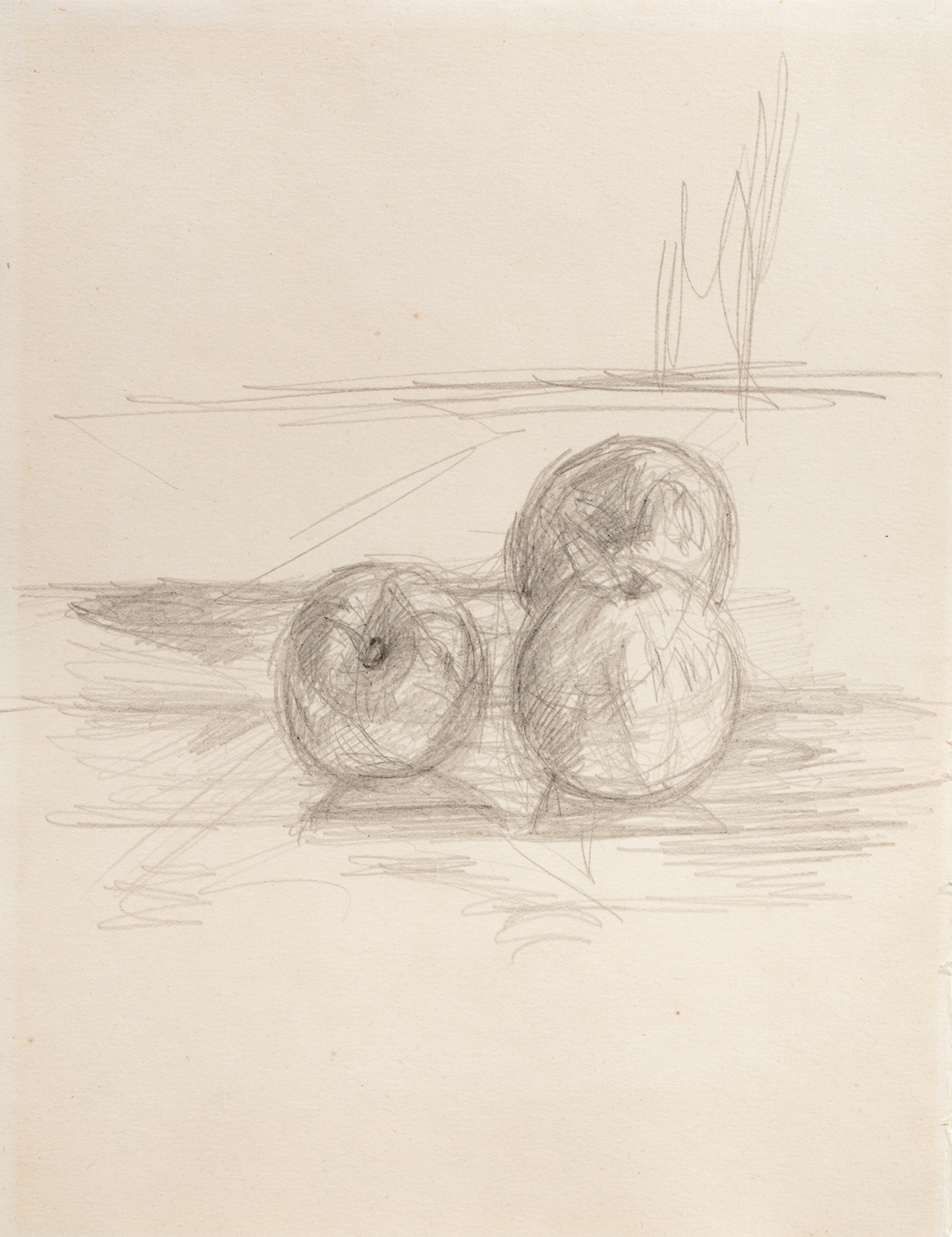
Alberto Giacometti
Pommes, 1954
For collectors, the range of Giacometti's output offers genuine breadth and considered entry points. Works on paper, including pencil drawings and prints such as the Rimbaud vu par les peintres etching and lithographs from suites like La Double Vue, allow collectors to encounter his draftsmanship at close range. His line is restless and searching, never settling, always circling its subject as though vision itself were a form of longing. Bronzes from the 1940s and 1950s command extraordinary attention at auction, and his work consistently ranks among the most sought after in the postwar and modern categories at Christie's, Sotheby's, and Phillips.
In 2015, L'Homme au doigt, a bronze from 1947, sold at Christie's New York for over 141 million dollars, setting a then record for any sculpture sold at auction. Even works at more accessible price points carry the full weight of his conceptual achievement. Giacometti belongs to a lineage of artists who understood the human body as a philosophical problem as much as an aesthetic one. His closest spiritual neighbors include Francis Bacon, who was a personal friend and whose distorted figures share a similar existential urgency, and Jean Dubuffet, whose rough surfaces and outsider sensibilities rhyme with Giacometti's refusal of polish.
Looking further back, the influence of Paul Cézanne, particularly Cézanne's sense that seeing is an active, incomplete, and profound act, runs through almost everything Giacometti made. Looking forward, his legacy is visible in the work of sculptors from Thomas Houseago to Berlinde De Bruyckere, artists who understand the body as both vulnerable and irreducible. What makes Giacometti so enduring, and so moving, is the sincerity at the heart of his struggle. He worked in a small, legendary studio on the Rue Hippolyte Maindron in Montparnasse that was barely larger than a storage room, its walls thick with plaster dust and its shelves crowded with figures he could never quite finish to his satisfaction.
He famously spoke of the impossibility of capturing what he saw, of how the distance between perception and representation was the very subject of his art. That honesty, that refusal to pretend the problem had been solved, is exactly what gives his figures their extraordinary life. They stand, they walk, they endure. In galleries and collections around the world, and on platforms like The Collection where serious collectors gather to look and to think, Giacometti's work continues to ask its essential question with quiet and unwavering force: what does it mean to be here, present in space, reaching toward another person across an impossible distance.
Explore books about Alberto Giacometti
Alberto Giacometti: A Biography
James Lord
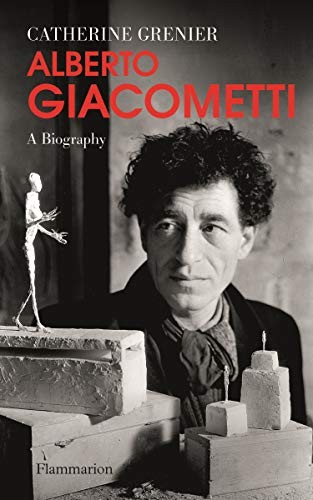
Giacometti: A Life
Catherine Grenier

Alberto Giacometti
David Sylvester
Giacometti: The Raw and The Cooked
Yilmaz Dziewior
Alberto Giacometti: Sculptures, Paintings, Drawings
Pierre Schneider

The Sculpture of Giacometti
Reinhard Spieler

Giacometti: Pure Presence
Angela Schneider

Alberto Giacometti: Works, Writings, Interviews
various editors