Agnes Martin
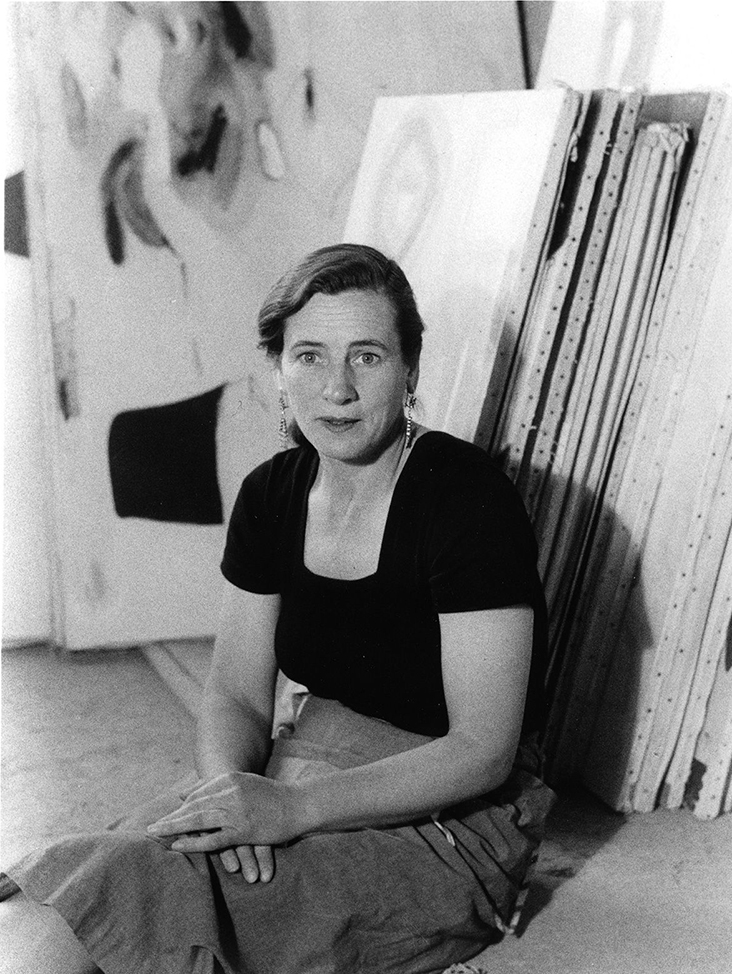
Agnes Martin, Painting Silence Into Light
Artist Spotlight · The Collection Editorial
“When I first made a grid I happened to be thinking of the innocence of trees and then this grid came into my mind and I thought it represented innocence.”
Agnes Martin, artist statement
In 2016, the Solomon R. Guggenheim Museum in New York mounted a sweeping retrospective of Agnes Martin's work that stopped the art world in its tracks. Visitors moved slowly through the rotunda galleries, drawn into the quiet pulse of her canvases as though entering a state of meditation. Critics reached for language usually reserved for sacred spaces.
Agnes Martin
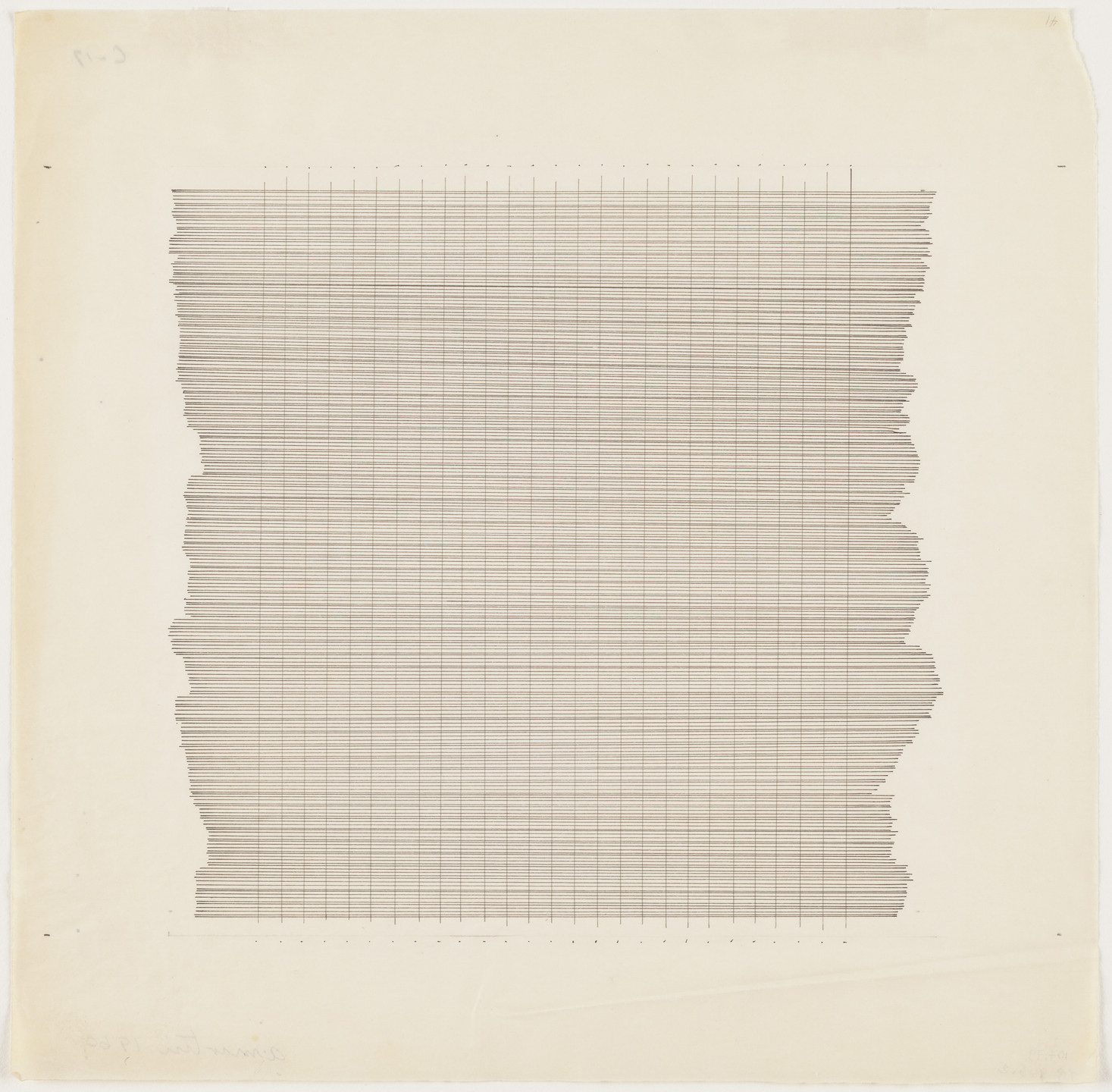
Untitled, 1960
The exhibition traveled to Tate Modern in London and the Los Angeles County Museum of Art, confirming what devoted collectors and curators had long understood: Martin was not simply a painter of grids and washes. She was one of the twentieth century's most original voices, and her work grows more necessary with every passing year. Agnes Bernice Martin was born in 1912 in Macklin, Saskatchewan, Canada, the third of four children in a Presbyterian family of Scottish descent. She emigrated to the United States in her early twenties, eventually becoming an American citizen, and spent years moving between cities before finding her footing as an artist.
She studied at Columbia University in New York, earning both her bachelor's and master's degrees, and taught for a period before committing herself fully to painting. Her formation was slow, deliberate, and unconventional by the standards of the postwar New York art world she would eventually inhabit. Those years of searching gave her work its particular quality of hard won calm. Martin's breakthrough came in the late 1950s when she began to inhabit the artist community of Coenties Slip in Lower Manhattan, a neighborhood that also nurtured Ellsworth Kelly, Robert Indiana, and Lenore Tawney.
Agnes Martin
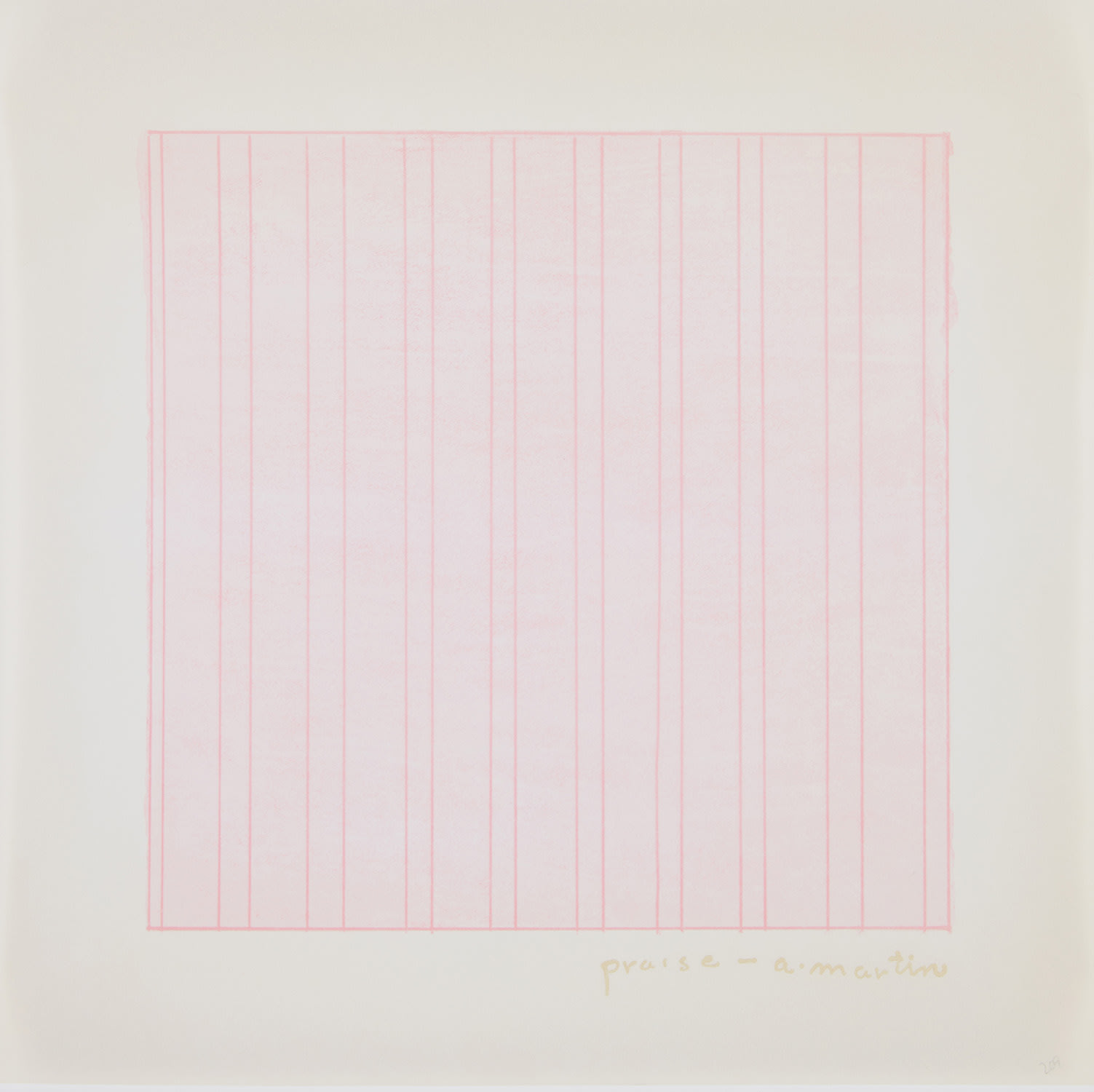
Praise, from Rubber Stamp Portfolio
It was there, in a loft with river light and the sound of the harbor, that she developed the visual language that would define her. Working first in biomorphic abstraction and then, crucially, in the grid, she arrived at a formal system that felt both inevitable and entirely personal. She described the grid coming to her almost as a vision, an image that arose when she was thinking about the innocence of trees. That account tells you everything about how Martin worked: from the inside out, from feeling toward form.
“Nature is like parting a curtain, you go into it. I want to draw a certain response like this, that quality of response from people when they leave themselves behind.”
Agnes Martin
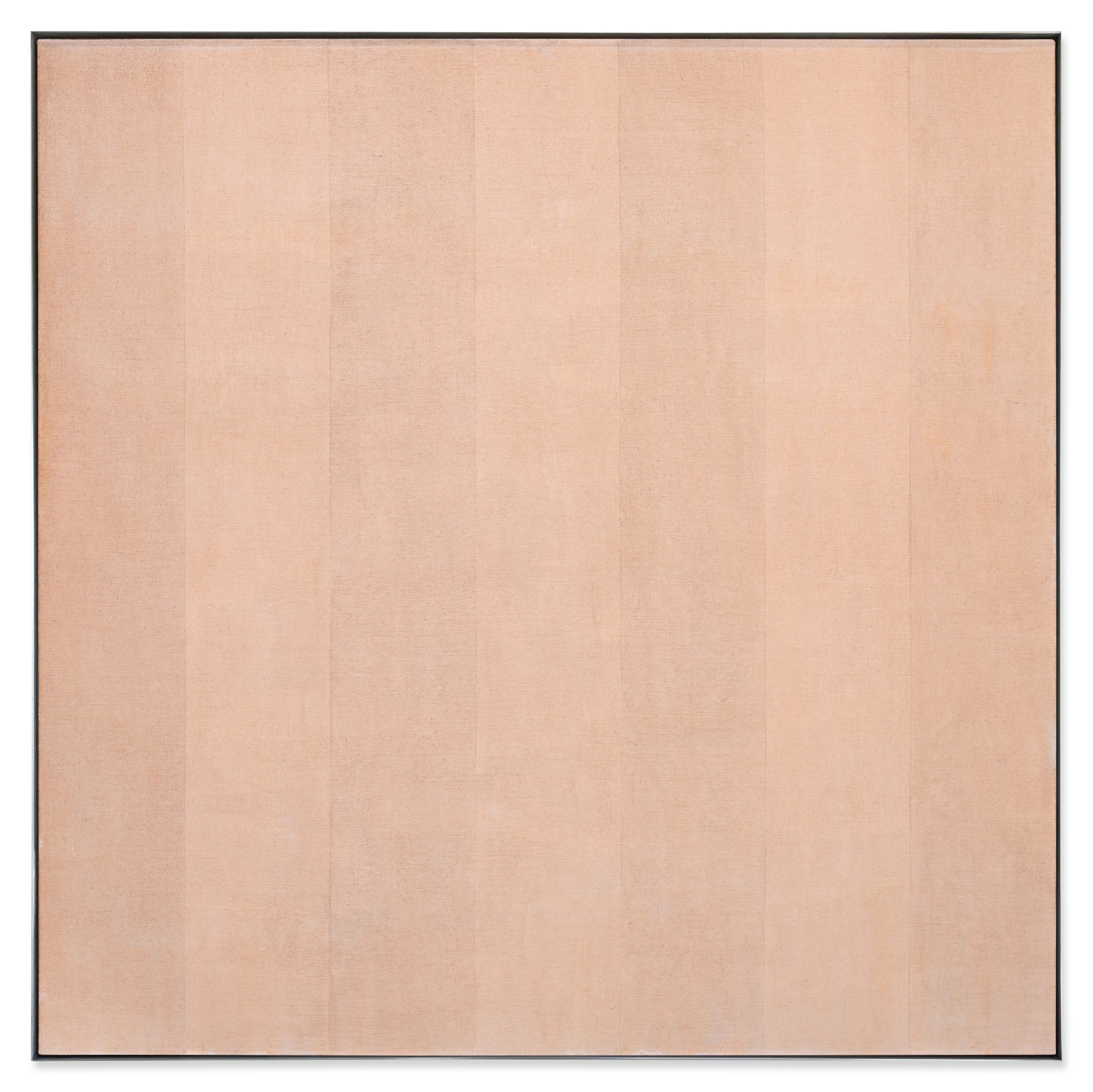
The canvases Martin made throughout the 1960s represent some of the most quietly radical work in American art history. Six foot square surfaces covered in penciled graphite lines, barely there washes of pale color, fields of muted pink, grey, and gold that seem to breathe. Works such as Untitled from 1960 and her graphite on paper drawings from 1965 demonstrate her extraordinary sensitivity to interval and repetition. These are not cold or mechanical objects.
Agnes Martin
Untitled #13
They are warm, trembling, and intensely human. Martin insisted her work was about emotion rather than intellect, about happiness, innocence, and the sublime feelings she associated with the natural world. That insistence was itself a kind of radical act in an era dominated by theoretical discourse and masculine bravado. In 1967, at the height of her New York success, Martin did something almost no artist at her moment of recognition would consider.
“I paint with my back to the world.”
Agnes Martin
She left. She dismantled her studio, gave away her possessions, and drove west, eventually settling in New Mexico, where she lived for the rest of her life. She did not paint for seven years. When she returned to the canvas in the mid 1970s, her work had deepened into something even more luminous.
Agnes Martin
Untitled #44
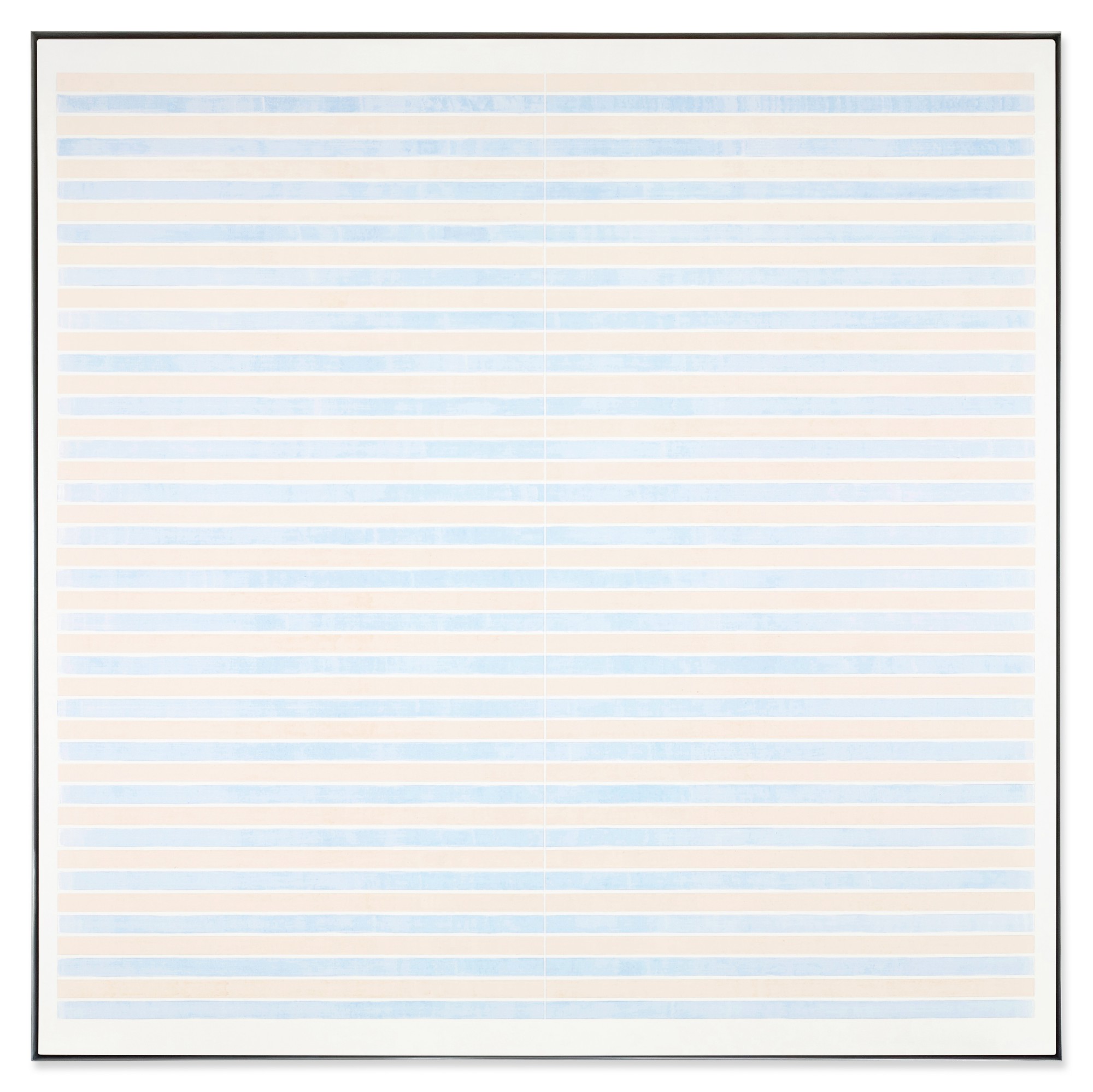
The stripes she introduced in this period, horizontal bands of acrylic color in pale blues, yellows, and whites, carry a tenderness that is almost unbearable in its gentleness. Works from the Paintings and Drawings 1974 to 1990 series, including the complete portfolio of ten lithographs published during this period, are among the most treasured by serious collectors. The late canvases, including works such as Untitled No. 11 and Untitled No.
13, show no diminishment of her vision. If anything, they grow brighter and more assured. She continued working until shortly before her death in Taos, New Mexico, in December 2004, at the age of 92. For collectors, Martin occupies a position of extraordinary rarity and cultural weight.
Her primary market was anchored by Pace Gallery, which represented her for decades and brought her work to the world's most discerning buyers. At auction, her major canvases have achieved prices well into the millions of dollars, reflecting both the scarcity of significant works available and the depth of institutional and private demand. Works on paper, including her ink drawings and graphite studies, offer a compelling point of entry: they reveal her process with an intimacy that large canvases do not always permit, and they carry the same meditative intensity that defines her oils and acrylics. Edition works such as the Parasol Press portfolio and the Agnes Martin screenprints on laid paper represent an opportunity to acquire a direct connection to her thinking at a more accessible level.
In all formats, what to look for is the quality of her line and the coherence of her tonal field. A genuine Martin, at any scale, has an atmosphere that announces itself immediately. Martin is often discussed alongside the Minimalists, grouped with Donald Judd, Dan Flavin, and Frank Stella, yet she always resisted that categorization with quiet firmness. Her affinities were as much with the Abstract Expressionists, with Mark Rothko's pursuit of the transcendent and Barnett Newman's vertical fields of color, as with the cooler intellectual project of Minimalism.
She is perhaps better understood as a bridge figure, someone who absorbed the emotional ambition of one generation and refined it into a discipline of extraordinary focus. Artists working today in the space between abstraction and feeling, from Remy Zaugg to Kishio Suga to the painters associated with the Slow Art movement, owe a profound and largely unspoken debt to the territory Martin mapped in her New Mexico solitude. What makes Agnes Martin matter so urgently right now is precisely what made her seem eccentric to some of her contemporaries. In an age of noise, acceleration, and fractured attention, her canvases ask us to stop.
They ask us to look slowly and to let the looking change us. She once described the experience of nature as parting a curtain and stepping through, and that is exactly what standing before her work feels like: a threshold, an invitation, a release. Her paintings are not decorations or status objects, though they have become both. They are propositions about consciousness, about what it means to be present and at peace in a body, in a moment, in a life.
That proposition feels more radical and more necessary today than it ever has. To collect Agnes Martin is to make a commitment not just to a painter but to a way of being in the world.
Explore books about Agnes Martin