Aaron Garber-Maikovska
Aaron Garber-Maikovska: Painting Alive With Pure Energy
Artist Spotlight · The Collection Editorial
“I start from just a particular mood, and then I'll let my hand do it all. It's about escaping, putting something down then escaping out of it.”
Aaron Garber-Maikovska
Something remarkable happens when you stand before one of Aaron Garber Maikovska's paintings. The surface pulls you in with an almost physical force, layers of ink and acrylic and chalk pastel locked together in compositions that feel simultaneously spontaneous and deeply considered. Los Angeles has long been a city that rewards artists who resist categorization, and Garber Maikovska, working from his studio there, has become one of the most compelling voices in contemporary painting precisely because he refuses every easy label the art world reaches for. His work has drawn serious international attention, and right now, for collectors with an eye for what endures, his paintings represent one of the most rewarding discoveries available in the current market.
Aaron Garber-Maikovska
Experimental 7, 2014
Garber Maikovska was born in 1975, coming of age at a moment when the culture was crackling with competing energies: the final convulsions of punk, the rise of hip hop, the ongoing conversation between street culture and the museum world. These forces did not simply become subject matter for him; they became structural principles. The rawness of punk, with its insistence on immediacy and its impatience with pretension, runs through every mark he makes. He absorbed art history with the same appetite he brought to pop culture, treating the legacy of gestural abstraction and the iconography of everyday life as equally available, equally generative sources.
This refusal to rank his influences is central to understanding why his work feels so alive. His development as a painter has followed a path that is both restless and deeply coherent. Working across ink, acrylic, chalk pastel, and oil on unconventional supports including archival Gatorfoam board, fluted poly board, and aluminum mounted panels, Garber Maikovska has built a practice that is as much about the physical act of making as it is about any finished image. The layered quality of his compositions reflects a genuine improvisational process, one in which the hand leads and the mind follows, then intervenes, then follows again.
Aaron Garber-Maikovska
Bob, 2013
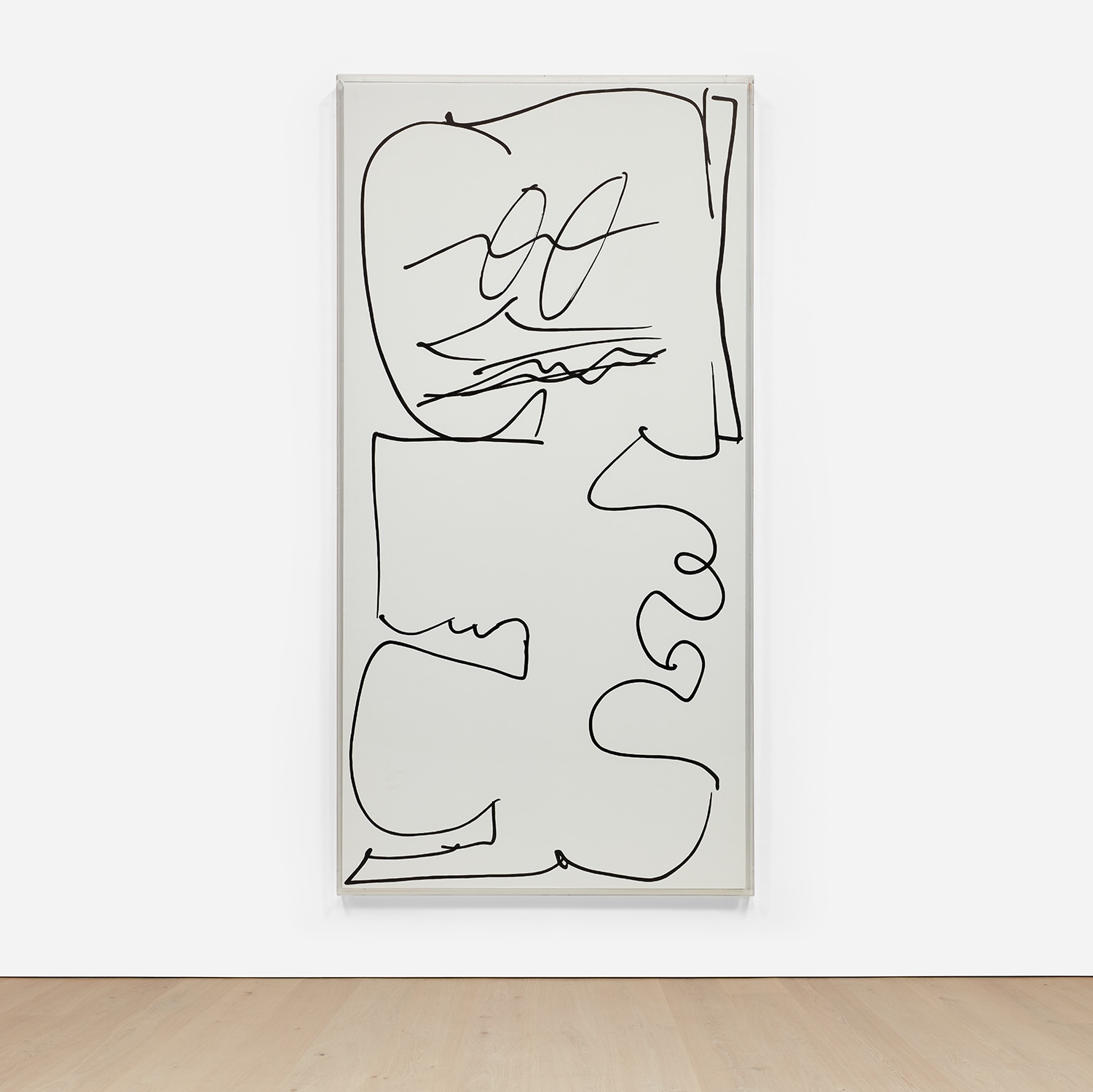
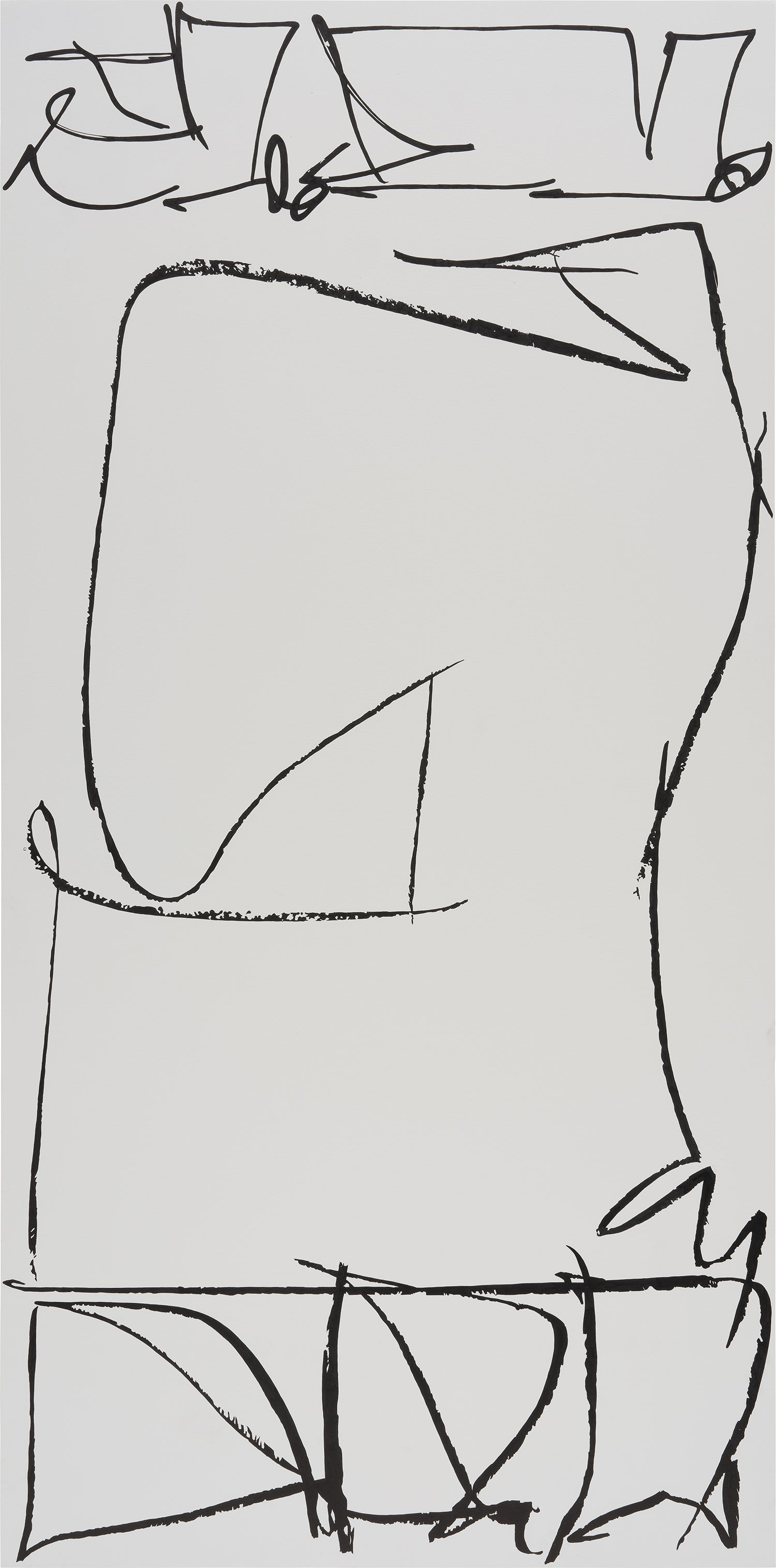
Text appears and disappears within his surfaces, figures emerge from abstraction and dissolve back into it, and the result is work that rewards sustained looking in the way that only genuinely complex painting can. Among the works that best illuminate his approach, the 2013 series that includes pieces known simply as "Bob," "Charles," "Dan," and "Jewel" stands out as a defining body of work. Created with ink and acrylic on archival gator board, these paintings carry the intimacy of portraiture alongside the freedom of pure mark making. The single word titles, drawn from given names, suggest a cast of characters conjured through gesture rather than likeness.
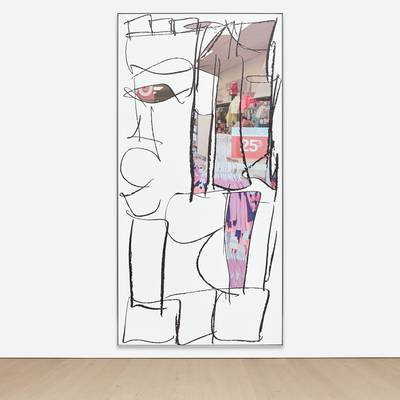
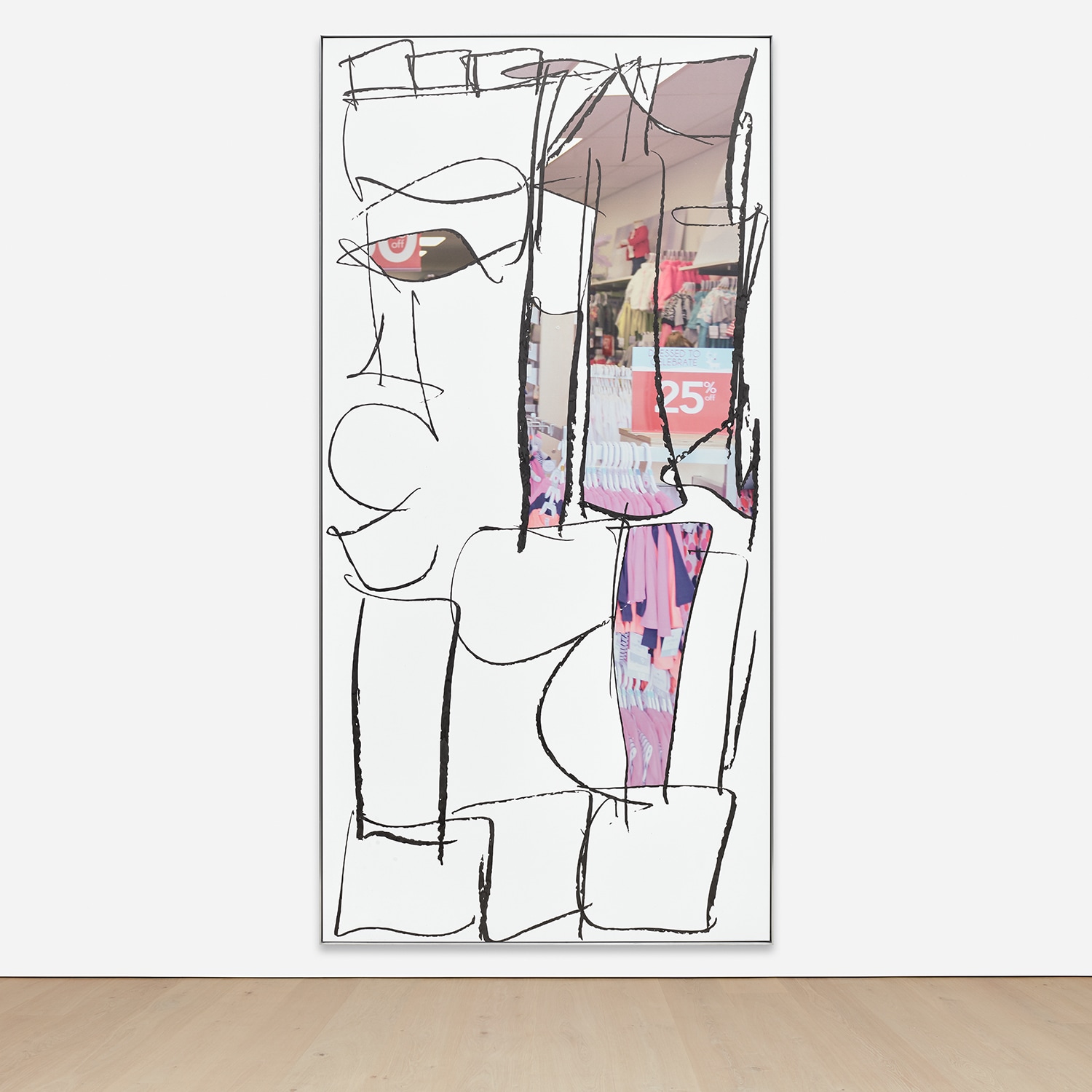
"Sprouts" from the same year, rendered in ink on fluted poly board mounted on aluminum, demonstrates his sensitivity to support and surface, the industrial material of the substrate becoming part of the painting's meaning. "Experimental 7" from 2014, a UV print combined with ink and acrylic on archival Gatorfoam board, shows Garber Maikovska pushing into new technical territory, incorporating print processes without abandoning the handmade warmth that defines his sensibility. More recently, "Lacy Orange Play" from 2021, combining ink and oil on fluted poly, suggests a practice that continues to evolve with genuine curiosity. For collectors, Garber Maikovska offers something increasingly rare: a painter whose work is grounded in a coherent and personal vision while remaining genuinely unpredictable.
Aaron Garber-Maikovska
Charles, 2013
The use of unconventional supports is not affectation but a considered choice that keeps the work physically present in ways that stretched canvas sometimes cannot achieve. The gator board and poly board surfaces give his marks a particular urgency, a sense that the image arrived quickly and completely. Collectors drawn to the lineage of expressive painting, from Cy Twombly's textual gestures through to the improvisational energy of artists like Raymond Pettibon and Christopher Wool, will find Garber Maikovska's work in deeply resonant company. His prices remain at a level where serious private collectors can build meaningful holdings, and the consistency of his output across nearly two decades suggests a sustained commitment that the market reliably rewards over time.
To understand Garber Maikovska fully, it helps to place him within a broader conversation happening across contemporary painting. His blending of figuration, abstraction, and text connects him to a generation of artists who have reconsidered what a painting can hold. Like Cecily Brown in her negotiation between figuration and the all over field, or like the late Martin Kippenberger in his embrace of punk irreverence as a legitimate painterly stance, Garber Maikovska works at the productive edge between sincerity and subversion. His Los Angeles context matters too: the city's particular light, its layers of cultural reference, its long tradition of artists who work outside the institutional structures of New York, all of this inflects his practice in ways that feel specific and rooted rather than generically cosmopolitan.
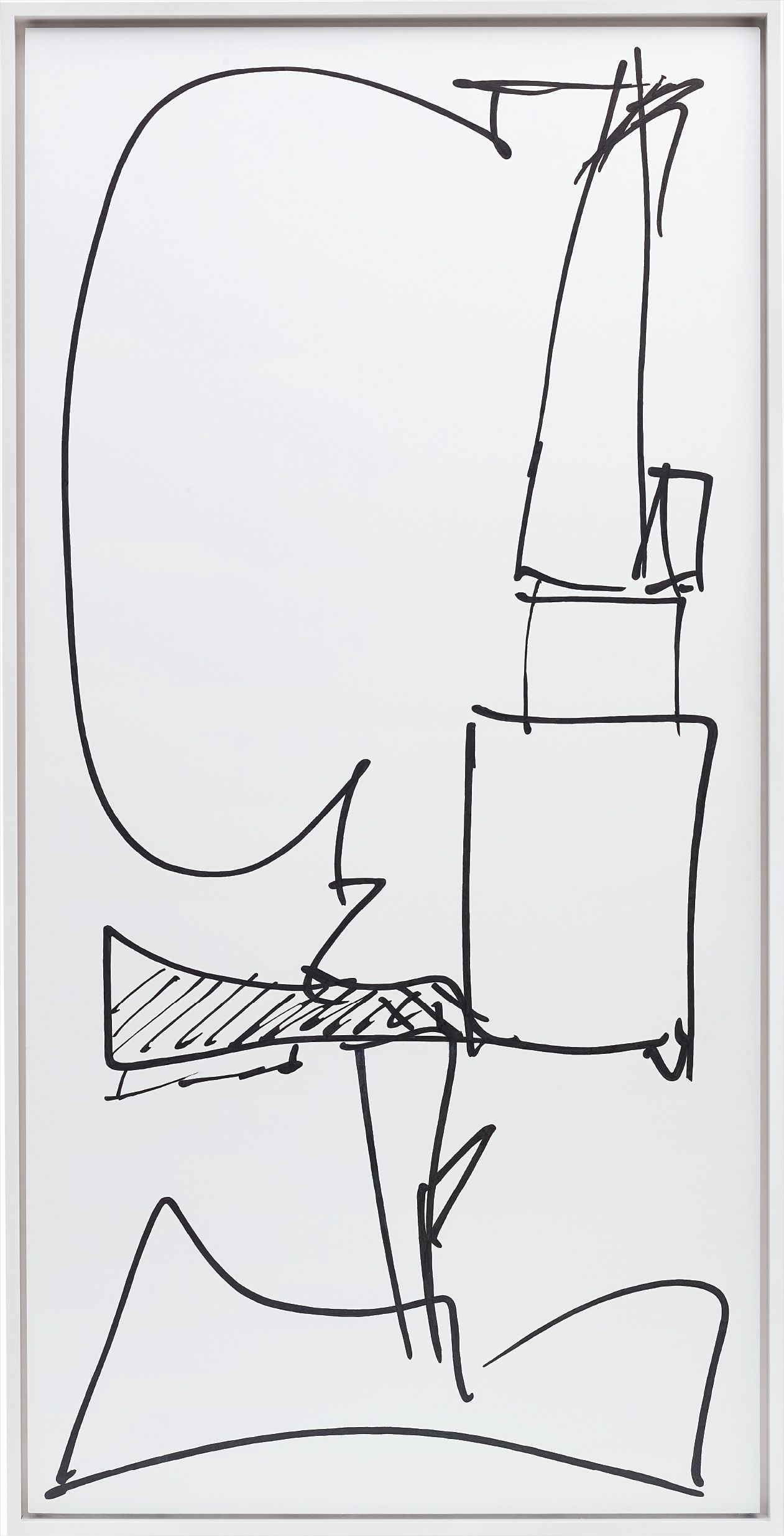
Aaron Garber-Maikovska
Dan, 2013
What Garber Maikovska ultimately offers the culture is a reminder that painting is still capable of genuine surprise. In an era when so much ambitious work announces its intentions before you have had a chance to look, his paintings hold something back, releasing meaning slowly, rewarding patience with revelation. The improvisational process he describes, starting from a mood, letting the hand lead, escaping out of each mark as it is made, produces work that carries the record of its own making in every layer. For collectors who care about the history of painting and its future in equal measure, his work represents exactly the kind of sustained, serious, joyful practice that deserves a permanent place on the wall and in the broader story of art in our time.